Chrysin vs Cancer
https://wikipedia.org
Chrysin
5,7-Dihydroxyflavone
Systematic IUPAC name
5,7-Dihydroxy-2-phenyl-4H-1-benzopyran-4-one
NP-005901; Galangin flavanone
CAS Number 480-40-0
Chemical formula C15H10O4s
Molar mass 254.241 g·mol−1
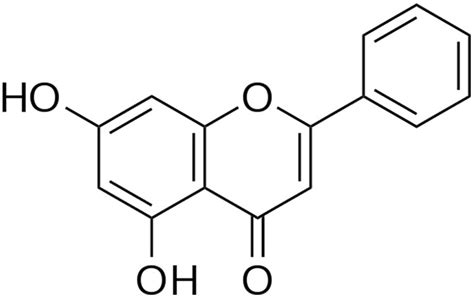
Chrysin, also called 5,7-dihydroxyflavone,[1] is a flavone found in honey, propolis, the passion flowers, Passiflora caerulea and Passiflora incarnata, and in Oroxylum indicum.[2] It is extracted from various plants, such as the blue passion flower (Passiflora caerulea).[1] Following oral intake by humans, chrysin has low bioavailability and rapid excretion.[1] It is under basic research to evaluate its safety and potential biological effects.[1]
Occurrence
A component in various medicinal plants (e.g. Scutellaria baicalensis), chrysin is a dihydroxyflavone, a type of flavonoid.[6] It is also found in honey, propolis, the passion flowers, Passiflora caerulea and Passiflora incarnata, in Oroxylum indicum,[2] carrots,[1] chamomile,[7] many fruits, and in mushrooms, such as the mushroom Pleurotus ostreatus.[6] It is extracted from various plants,[1] such as the blue passion flower (Passiflora caerulea).[1]
The amount of chrysin in honey from various plant sources is about 0.2 mg per 100 g.[8] Chrysin is typically found at higher amounts in propolis than in honey.[9] A 2010 study found the amount of chrysin was 0.10 mg/kg in honeydew honey, and 5.3 mg/kg in forest honeys.[10] A 2010 study found the amount of chrysin in propolis was as much as 28 g/L.[10] A 2013 study found the amount of chrysin in various mushrooms from the island of Lesvos, Greece, varied between 0.17 mg/kg in Lactarius deliciosus to 0.34 mg/kg in Suillus bellinii.[10]
https://www.thailandmedical.news/news/chrysin-blocks-telomerase-and-forces-cancer-cells-into-aging
Chrysin blocks telomerase and forces cancer cells into aging
https://web.archive.org/web/20160804210002/http://www.fda.gov/downloads/AdvisoryCommittees/CommitteesMeetingMaterials/Drugs/PharmacyCompoundingAdvisoryCommittee/UCM509958.pdf
Chrysin
Pharmacy Compounding Advisory Committee Meeting June 23, 2016
Michael Brave, MD
[ PDF ]
https://pmc.ncbi.nlm.nih.gov/articles/PMC12389306/
Pharmaceuticals (Basel). 2025 Aug 5;18(8):1162. doi: 10.3390/ph18081162
Chrysin: A Comprehensive Review of Its Pharmacological Properties and Therapeutic Potential
Magdalena Kurkiewicz, et al.
[ PDF ]
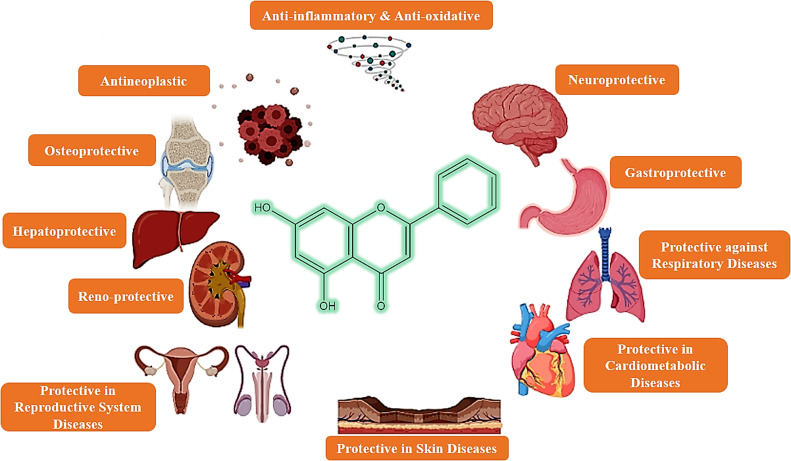
Abstract -- Flavonoids constitute a broad class of naturally occurring chemical compounds classified as polyphenols, widely present in various plants, fruits, and vegetables. They share a common flavone backbone, composed of two aromatic rings (A and B) connected by a three-carbon bridge forming a heterocyclic ring (C). One representative flavonoid is chrysin, a compound found in honey, propolis, and passionflower (Passiflora spp.). Chrysin exhibits a range of biological activities, including antioxidant, anti-inflammatory, anticancer, neuroprotective, and anxiolytic effects. Its biological activity is primarily attributed to the presence of hydroxyl groups, which facilitate the neutralization of free radicals and the modulation of intracellular signaling pathways. Cellular uptake of chrysin and other flavonoids occurs mainly through passive diffusion; however, certain forms may be transported via specific membrane-associated carrier proteins. Despite its therapeutic potential, chrysin’s bioavailability is significantly limited due to poor aqueous solubility and rapid metabolism in the gastrointestinal tract and liver, which reduces its systemic efficacy. Ongoing research aims to enhance chrysin’s bioavailability through the development of delivery systems such as lipid-based carriers and nanoparticles.
https://www.sciencedirect.com/topics/medicine-and-dentistry/chrysin
Crosstalk between xanthine oxidase (XO) inhibiting and cancer chemotherapeutic properties of comestible flavonoids- a comprehensive update
Sohanur Rahaman, ... Jesus Simal-Gandara
[ PDF ]
Chrysin is defined as a flavonoid found in the bluecrown passionflower (Passiflora caerulea), known for its anti-inflammatory, antioxidant, antibacterial, antidiabetic, and anticancer activities.
5.2 Chrysin (2)
Chrysin is a flavonoid which is mainly extracted from plants, honey, and propolis [94]. It possesses potent anti-inflammatory, and antioxidant properties [95]. Chrysin is the structural analogue of apigenin and possesses a strong XO inhibitory activity in a reversible competitive manner. Being the main constituent of honey, passiflora, propolis, and Oroxylum indicum, it plays a significant role in the remedy of gout [96].
Several studies demonstrated that chrysin is potent against cervical, esophageal squamous, breast, prostate, and colon carcinoma [44]. Chrysin derived from honey reduced cell proliferation and induced apoptosis in the PC-3 prostate cancer cells [97]. It was reported to inhibit angiogenesis with chymotrypsin and trypsin like proteasomal degradation [98,99]. It sensitized TNF-α induced cell death in human tumor cells through activation of caspase-8 and suppression of NF-ĸB and cellular FLICE (FADD-like IL-1β-converting enzyme)-inhibitory protein (C-FLIP)-L activation [100]. Chrysin was also reported to potentiate the cytotoxicity of anticancer drugs by depleting cellular glutathione [101]. It induced apoptosis in human leukemia U937 cells by the activation of caspase-3 that was associated with inactivation of Akt and X-linked inhibitor of apoptosis protein (XIAP) [102]. Chrysin was found to downregulate human telomerase reverse transcriptase (hTERT) expression in leukemia cells as well [103]. It caused G2/M cell cycle arrest through upregulation of p21 and downregulation of cyclin B1 in KYSE-510 human esophageal squamous carcinoma cells [104]. Moreover, it acted as a histone deacetylase-8 inhibitor and inhibited cell growth and differentiation in MDA-MB-231 breast cancer cells [105]. The MTT assay of chrysin demonstrated MCF-7 breast cancer cell proliferation inhibitory effect in a dose and time-mediated fashion [106]. It could inhibit cyclooxygenase-2 (COX-2) gene expression by targeting IL-6 in lipopolysaccharide (LPS)-stimulated macrophages, which provided a promising insight on the anti-inflammatory and anti-carcinogenic activity of chrysin [95]. Satisfactory effect of chrysin was observed against HeLa cervical cancer cells where it downregulated the proliferating cell nuclear antigen (PCNA) [107]. It was reported to obstruct the tumor formation in 7,12-dimethyl benz(a) anthracene (DMBA)-induced oral and skin carcinogenesis model by downregulating the phase-I enzymes, cytochrome 450 and cytochrome b5 and upregulating the phase-II enzymes like, glutathione S-transferase, glutathione, D-Tyr-tRNA deacylase and glutathione reductase [108,109]. The in-vivo anti-breast cancer activity of chrysin was also reported where modulation of phase I and phase II enzymes were associated [110]. It abolished the proliferation of colon cancer cells via suppressing the PCNA and growth factors, such as leptin and insulin like growth factor-1 (IGF-1) [111]. In human lung adenocarcinoma A-549 cells, chrysin upregulated caspase-3 and -9 and Bcl-2 Associated X-protein (Bax)/B-cell lymphoma 2 (Bcl-2) ratio to exert its anti-proliferative action [112]. The synergistic effect of chrysin and silibinin against T47D breast cancer cells was reported to be associated with the suppression of cyclin D1 and hTERT genes [113].
Sources of chrysin
Chrysin (5,7-dihydroxy-2-phenyl-4H-chromene-4-one or 5,7-dihydroxyflavone) is a naturally 15-carbon backbone-based flavone compound. The most commonly known natural sources of chrysin are honey, wherever the content of chrysin varies from 0.10 mg/kg in honeydew honey to 5.3 mg/kg in forest honey [26,27], propolis (chrysin content 28 g/L), stingless bee products [28], and numerous plants species e.g. Oroxylum indicum, Cytisus multiflorus, Cytisus villosus, Crataegus oxyacantha, Pelargonium crispum, Mangifera indica, Desmos cochinchinensis, Passiflora incarnate, Passiflora coerulea, Scutellaria immaculata, Scutellaria baicalensis, Scutellaria ramosissima, Scutellaria orientalis, Scutellaria bornmuelleri, Scutellaria lateriflora, Scutellaria tomentosa, Pyrus pashia, Teloxys graveolens, Artocarpus heterophyllus, Centaurea omphalotricha, Eriodictyon califomicum, Alpinia oxyphylla [29–47], mushrooms Lactarius deliciosus, Suillus bellinii, Pleurotus ostreatus, and a marine endophytic strain Chaetomium globosum [48,49].
https://pmc.ncbi.nlm.nih.gov/articles/PMC2885101/
Apoptotic Effects of Chrysin in Human Cancer Cell Lines
Boon Yin Khoo, Siang Ling Chua, Prabha Balaram
[ PDF ]
Abstract -- Chrysin is a natural flavonoid currently under investigation due to its important biological anti-cancer properties. In most of the cancer cells tested, chrysin has shown to inhibit proliferation and induce apoptosis, and is more potent than other tested flavonoids in leukemia cells, where chrysin is likely to act via activation of caspases and inactivation of Akt signaling in the cells. Moreover, structure-activity relationships have revealed that the chemical structure of chrysin meets the key structural requirements of flavonoids for potent cytotoxicity in leukemia cells. It is possible that combination therapy or modified chrysin could be more potent than single-agent use or administration of unmodified chrysin. This study may help to develop ways of improving the effectiveness of chrysin in the treatment of leukemia and other human cancers in vitro.
https://pmc.ncbi.nlm.nih.gov/articles/PMC7182457/
Chrysin Induced Cell Apoptosis and Inhibited Invasion Through Regulation of TET1 Expression in Gastric Cancer Cells
Xiaowei Zhong, et al
Abstract -- Ten-eleven translocation (TET) enzymes that oxidize a 5-methylcytosine (5mC) to yield 5-hydroxymethylcytosine (5hmC) have been responsible for fine-tuning methylation patterns and exhibit role in epigenetic modifications. Chrysin, a natural flavone frequently present in honey, has been recognized to exhibit anti-tumor properties. In this study, we investigated the effects of Chrysin in the expression pattern of TET proteins in gastric cancer (GC) cells...
Conclusion
This study indicated that Chrysin exerted anti-tumor effects through the regulation of TET1 expression in GC and presented TET1 as a novel promising iotarget for GC therapy.
https://pmc.ncbi.nlm.nih.gov/articles/PMC5958737/
Chrysin induces cell growth arrest, apoptosis, and ER stress and inhibits the activation of STAT3 through the generation of ROS in bladder cancer cells
Yi Xu et al
Abstract -- Chrysin is a natural flavone that has various biological activities, including antitumor effects. However, the effect of chrysin on bladder cancer cells remains elusive. The present study investigated the effects of chrysin on bladder cancer cells and its underlying mechanisms. The results demonstrated that chrysin induced apoptosis via the intrinsic pathway, as evidenced by activation of caspase-9 and caspase-3, however not caspase-8. In addition, chrysin reduced the expression of anti-apoptotic B cell lymphoma (Bcl) proteins including Bcl-2, Mcl-1, Bcl-xl, and promoted the protein expression of pro-apoptotic Bcl-2 associated X, apoptosis regulator. Chrysin also induced endoplasmic reticulum stress via activation of the unfolded protein response of PRKR-like endoplasmic reticulum kinase, eIF2α and activating transcription factor 4 in bladder cancer cells. Additionally, chrysin inhibited the signal transducer and activator of transcription 3 pathway. Furthermore, the generation of reactive oxygen species (ROS) was detected following treatment with chrysin. The ROS scavenger N-acetylcysteine inhibited the antitumor effect of chrysin. Collectively, these results indicate chrysin may act as a promising therapeutic candidate for targeting bladder cancer.
https://pmc.ncbi.nlm.nih.gov/articles/PMC8392734/
Development of Chrysin Loaded Oil-in-Water Nanoemulsion for Improving Bioaccessibility
Pisamai Ting et al
Abstract -- Chrysin (5,7-dihydroxyflavone) is a remarkable flavonoid exhibiting many health-promoting activities, such as antioxidant, anti-inflammatory, and anti-Alzheimer’s disease (AD). Nevertheless, chrysin has been addressed regarding its limited applications, due to low bioaccessibility. Therefore, to improve chrysin bioaccessibility, a colloidal delivery system involving nanoemulsion was developed as chrysin nanoemulsion (chrysin-NE) using an oil-in-water system. Our results show that chrysin can be loaded by approximately 174.21 µg/g nanoemulsion (100.29 ± 0.53% w/w) when medium chain triglyceride (MCT) oil was used as an oil phase. The nanocolloidal size, polydispersity index, and surface charge of chrysin-NE were approximately 161 nm, 0.21, and −32 mV, respectively. These properties were stable for at least five weeks at room temperature. Furthermore, in vitro chrysin bioactivities regarding antioxidant and anti-AD were maintained as pure chrysin, suggesting that multistep formulation could not affect chrysin properties. Interestingly, the developed chrysin-NE was more tolerant of gastrointestinal digestion and significantly absorbed by the human intestinal cells (Caco-2) than pure chrysin. These findings demonstrate that the encapsulation of chrysin using oil-in-water nanoemulsion could enhance the bioaccessibility of chrysin, which might be subsequently applied to food and nutraceutical industries.
&c...
Chrysin
Extraction Patents
Preparation method and application of lavender seed total flavone extract with antioxidant activity and glycolipid metabolism related enzyme inhibitory activity
CN122557417 (A)
The invention discloses a preparation method and application of a lavender seed total flavone extract with antioxidant activity and glycolipid metabolism related enzyme inhibitory activity, and relates to the field of flavone extract preparation. The medicine composition is prepared from the following raw materials: apigenin-7-O-glucuronide, 6-malonyl apigenin-7-O-glucoside, genistin, kaempferol, diosmetin, luteolin, quercetin, catechin, baicalin, silibinin, chrysin, 5-demethylnobiletin, isoneohesperetin, thripatin, jaceosidin, fructus psoraleae flavone, morin and astragalus smicus glycoside. The components comprise kanran, linarin, herbacetin, vicenin-2, rosmarinic acid, caffeic acid and ferulic acid; through an extraction and purification process, the purity of the flavonoid compound is far higher than that of the existing conventional process product; the defects of single active ingredient and one-sided action in the prior art are overcome, the oxidation resistance and the glycolipid metabolism enzyme inhibition activity are greatly improved, and the activity effect is stable and free of dependence.
Propolis extract and production process thereof
CN122440670 (A)
The invention discloses a propolis extract and a production process thereof. The propolis extract comprises the following components in percentage by mass: 25-40% of total flavonoids, 15-30% of total phenolic acids, 10-20% of propolis alkanoic acid compounds, less than or equal to 3% of water, less than or equal to 2% of ash and the balance of other natural propolis components, the sum of chrysin, galangin and pinocembrin in the total flavonoids accounts for 30-50% of the mass of the total flavonoids. The production process comprises the following steps: freezing and crushing, carrying out composite enzymolysis, carrying out ultrasonic-assisted ethanol extraction, dewaxing, purifying by using macroporous adsorption resin and drying. Through combination of enzymolysis and ultrasonic treatment, the extraction rate and purity of active ingredients are remarkably improved, the obtained propolis extract is clear in component, high in active ingredient content and few in impurities, the process is green and efficient, and the method is suitable for industrial production.
Method for extracting chrysin from fructus alpiniae oxyphyllae and application
CN120441520 (A)
The invention discloses a method for extracting chrysin from fructus alpiniae oxyphyllae and application. Belongs to the technical field of plant active ingredient extraction. According to the extraction method disclosed by the invention, the fructus alpiniae oxyphyllae is uniformly stirred in the saline water and then is stir-fried with slow fire, so that the conversion of bioactive components in the fructus alpiniae oxyphyllae can be promoted in the processing process, and the content of chrysin is increased; and bromelain and papain are added for enzymolysis treatment, so that the extraction efficiency of the chrysin is improved, the extracted chrysin extract has better biological activity, such as anti-hypoxia capability, and the treatment effect is remarkably improved.
Propolis flavone refined product as well as preparation method and application thereof
CN113855617 (A)
The invention provides a propolis flavone refined product as well as a preparation method and an application thereof. According to the technical scheme of the invention, the propolis flavone refined product is prepared by a method of sequential extraction of sodium bicarbonate and sodium hydroxide, separation and purification, acidification treatment and macroporous adsorption resin filtration. The weight percentage of total flavonoids in the propolis flavone refined product is more than 90% on the basis of rutin, and nine flavone monomers with the highest content are quercetin, 3, 4-dimethoxycinnamic acid, pinobufagin, naringenin, pinocembrin, kaempferol, apigenin, chrysin and galangin in sequence. According to the method, common alkali and acid treatment is adopted to reduce the dosage of ethanol without environment pollution, Moreover, the prepared propolis flavone refined product is definite in chemical component, high in total flavone content, free of viscosity and golden yellow in color and has an obvious photoaging-resistant effect on the skin. The invention greatly extends applications of the propolis flavone refined product in the field of cosmetics, and the propolis flavone refined product has high applicability.
NON-NATURALLY OCCURRING MICROORGANISM FOR THE BIOSYNTHETIC PRODUCTION OF BAICALEIN
EP3913063 (A1)
The invention describes a non-natural occurring microorganism used for the biosynthetic production of baicalein from the precursor molecule chrysin. This is enabled, in the microorganism, of cytochrome P450 CYP82D1.2 (protein ID: ASW21051.1) from Scutellaria baicalensis and a cytochrome P450 reductase to ensure proper function of the first. This invention proposes an alternative and scalable production method to the mainstream method currently used, plant extraction. So, that baicalein can be introduced into the pharmaceutical and medical market as a principal or supplementary medication to patients.
Preparation Method of Highly Active Total Flavonoids of Hedyotis Diffusa
LU500041 (B1)
The present invention relates to the technical field of extraction of traditional Chinese medicinal materials and medicines, in particular to a preparation method of highly active total flavonoids of Hedyotis diffusa Willd, that is, total flavonoids of Hedyotis diffusa Willd is extracted by directly using a small amount of cellulose. Compared with other extraction methods, the method disclosed by the present invention has the advantages of simple operation, low energy consumption, higher feasibility, and higher biological activity of the extracted total flavonoids (higher content of isoflavones). In addition, three components that are not extracted by other extraction methods can be extracted by the method for preparing the total flavonoids of Hedyotis diffusa Willd, i.e., dihydrokaempferol, apigenin and chrysin; and six components with significantly increased content (up-regulated by more than 2 times) are obtained, i.e., naringin, vitexin, isovitexin, genistein, luteolin and 7-O-glucoside luteolin.
COMPOSITION CONTAINING OROXYLIN A AND METHOD OF EXTRACTION THEREOF
US2021196739
Disclosed are the compositions comprising bioactive components Oroxylin A-7-glucuronide, Baicalein-7-glucuronide and Chrysin-7-glucuronide, isolated from the bark of Oroxylum indicum, and the process of isolating the said bioactive components.
Preparation method of high-activity oldenlandia diffusa total flavonoid
CN111437310 (A)
The invention relates to the technical field of traditional Chinese medicinal material extraction technologies and medicines, in particular to a preparation method of high-activity oldenlandia diffusatotal flavonoid, namely the oldenlandia diffusa total flavonoid is extracted by directly adopting a small amount of cellulase. Compared with other extraction methods, the method disclosed by the invention is simple to operate, low in energy consumption and higher in feasibility, and the extracted total flavonoids (higher content of isoflavone components) are higher in biological activity; the method for preparing the oldenlandia diffusa total flavonoid can be used for obtaining three components which are not extracted by other extraction methods, namely dihydrokaempferol, apigenin and chrysin; six components, namely naringin, vitexin, isovitexin, genistein, luteolin and 7-O-glucoside luteolin, of which the contents are remarkably increased (up-regulated by two times or more) are obtained;the nine compounds have various biological activities such as inflammation resistance, oxidation resistance, tumor resistance, liver protection and the like; and the high-activity oldenlandia diffusatotal flavonoid extract prepared by the invention can be used for preventing and treating liver peroxidation injury and can play a role in assisting in reducing blood fat.
Method for preparing flavone by supercritical extraction of propolis
CN109876014
The invention discloses a method for preparing flavone by supercritical extraction of propolis. The method comprises the steps: freezing and crushing propolis into coarse powder, then adding acetone in proportion, extracting, filtering, merging filtrates, carrying out reduced pressure recycling of the solvent, concentrating into a thick paste, carrying out reduced pressure drying, and crushing into fine powder; dissolving with a trichloromethane mixed solution, extracting with a diethyl ether solution with equal volume, and adding hydrochloric acid to an alkali extract liquid, adjusting the pHto 4-8, producing a precipitate, carrying out suction filtration, washing with water to neutral, carrying out reduced pressure drying, crushing into fine powder, and thus obtaining the product. The novel process for preparing the propolis flavone has the advantages that the total flavone content of the extracted propolis flavone is not less than 30% based on rutin, the content of total phenolic acid is not less than 20% based on protocatechuic acid, the content of chrysin is not less than 3.45%, the content of heavy metals is low (less than 5 ppm) and the content of pesticide residues is low(less than 10 ppb). Pharmaceutical preparations can be used for preventing and treating coronary heart disease, angina pectoris, hyperlipidemia and other diseases.
Method for extracting chrysin-8-C-Beta-D-glucoside from Camellia semiserrata Chi
CN109232674
The invention provides a method for extracting chrysin-8-C-Beta-D-glucoside from Camellia semiserrata Chi. The method comprises the following steps: a Camellia semiserrata Chi cake is extracted, the sample solution is loaded onto a macroporous resin chromatographic column, and after gradient elution, eluent eluted by 15 percent aqueous ethanol solution is collected and post-processed, so that a crude component solution is obtained; the crude component solution is sampled onto a polyamide resin chromatographic column, and after gradient elution, eluent containing the target compound is collected, concentrated and freeze-dried, so that a crude extract is obtained; a high performance liquid chromatograph and a C18HCE chromatographic column are used for carrying out DAC (Dynamic Axial Compression) preparation, so that a crude separated product is obtained; the high performance liquid chromatograph, a C18ME chromatographic column and aqueous acetonitrile solution (the volume fraction is 19percent) as a mobile phase are used for carrying out isocratic elution, the flowing part containing the target compound is collected, and by concentration and freeze-drying, the target compound is obtained. The method provided by the application effectively separates out the target compound from the Camellia plant for the first time, and the purity of extraction is high.
Preparation method and application of chain hydrocarbon chrysin derivative
CN109020939 (A)
The invention provides a preparation method of a chain hydrocarbon chrysin derivative. Chrysin and acyl chloride are used for reaction; triethylamine is added; after reaction, extraction and concentration are performed to prepare a target compound. The preparation method of the chain hydrocarbon chrysin derivative has the advantages that the prepared chain hydrocarbon chrysin has high biological purity and high yield; the median inhibitory concentration on cancer cells is small; the anticancer activity is high; the preparation method can be better applied to anticancer medicine preparation.
Preparation method for degreasing poplar barks used as wood processing byproducts and extracting phenolic acid components
CN108272890 (A)
The invention relates to a preparation method for degreasing poplar barks used as wood processing byproducts and extracting phenolic acid components. The preparation method is characterized by comprising the following steps: degreasing the poplar barks, then performing extraction with alcohol at a concentration of 70 to 85 percent, and performing macroporous resin column chromatography to obtain an active site with concentrated phenolic acid compounds. The yield and the purity of the effective phenolic acid components in the poplar barks obtained by the extraction process and the method whichare disclosed by the invention; and the total content of main active components such as chrysin, galangin and kaempferol is not less than 15 percent. The structural formulas of the compounds such as the chrysin, the galangin and the kaempferol are as shown in the right figure.
COMPOSITION CONTAINING OROXYLIN A AND METHOD OF EXTRACTION THEREOF
US10555982
Disclosed are the compositions comprising bioactive components Oroxylin A, Baicalein, Chrysin, and their glucuronides Oroxylin A-7-glucuronide, Baicalein-7-glucuronide and Chrysin-7-glucuronide, isolated from the bark of Oroxylum indicum, and the process of isolating the said bioactives.
Chinese propolis flavone extract and preparation method and application
CN106892889 (A)
The invention provides a Chinese propolis flavone extract. By the weight of general flavone, rutin accounts for 54.3%-89.3%, five flavonemonomers having the highest contents include pinobanksin, pinocembrin, pinobanksin-3-acetate, chrysin and galangin. The Chinese propolis flavone extract is prepared through step-by-step extraction, separation and purification by using organic solvents such as petroleum ether, ethanol and petroleum ether-ethyl acetate. The Chinese propolis flavone extract is definite in chemical component and high in general flavone content. Compared with an existing propolis extracts, the general flavone content in the extract is high, flavone compound components in the extract are definite, and the extract has an obvious cancer cell inhibiting effect, can induce cancer cellapoptosis and can be applied to preparation of antitumor drugs.
Method for extracting propolis step by step with subcritical fluid
CN106823453 (B)
The invention discloses a method for extracting propolis step by step with subcritical fluid with an aim to extract beewax and propolis from glue respectively. The method includes: performing freezing and breaking on the glue; loading broken glue raw materials in to a sieving cloth bag which is put into an extraction pot for vaporization and adding a primary extractant for extraction; moving the extractant to an evaporating pot for solvent evaporation and placing the vaporized primary extractant in a solvent tank after cooling and liquidation; subjecting the evaporating pot to negative press separation to take out an extractant to obtain the beewax; after the extraction pot is subjected to solvent removal, adding a secondary extractant for extraction; moving the secondary extractant to the evaporating pot for solvent evaporation and placing the vaporized second extractant to the solvent tank after cooling and liquidation; subjecting the evaporating pot to negative press desolventizing to obtain the light-colored refined propolis extract. The method is low in extraction temperature, capable of reducing damage of active components, simple in process, low in extraction cost, high in extraction rate, high in total flavonoid content, high in galangin and complete in extraction of aspen, free from heavy metal in the propolis extraction and solvent residue free.
A filter equipment that is arranged in plain extraction process of white poplar
CN205796701 (U)
The utility model relates to a filter equipment that is arranged in plain extraction process of white poplar, the device comprises a device body, device body upper end one side is provided with the feed port, and lower extreme one side is provided with the relief hole, feed port department is provided with the feeding subassembly, the inside stirring subassembly that is provided with of device body, the stirring subassembly includes drive roller and stirring vane, stirring vane evenly distributed is on the drive roller circumferencial direction, the device body is inside from last to having set gradually filter screen A and filter screen B down. The utility model discloses during the use, add the device with the raw materials from the feed port inside, emiting into in succession of raw materials can be realized to the feeding subassembly this moment, stirred the subassembly simultaneously and drove direction stirring about the raw materials, a filters effectual improvement filter effect with filter screen B to the raw materials at stirring in -process filter screen.
Draw plain device of white poplar from western white pine
CN204752574 (U)
The utility model relates to a draw plain device of white poplar from western white pine, including vacuum water extraction element, centrifugal separation device, the enrichment facility, macroporous resin chromatographic device, column chromatography chromatographic device and crystallizer, vacuum water extraction element and centrifugal separation device intercommunication, centrifugal separation device and enrichment facility intercommunication, the solution that obtains the separation through the enrichment facility carry out the concentration, enrichment facility and macroporous resin chromatographic device intercommunication, macroporous resin chromatographic device and column chromatography chromatographic device intercommunication, column chromatography chromatographic device and crystallizer intercommunication. The utility model discloses an it is plain that draw plain device of white poplar from western white pine can high -efficiently must follow the white poplar of drawing the high -purity in the western white pine, and process flow is simple, greatly must reduce the plain manufacturing cost of white poplar, in addition, through the improvement to the enrichment facility, the concentration effect of solution has been improved to be favorable to obtaining the white poplar element of high -purity.
Oroxylum indicum general flavone extraction and purification method and application thereof
CN104958330
The invention relates to an oroxylum indicum general flavone extraction and purification method. Ethyl alcohol backflow and macroporous resin adsorption are used for separating, extracting and purifying oroxylum indicum general flavone, non-flavonoid impurities are removed as many as possible, and finally enrichment is carried out to obtain the high-purity general flavone. The oroxylum indicum general flavone comprises five chemical components including semen oroxyli glycoside B, semen oroxyli glycoside A, chrysin-7-O-beta-D-glucuronide, baicalein and chrysin. The invention further provides application of the oroxylum indicum general flavone to prepating medicine for treating liver cancers. In-vitro pharmacological tests show that the general flavone has the obvious restraining effect on proliferation of liver cancer cells and trends to have the obvious dose-effect relationship, and meanwhile the pharmacological effect is obviously improved along with increase of the purity of the general flavone; in addition, oroxylum indicum general flavone matter analysis studying is carried out, the material basis of oroxylum indicum for playing a role in anti-cancer pharmacological effect is defined, and the material basis and the experiment basis are laid for developing clinical application of oroxylum indicum general flavone enrichment matter, anti-cancer new medicine researching and development and industrial production.
Extracting process of chrysin
CN104926771 (A)
The invention relates to an extracting process of chrysin, in particular to a biological enzymolysis ultrasonicassisted alcohol extraction method. The method comprises the following steps of treating raw materials, performing enzymolysis, performing ultrasonic extraction, refining and performing crystalization in supercritical fluid to obtain the finished product of chrysin. The process is simple, the extraction efficiency is high, energy resources are saved, the cost is low, and the extracting process is suitable for industrial production.
Separation method for dermatophagoides farinae allergy resistant active substance in propolis
CN102784170 (A)
The invention has provided the separation method of an allergic active material of dermatophagoid mite of anti-powder of propolis. In said method, use the ethanol solvent to carry on digestion to propolis at first. Secondly, carry on solid-liquid separation then rotate and evaporate off ethanol and obtain digestion paste as the allergic active material of dermatophagoid mite of anti-powder of propolis. Still further separate, get activity components the digestion paste through column chromatography and thin-layer chromatography by said method. Can also include the chemical structure identification of activity components in said method, this step determines the substance got is kaempferol and/or chrysin. The invention has provided and isolated the method to get natural active material and new use in the dermatophagoid mite of anti-powder is allergic of this active material from propolis. The invention not merely for to develop utilize provide efficient method system deeply propolis, and offered the maiden prevention and treatment route for disease that sensibiligen of powder dermatophagoid mite caused.
Method for extracting chrysin dimethyl ether
CN102659739 (A)
The invention relates to a method for extracting chrysin dimethyl ether, which belongs to the technical field of extraction and separation of plant active ingredients. The method comprises steps of smashing ground parts of bright strawflowers, adding 5-10 times of 90%-99% of an ethanol solution to subject to reflux extraction for 2-3 times, depressurizing the extraction liquid, recovering ethanol up to alcohol concentration of 20%-40%, performing replacement, precipitation and centrifugation, using chloroform to dissolve precipitation, using silica gel to mix the precipitation, packing, performing gradient elution of a petroleum ether-chloroform solution, performing detection of thin layers, collecting high-concentration flow, performing depressurization and concentration, replacing till crystallization, filtering out crystals, using n-hexane-chloroform for recrystallization, and obtaining products with high chrysin dimethyl ether content after crystallization and drying. The method is simple in process and suitable for industrial production.
Method for preparing chrysin
CN102465158 (A)
The invention relates to a method for preparing chrysin. The method has the advantages of low pollution degree and high product yield due to adoption of bio-enzyme enzymolysis, and comprises the following steps of: crushing toringo crab leaves, adding an acidic water solution, mixing to reach a wet state, adding 0.2-0.5% bio-enzyme for enzymolysis, adding 80-90% ethanol solution 5-10 times that of the enzymolysis raw materials, refluxing for extraction 2-3 times, performing reduced-pressure recovery on an extracting solution to obtain ethanol until the ethanol concentration reaches 20-40%, standing for crystallization, dissolving crystals with ethanol, stirring the dissolved crystals with polyamide to prepare a sample, loading to a column, performing gradient elution by using the ethanol solution, performing thin-layer detection, collecting high-concentration fractions, performing reduced-pressure concentration, standing for crystallization, filtering out crystals, dissolving the crystals by refluxing 90-99% ethanol, and drying the crystals to obtain a high-content chrysin product. The method disclosed by the invention is simple to operate and is suitable for industrial production.
Method for extracting chrysin-7-glucoside from toringo leaves
CN102464687 (A)
The invention provides a kind of glycosides method of from leaf of Malus sieboldii Mill, extracting chrysin, process method is: be raw material with the leaf of Malus sieboldii Mill, pulverize the 20-40 order, add 5-10 and doubly measure the 50-70% ethanol ultrasonic extraction 2-3 time; The extracting solution decompression recycling ethanol filters, and adds macroporous resin column absorption, and washing is to there not being fried sugar; Use the 4-6BV40-70% ethanol elution again, collect the elutriant concentrating under reduced pressure, liquid concentrator transfers to pH8-9, adds the water-saturated n-butanol extraction; Keep water and regulate pH3-5, add the water-saturated n-butanol extraction again, collect n-butanol layer, concentrating under reduced pressure; Medicinal extract adds the dissolving of 70-90% alcohol reflux, filters, and concentrates the 1/2-1/3 volume, places crystallization; Leach above-mentioned crystallisate, hot wash 2-3 time uses alcohol reflux dissolving crystallized again, the dry product that gets of crystallisate.Adopt present method to produce the chrysin glycosides, technology is simple, and toxicological harmless reagent uses, and is environmentally friendly, is fit to suitability for industrialized production.
Method for extracting chrysin from Malus sieboldii leaves
CN102344430 (A)
The invention discloses a method for extracting chrysin from Malus sieboldii leaves, which comprises the following steps of: pulverizing Malus sieboldii leaves which serve as the raw material, adding 7-10 times of water solution to extract 2-3 times under reflux, filtering the extracting solution, adding into macroporous resin columns for adsorption, washing the resin columns with water until no sugar color exists, eluting with 4-6 times of 50-70% ethanol solution, concentrating the eluate under reduced pressure, carrying out acid hydrolysis on the concentrated solution for 2-4 hours, centrifuging, washing the centrifugation product with water until the centrifugation product is neutral, washing with 1-2 times of 70% ethanol solution under reflux 1-2 times, dissolving in 95% ethanol and recrystallizing 1-2 times, and drying to obtain the chrysin product. The Malus sieboldii leaves serving as the raw material have the advantages of high chrysin content and abound resources, thereby greatly lowering the production cost; and the macroporous resin purification technique is simple and easy to operate. The method is suitable for industrial production.
Method for extracting chrysin from passiflora edulis fruit residue obtained after juicing
CN102285949 (B)
The invention discloses a method for extracting chrysin from passiflora edulis fruit residue obtained after juicing, which comprises: adding chrysin from passiflora edulis fruit residue obtained after juicing into low-carbon alcohol, regulating the pH value of the obtained mixed solution to 9 to 12 by using alkaline solution, and performing refluxing extraction for 1 to 3 times, 1 to 2 hours eachtime; combining extracting solution, cooling and pumping under vacuum; regulating the pH value of the filtrate to 1 to 3 by using an acid; standing, precipitating, and filtering under vacuum; dissolving a filter cake in ethyl acetate, filtering, and concentrating filtrate to obtain extract; adding low-carbon alcohol into the extract and regulating the pH value to 9 to 12 by using alkaline solution, heating, dissolving and cooling; regulating the pH value to 5 to 7 by using an acid, standing, precipitating, and filtering under vacuum; and washing an obtained filter cake, dying and thus obtaining chrysin. In the method disclosed by the invention, the juiced passiflora edulis fruit residue treated as a waste is used as a raw material for extraction, so the waste is recycled and resources aresaved effectively; and the production method disclosed by the invention is low in production cost, makes a process simple and easy to control, requires short production period and is suitable for industrial production.
Method for preparing special component of traditional Chinese medicine Indian trumpetflower seed, namely Oroxin B
CN102030789 (A)
Indian trumpetflower seed is a common traditional Chinese medicine and contains main chemical components of flavonoid compounds, such as baicalein, chrysin, Oroxin A, Oroxin B, baicalin and the like, wherein the Oroxin B is a special component of the Indian trumpetflower seed and can serve as an important index for quality control of the Indian trumpetflower seed medicinal material. An identification method and a contrast for the special component have not been present under the item of Indian trumpetflower seed in the first part of 2005 version Chinese Pharmacopoeia. The Oroxin B prepared by separation serving as a contrast in a thin-layer identification method for the specificity of the traditional Chinese medicine Indian trumpetflower seed, has been written under the item of the traditional Chinese medicine Indian trumpetflower seed in the first part of 2010 version Chinese Pharmacopoeia, and is about to serve as the content of Chinese Pharmacopoeia to be published and implemented. A method for preparing the special component of traditional Chinese medicine Indian trumpetflower seed, namely Oroxin B is invented by scientific research personnel of Institute of Chinese Materia Medica, China Academy of Chinese Medical Sciences through years of experiments. The Oroxin B is prepared by ethanol extraction, polyamide separation, and glucan gel purification.
Preparation and use of Linaria vulgaris flavone and total flavone thereof
CN101475619 (B)
The invention belongs to the technical field of medicine, and relates to a method for preparing flavonoids and total flavonoids in Linaria vulgaris and application thereof. The flavonoids and the total flavonoids come from flavonoid compounds in the Linaria vulgaris (including flavonoid compounds such as pectolinarin, aglycon, acetyl pectolinarin, acetyl linarin, acetyl linarin, hesperidin, robinin, hispidulin, luteolin, vanilla lignin, chrysin and the like). Dried whole herbs of the Linaria vulgaris are subjected to reflux extraction by water or alcohol, then a macroporous resin is used to send to a column, alcohols with different concentrations are used for elution, eluents are collected, then different elution flow ingredients pass through a silica gel chromatographic column, a polyamide chromatographic column, a gel chromatographic column and the like, to obtain various compositions, and the content of an obtained total flavonoid substance is more than 60 percent. The flavonoid compounds can be used for preparing medicines for treating angiocardiopathy, cough, and asthma. An extraction method of the invention is simple, practical and cheap, and is suitable for industrialized production.
Radical lobelia total flavones effective component and preparation thereof
CN101347491 (A)
The present invention discloses an effective component of total flavonoid extracted from Chinese medicine Chinese lobelia and a preparation method thereof. The preparation material mainly contains apigenin, luteolin, diosmetin, chrysin flavonoid, linarin, dafion, and indican compounds and other derivatives with the dafion as the mother nucleus. The present invention can be obtained by the methods of macroporous absorption resin, polyamide chromatography, solvent extraction and other methods.
NATURAL AGENT FOR TREATMENT OF GASTROINTESTINAL TOXICITY, ASSOCIATED SYMPTOMS AND ULCERS
US2011059913
The present invention relates to identification of Oroxylum indicum, Indian medicinal plant as a rich source for flavanoid compounds. Mucoprotective and antigastric ulcer properties in the flavone class of compounds isolated therefrom have been identified along with a flavanoids mixture in substantial yields from hexane and acetone extracts. The hexane extract was fractionated, purified and the compounds identified as Oroxylin A, Chrysin and Baicalein. The acetone extract was purified and the compounds obtained identified as methoxy chrysin, Oroxyloside methyl ester and chrysin-7-O methyl glycoside.
Extraction, separation, purification and identification of flavonoid monomers in oriental blueberry melanin
CN1844116 // CN100384831 (C)
A method for monomeric extraction of flavonoid, separation, purification and its structure identification in the leaf melanin of Fructus Vaccinii Bracteati, it is a flavonoid technical field. This invention takes leaf of Fructus Vaccinii Bracteati as raw materials, through extracting with ethanol getting Fructus Vaccinii Bracteati leaf melanin solution, carry on crude separation to the flavonoid in the melanin by macroporous adsorbent resin, purify the flavonoid monomer through polyamide column and HW-40 column, reuse high-efficient liquid chromatography-mass spectrography, nuclear magnetic resonance technology to carry on the structure identification to the purified component; Isolate 7 kinds of flavonoid monomers from it, are A, B, C, D, E, F and G each, and has carried on the precise structure identification to B, C, D, E and F and confirmed that are Quercetin, chrysin, apigenin, kaempferol and luteolin each, its relative amount are each: 37.51%, 2.26%, 9.57%, 1.72% and 15.16%.
Extractive of fingerprint characteristic component from skullcap root, extracting technique and application
CN1687098 (A)
The present invention relates to a baikal skullcap root fingerprint characteristic component extract, its extraction process and application. Its content range includes: baicalin content range is 70.0-80.0%, total minor flavone content range is 12.0-19.0%; the content range of every component of minor flavone is as follows: wild baicalin 0.5-2.0%, norwogonin-7-O-glucoside acid 0.5-2.5%, tetuin-7-O-glucoside acid 1.0-4.0%, wogonin-7-O-glucoside acid 2.0-6.5%, baicalein 2.5-5.5%, wogonin 0.5-3.5% and chrysin 0.1-0.5%. Said extract has reliable anti-inflammation activity. Said invention also relates to the application of said extract for preparing cosmetics, health-care food and medicine with anti-inflammation activity.
Extraction technology of baicalein, medicinal composition and preparation technology of medicine
CN1556108 // CN1245398
This invention involves highly purified baicalin, its pharmaceutical composition, preparation method and medicinal use, it is more than 90% that calculate, contain the baicalin this highly purified baicalin according to the weight percent, there are compounds such as wogonin, oroxylin and chrysin,etc.; It is used for the treatment of diseases of different viral infection that baicalin and its pharmaceutical composition of this invention are clinical, acute respiratory complication,etc. as hepatitis, influenza, viral infection are caused.
Bee glue flavone extract preparation method, pharmaceutical preparation and its new medical uses
CN1544429 // CN1274684
This invention relates to a method for preparing propolis flavone extract, pharmaceutical preparation and new use of medicine. Chill propolis, pulverize to coarse powder, lixiviate with ethanol proportionally, filter, mix filtrates, reclaim solvents under reduced pressure, concentrate into thick paste, dry under reduced pressure, pulverize to furfurescence; Dissolve with chloroform-ethanol mixed solution, and extract isopyknic NaOH, alkali extract adds hydrochloric acid and adjusts pH to 4-8, precipitate, filter, wash to the neutrality, dry under reduced pressure, pulverize to furfurescence to get said products. It is no less than 30% by rutin of content of the propolis flavone extract total flavone that is got to prepare the new technological characteristic of propolis flavone, the total phenolic acid content is no less than 20% by protocatechuic acid, chrysin content can't be lower than 3.45%. The heavy metallic content is low (lower than 5ppm), the pesticide residue is low (less than 10ppb), its pharmaceutical preparation can be used for preventing and treating coronary heart disease, angina pectoris, hyperlipemia.