Robert GODES
Brillouin LENR
Brillouin LENR
https://brillouinenergy.com/
Brillouin Energy Corp.
6550 Vallejo Street
Suite 101
Emeryville, CA 94608
General Inquiries: info@brillouinenergy.com
Brillouin Energy Corp (‘BEC’) is a world-leading developer of data-driven, clean thermal energy systems based on Low Energy Nuclear Reactions (LENR). As businesses worldwide race to transform the future of energy, our company recently transitioned from laboratory research to an integrated, closed-loop development platform — combining in-house manufacturing, testing, and high-frequency data capture to accelerate iteration and system performance. BEC has spent more than 15 years developing its technology through laboratory research and now operates a 37,200 ft² pilot manufacturing and development facility in Emeryville, California, dedicated to scale-up, engineering, and production readiness. The company's proprietary Hydrogen Hot Tube™ (HHT™) reactor and Q-Pulse™ control system is designed to produce a safe, zero-emission heat source for industrial process heat, district energy, and distributed power applications. The technology offers a scalable solution to rising global demand for reliable clean energy, while also enhancing long-term energy resilience for critical infrastructure and defense applications. BEC's technical progress has included third-party validation efforts, featuring independent work conducted by SRI International, and other experts. ..
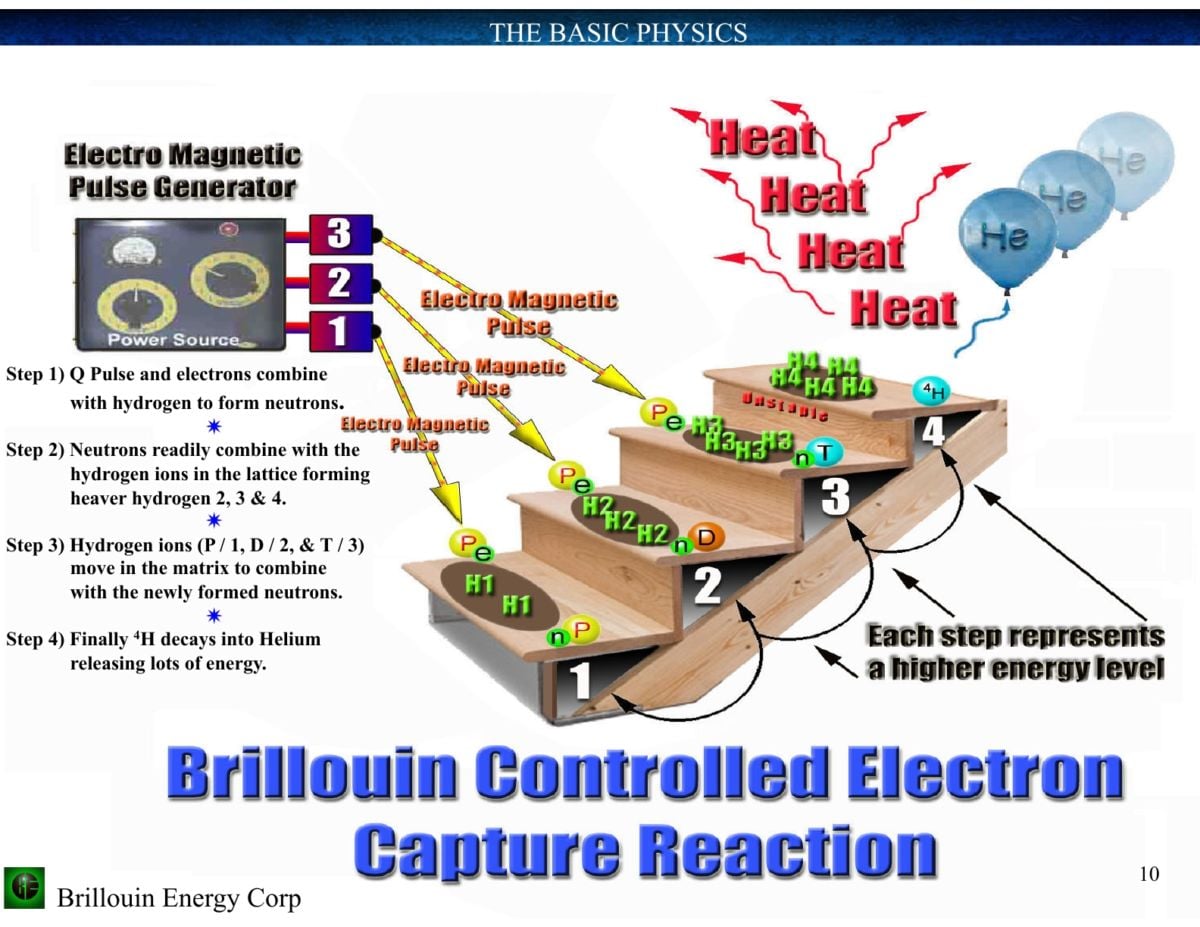
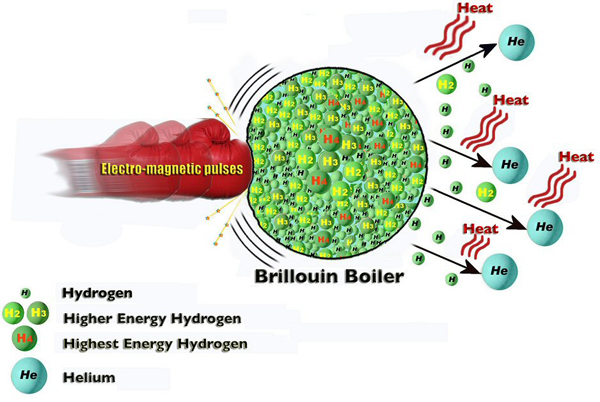
Brillouin Energy’s Q-Pulse™ can stimulate a Controlled Electron Capture Reaction (CECR) to create a safe, controllable, and continuous thermal energy source, leading to the potential unattended operation of low and high temperature boiler system devices capable of producing an inexhaustible supply of safe, reliable clean energy. The CECR reaction consumes hydrogen in a solid nickel reactor core producing a large amount of heat and a negligible amount of harmless helium. The amount of hydrogen used in BEC’s reactor is very small, relative to the final heat output, and for all practical purposes, the supply is inexhaustible. ..
Brillouin Energy’s unique form of LENR, which is its Controlled Electron Capture Reaction (CECR) technology, generates a reaction producing what is sometimes called ‘excess heat’, by using very small amounts of hydrogen, nickel and electricity for inputs. In reality, the heat is not excess, but arises from a LENR.
Brillouin Energy’s CECR process technologies exploit this substantial anomalous generated heat to create a safe, reliable, and continuous thermal energy source, leading to years of potential unattended operation of renewable energy production. There are no (zero) pollutants of any kind, including no (zero) radiation produced in Brillouin Energy’s CECR. ..
LENR/CECR
Brillouin Energy’s unique form of LENR, the Controlled Electron Capture Reaction (CECR), generates excess thermal energy (heat) by using very small amounts of hydrogen, nickel and electricity for inputs.
Hydrogen is loaded, in the form of either a wet electrolyte, or as a gas, into highly engineered metallic cores constructed from nickel inside of a pressure vessel – either a WET™ or HYDROGEN HOT TUBE™ boiler system – and catalyzed with electrical charges from Brillouin Energy’s proprietary Q-Pulse™ electronic pulse generator...
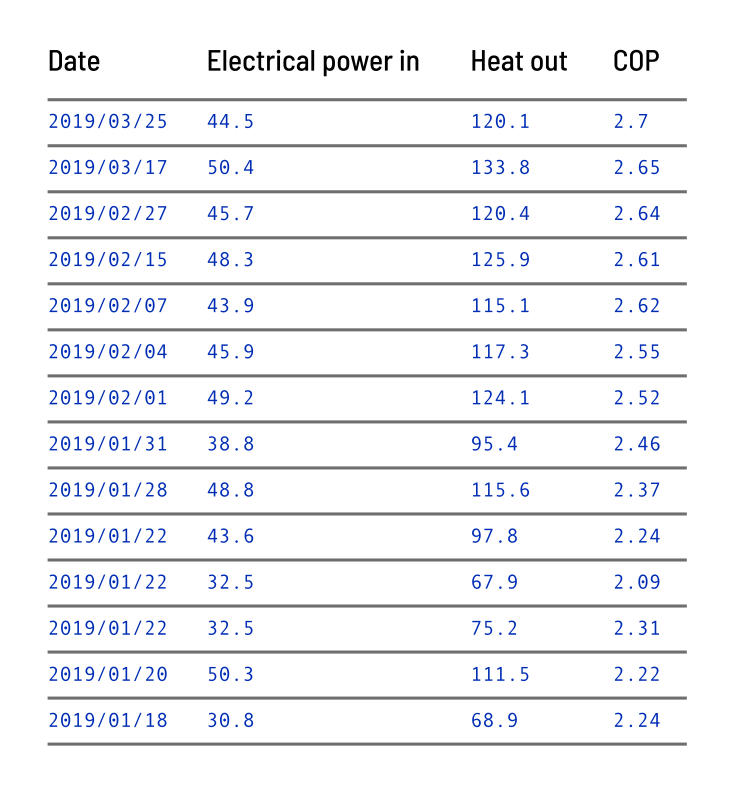
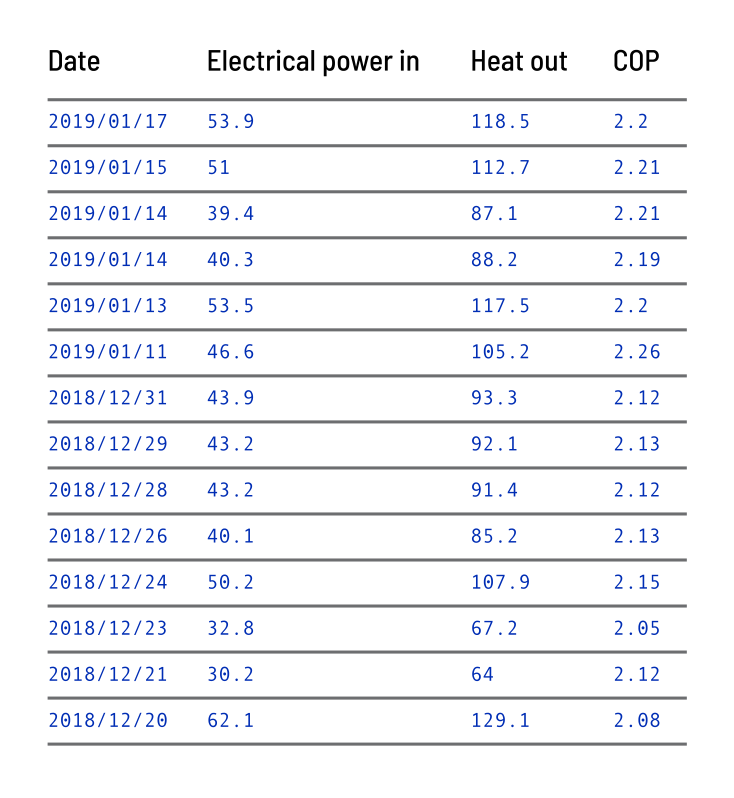
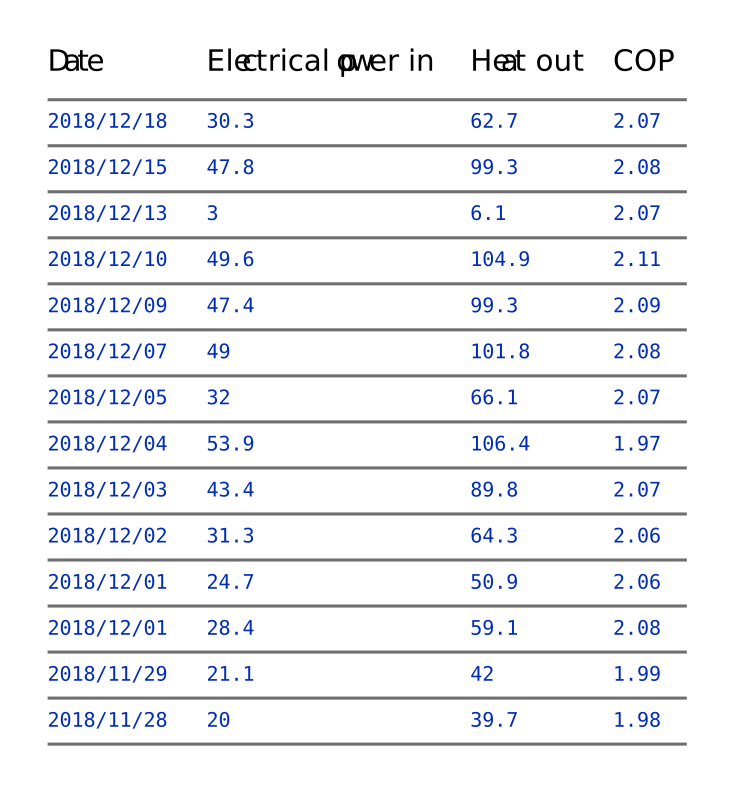
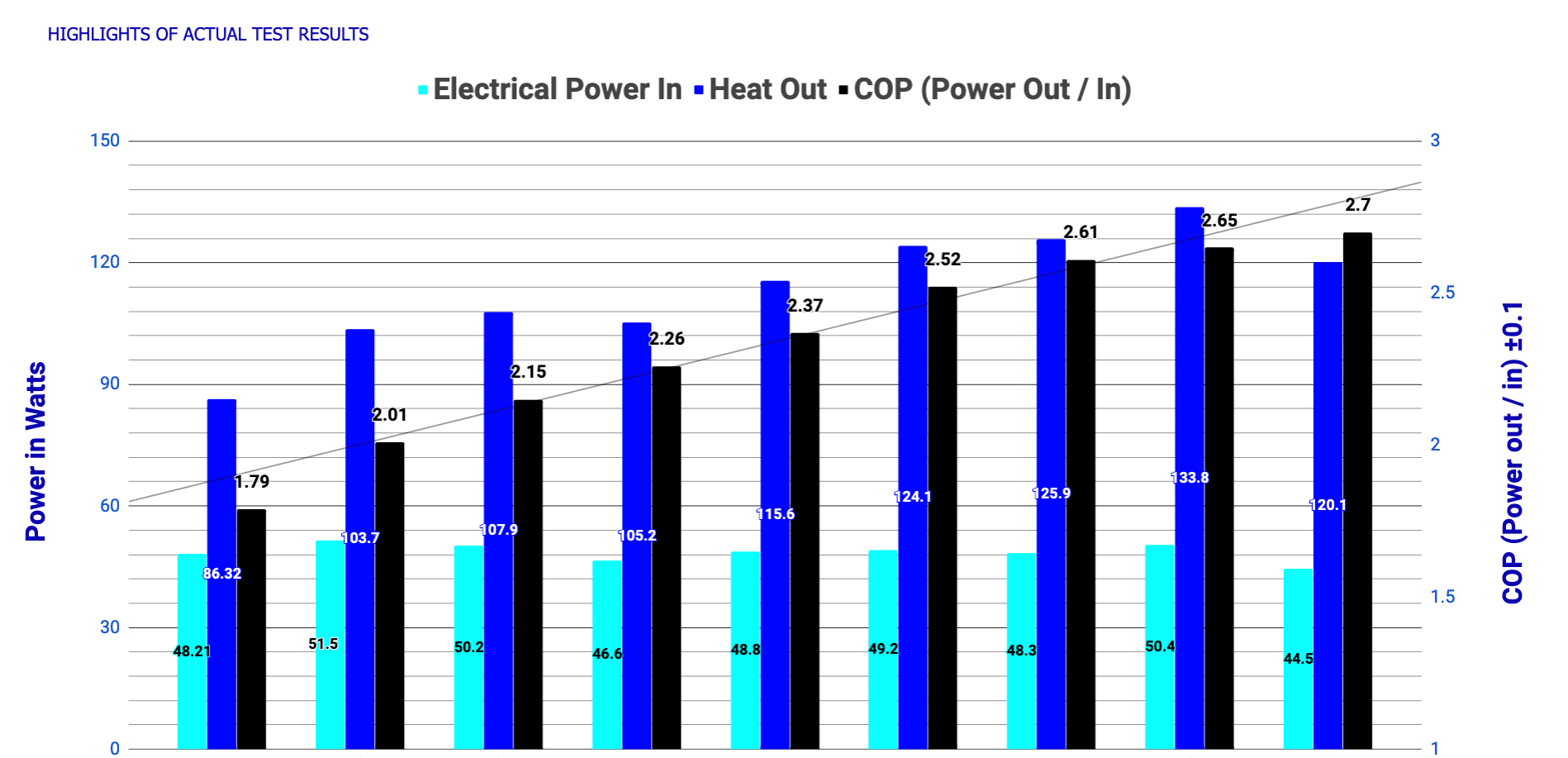
We are continuously running a variety of tests and have an extensive library of accumulated repeatable LENR heat output results that are available to review under NDA. Below is a more comprehensive sampling of some of the more recent peak highlights that we have achieved in our Lab to date.
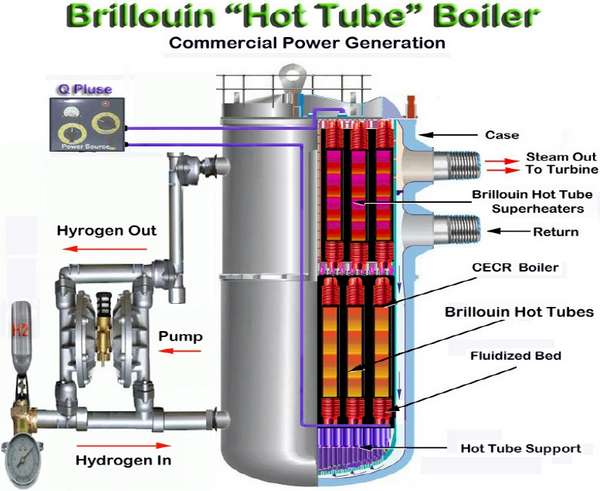
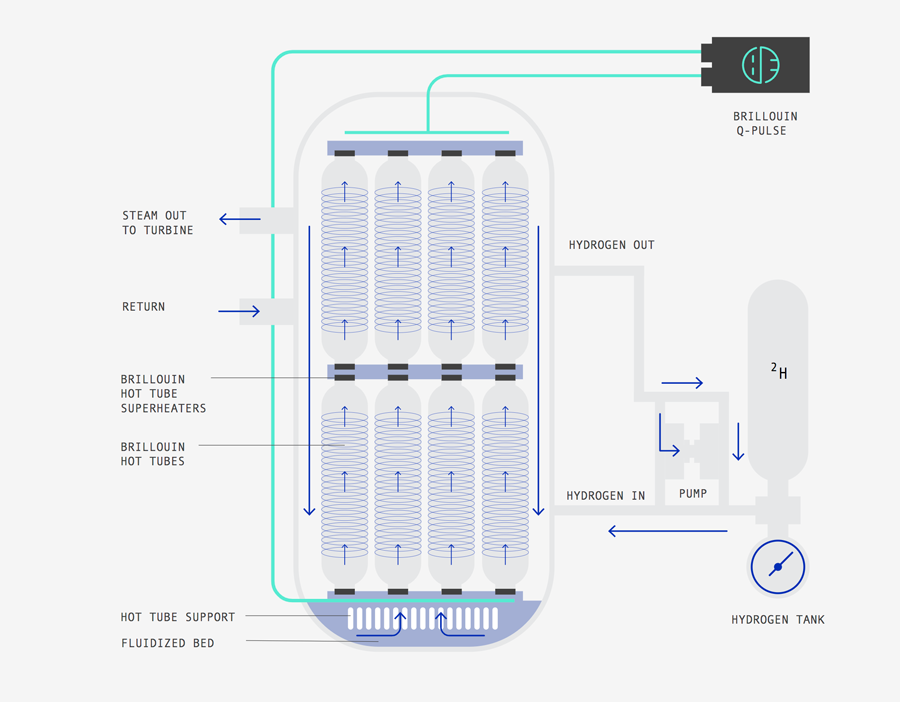
https://www.nextbigfuture.com/2018/03/brillouin-energy-posts-sri-evaluation-which-confirms-net-energy-for-brillouin-but-so-far-a-few-watts.html
Brillouin Energy Posts SRI evaluation which confirms net energy for Brillouin but so far a few watts
In August 2012, SRI International (SRI – https://www.sri.com) was contracted by Brillouin Energy Corp. of Berkeley California (“Brillouin”, “Brillouin Energy” or “the company” – http://brillouinenergy.com) to perform independent studies of Brillouin’s low energy nuclear reaction (LENR) reactors, as well as advise on related Brillouin LENR research. They have operated these reactors to observe, monitor, analyze, advise on, and independently verify Brillouin’s LENR evolving research & development work, test systems, and test results. This Report documents the most recent independent results obtained with Brillouin’s prototype reactors located in SRI’s laboratory, as well as verification and validation of results obtained with Brillouin’s prototype reactors located in Brillouin’s laboratory, over the course of the past year.
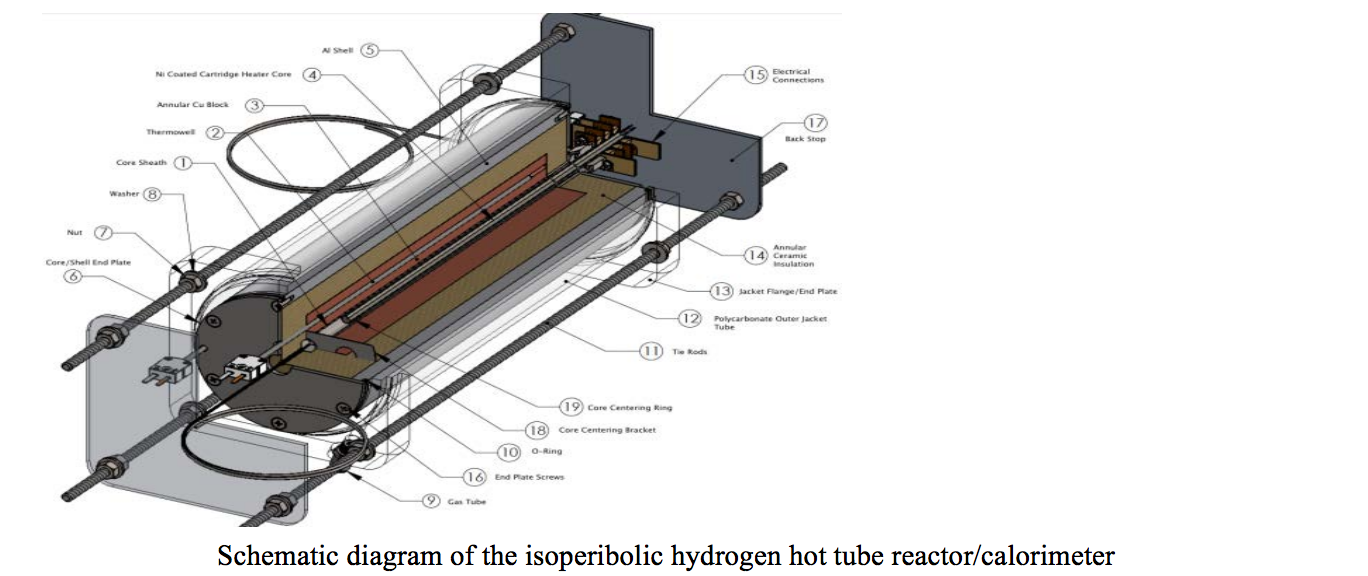
The calorimeter was designed by both SRI and Brillouin personnel to be perfectly matched to the reactor for the accuracy of measurement, whose results are described in this Report. During 2017, the calorimeter design was modified to match the analytical methodology suggested by an independent commercial third-party reviewer, who is also overseeing their suggested stimulation and analyses.
This Technical Progress Report is the second such Report that SRI International has issued to Brillouin Energy Corp., covering technical results achieved in 2017. It compares with the original (first) Progress Report that SRI issued to Brillouin covering results achieved in 2016.
Last year’s Report suggested that Brillouin could produce repeatable, small scale LENR reaction heat on the order of a couple watts of power, on a fully controlled basis, on demand. This year’s Report shows that such output has increased to as much as over five watts of power, on a fully controlled basis, on demand.
In summary, when using cores constructed from similar metal compositions and built to the same
industrial specifications, the Brillouin IPB HHTtm LENR prototype reactors continue to show
results that are potentially:
Controllable on demand
Reproducible
Transportable
Generated from multiple system components, made from relatively identical
compositions, manufactured to the same industrial specifications, producing the same
LENR heat output results
Generating significantly greater, repeatable COP’s and absolute LENR power outputs in
2017 than in 2016.
https://www.youtube.com/watch?v=YYt9NKQuHLI
Brillouin Energy Introductory Video // Outdoor Boiler
https://www.youtube.com/watch?v=v9Uoxtd9504 ICCF-18 : Robert Godes, Brillouin Energy
ColdFusionNow
Patents & Applications
Heating system and methods -- US12590732
A heating system and related methods are described. The heating system employs one or more catalytic tubes, each having a reactive transmission line. Each catalytic tube is supported in a corresponding containment tube of a heater to produce heat. Heat can be generated by applying electrical pulses to the transmission lines which are exposed to a reactant flowing in the containment tube containing the catalytic tube. The generated heat can be extracted from the heater with a heat-transfer liquid or gas for various practical applications including, but not limited to, industrial, commercial, and residential heating applications.
HEATING SYSTEMS AND METHODS AND ELECTRICAL CONNECTORS FOR SAME --
WO2025250631
A heating system, related methods, and electrical connectors for same are described. The heating system employs one or more catalytic tubes, each having a reactive transmission line. Each catalytic tube is supported in a corresponding containment tube of a heater to produce heat. Heat can be generated by applying electrical pulses to the transmission lines which are exposed to a reactant flowing in the containment tube containing the catalytic tube. The generated heat can be extracted from the heater with a heat-transfer liquid or gas for various practical applications including, but not limited to, industrial, commercial, and residential heating applications.
METHODS AND APPARATUS FOR CONTROLLING HYDROGENATION REACTIONS VIA CHARGED PARTICLE STIMULATION OF A HYDROGENATION CATALYST -- US20260078514
Hydrogenation reactions are catalyzed by driving charged particles (e.g., an electric current or particle beam) into and/or through a catalytic material so as to deliver energy for hydrogenation of one or more compounds chemisorbed by the catalytic material. The energy provided by the charged particles may be adjusted (e.g., based on a measured temperature and/or pressure associated with the reaction) to maintain a desired reaction temperature and/or prevent overheating of the reaction. In one example, hydrogen loading of the catalytic material (e.g., via electrolysis) enhances reaction rates. A wide variety of organic and inorganic reactants are contemplated for applications in food, energy production and storage (e.g., fossil-fuels, bio-fuels, petrochemicals, fuel cells), pharmaceuticals and other chemicals, as well as environmental applications (e.g., wastewater treatment, emissions reduction, carbon capture and sequestration).
HEAT GENERATION APPARATUS HAVING A HEATER CORE WITH A TUBULAR CONFIGURATION AND A LAYERED STRUCTURE FORMING A TRANSMISSION LINE -- US20260081042
A heater core has a tubular configuration and a layered structure forming a transmission line. An innermost metal layer is disposed on an outer surface of a tube and along a length of the tube. A middle dielectric layer is disposed on the innermost metal layer such that respective end portions of the innermost metal layer are exposed. An outermost reactive lattice material layer is disposed on the middle dielectric layer such that at least some of the middle dielectric layer and the respective end portions of the innermost metal layer are exposed. The metal layer and the reactive lattice material layer constitute respective conductors of the transmission line. In one example, an electrical pulse signal is propagated along the transmission line to facilitate interactions between a reactant gas and the reactive lattice material to generate heat.
Control of Low Energy Nuclear Reaction Hydrides, and Autonomously Controlled Heat -- US2014332087
A treatment of a possibly powdered, sintered, or deposited lattice (e.g., nickel) for heat generating applications and a way to control low energy nuclear reactions (“LENR”) hosted in the lattice by controlling hydride formation. The method of control and treatment involves the use of the reaction lattice, enclosed by an inert cover gas such as argon that carries hydrogen as the reactive gas in a non-flammable mixture. Hydrogen ions in the lattice are transmuted to neutrons as discussed in U.S. Patent Application Publication No. 2007/0206715 (Godes_2007)). Hydrogen moving through the lattice interacts with the newly formed neutrons generating an exothermic reaction.
ENERGY GENERATION APPARATUS AND METHOD -- US2023072686
A practical technique for inducing and controlling the fusion of nuclei within a solid lattice. A reactor includes a loading source to provide the light nuclei which are to be fused, a lattice which can absorb the light nuclei, a source of phonon energy, and a control mechanism to start and stop stimulation of phonon energy and/or the loading of reactants. The lattice transmits phonon energy sufficient to affect electron-nucleus collapse. By controlling the stimulation of phonon energy and controlling the loading of light nuclei into the lattice, energy released by the fusion reactions is allowed to dissipate before it builds to the point that it causes destruction of the reaction lattice.