Mushrooms vs Cancer
https://pmc.ncbi.nlm.nih.gov/articles/PMC3339609/
Recent developments in mushrooms as anti-cancer therapeutics: a review
Seema Patel, Arun Goyal
[ PDF ]
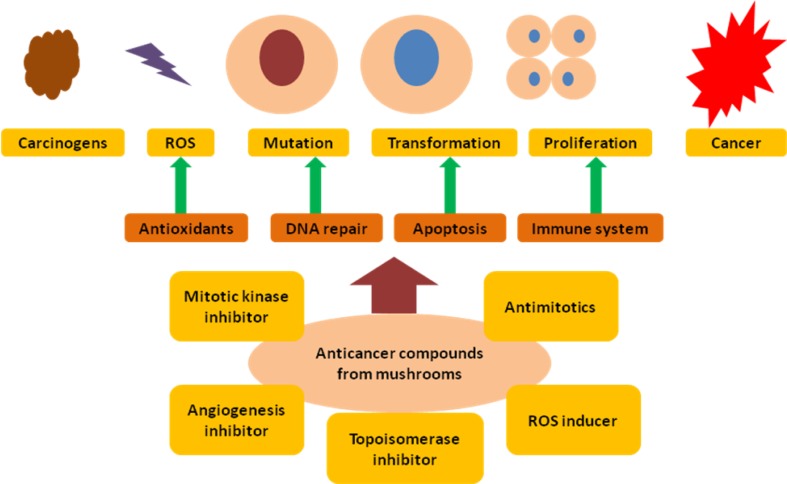
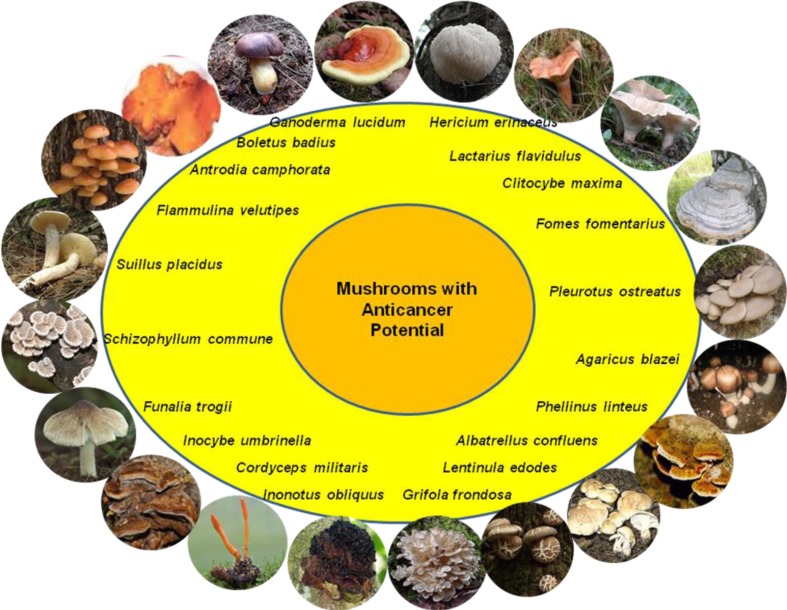
Abstract -- From time immemorial, mushrooms have been valued by humankind as a culinary wonder and folk medicine in Oriental practice. The last decade has witnessed the overwhelming interest of western research fraternity in pharmaceutical potential of mushrooms. The chief medicinal uses of mushrooms discovered so far are as anti-oxidant, anti-diabetic, hypocholesterolemic, anti-tumor, anti-cancer, immunomodulatory, anti-allergic, nephroprotective, and anti-microbial agents. The mushrooms credited with success against cancer belong to the genus Phellinus, Pleurotus, Agaricus, Ganoderma, Clitocybe, Antrodia, Trametes, Cordyceps, Xerocomus, Calvatia, Schizophyllum, Flammulina, Suillus, Inonotus, Inocybe, Funlia, Lactarius, Albatrellus, Russula, and Fomes. The anti-cancer compounds play crucial role as reactive oxygen species inducer, mitotic kinase inhibitor, anti-mitotic, angiogenesis inhibitor, topoisomerase inhibitor, leading to apoptosis, and eventually checking cancer proliferation. The present review updates the recent findings on the pharmacologically active compounds, their anti-tumor potential, and underlying mechanism of biological action in order to raise awareness for further investigations to develop cancer therapeutics from mushrooms. The mounting evidences from various research groups across the globe, regarding anti-tumor application of mushroom extracts unarguably make it a fast-track research area worth mass attention.
https://www.thefocalpoints.com/p/new-study-enoki-mushroom-extract
https://dedicatedissues.com/new-study-enoki-mushroom-shuts-down-cancer-growth-by-99-8-in-animal-models-just-10-days-of-oral-treatment-virtually-halted-tumor-growth/#google_vignette
NEW STUDY: Enoki Mushroom Extract Suppressed Tumor Growth by 99.8% in Mice
Tumors completely regressed in 67% of mice following just 10 days of oral treatment, alongside a 166% increase in immune-system macrophages.
Nicolas Hulscher
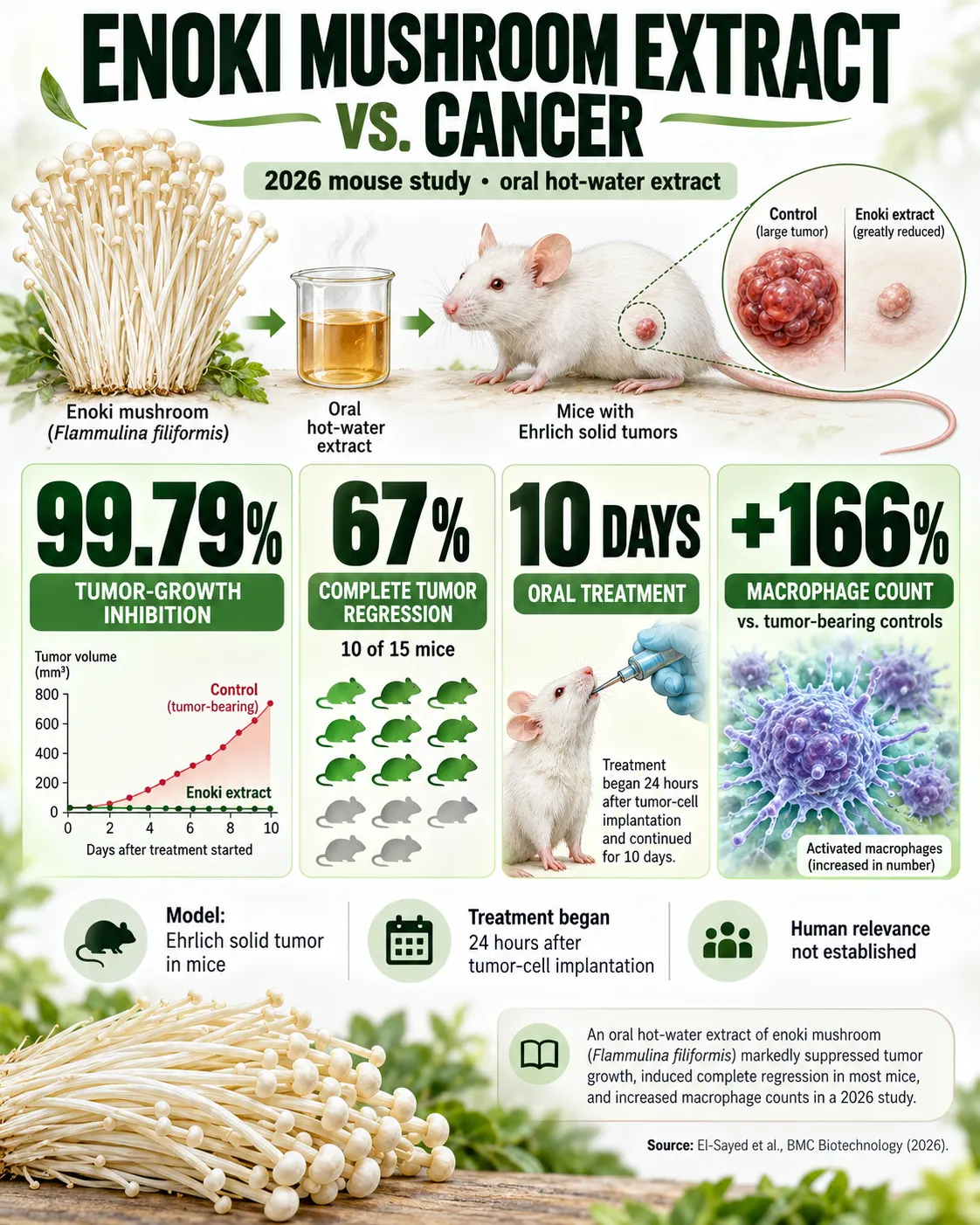
A 2026 peer-reviewed study published in BMC Biotechnology reported striking anticancer effects from Flammulina filiformis, commonly known as the enoki mushroom. They investigated a hot-water extract of enoki mycelium against Ehrlich solid carcinoma. The results revealed 99.79% tumor-growth inhibition, with complete tumor regression reported in 66.7% (10 of 15) of treated mice.
Remarkably, the extract was administered orally at 200 mg/kg/day for just 10 consecutive days, rather than through injections. Treatment began 24 hours after cancer-cell implantation, and tumor growth was monitored for six weeks.
A separate preventive experiment, in which mice received the extract before tumor implantation, demonstrated 99.34% tumor-growth inhibition, with 60% (9 of 15) of animals showing no detectable tumors. These findings suggest substantial activity against early tumor establishment, although the experiments did not demonstrate eradication of large, established cancers.
Beyond tumor suppression, researchers documented pronounced changes in immune function. Macrophage counts increased by 166% relative to tumor-bearing controls. Macrophages are immune cells capable of engulfing cancer cells, releasing inflammatory mediators, and coordinating broader antitumor responses.
Additional experiments revealed increases in tumor necrosis factor-alpha (TNF-α) production of up to 284%, nitric oxide production of 71%, and hydrogen peroxide production of 55% in specific assay comparisons. These findings suggest potential immune-modulating properties, although macrophage-mediated tumor destruction was not directly established.
Preliminary safety observations were also encouraging. Microscopic examination revealed no apparent pathological abnormalities in the spleen or lymph-node tissues of extract-treated mice, whereas untreated tumor-bearing animals exhibited focal splenic necrosis.
These findings are not surprising given that the remarkable anti-cancer potential of mushrooms has previously been elucidated across large numbers of studies:
https://link.springer.com/article/10.1186/s12896-026-01152-y
Metabolic profiling and systems biology analysis of Flammulina filiformis Fv19 extract: an integrated computational and experimental approach for dual anti-cancer and immunomodulatory therapy
Heba El-Sayed, Mohamed E. Osman, Eslam T. Mohamed, Soad Nady & Rehab M. Abd El-Hameed
[ PDF ]
Abstract
Background
The increasing demand for multi-target cancer therapies has prompted investigation into the anticancer and immunomodulatory potential of the hot water extract of Flammulina filiformis Fv19, utilizing in vitro cytotoxicity assays, in vivo murine models, and molecular docking analyses...
Results
The hot water extraction of mushroom mycelia yielded 11.4 ± 1.2% (w/w). Gas chromatography-mass spectrometry (GC-MS) profiling identified six major metabolites, with the most abundant being cholestan3ol, 2methylene (3α, 5α) (37.47%); spirost8en11one, 3hydroxy (23.24%); and 1Hcycloprop[e]azulen7ol, decahydro1,1,7trimethyl4methylene (12.58%). The extract demonstrated potent inhibition of MCF-7 (IC₅₀ = 5 µg/ml) and Hep-G2 (IC₅₀ = 4 µg/ml) cancer cell lines. In vivo evaluation involved male albino mice receiving oral administration of the extract at a dosage of 200 mg/kg/day for 10 days, employed in both preventive and treatment protocols against the Ehrlich solid tumor model. In vivo oral administration significantly suppressed Ehrlich carcinoma tumor growth with a 99.79% inhibition ratio, achieving complete tumor regression in 66.7% of mice. Additionally, the extract enhanced immune responses by increasing macrophage count by 166%, TNF-α production by 284%, NO release by 71%, and H₂O₂ levels by 55% compared to the tumor-bearing group, while reducing IL-17 production by splenocytes by 27%, indicating immunomodulatory effects. Molecular docking revealed strong interactions with oncogenic and immune-regulatory proteins, including Bcl-2 (−5.015 kcal/mol), EGFR (−4.567 kcal/mol), COX-2 (−4.581 kcal/mol), and iNOS (−5.855 kcal/mol).
https://www.thefocalpoints.com/p/the-remarkable-anti-cancer-potential?utm_source=publication-search
The Remarkable Anti-Cancer Potential of Mushrooms
Biological mechanisms, epidemiological evidence, and clinical data support the use of mushrooms in cancer prevention and treatment.
Recently, the entire MAHA movement was rightfully up-in-arms when Oracle's Executive Chairman and Chief Technology Officer, Larry Ellison, pushed AI-generated cancer mRNA injections developed in 48 hours. The health freedom movement has grown tired of experimental gene therapies and seek safer, more natural approaches to cancer prevention and treatment. Dr. John Catanzaro, founder of Neo7Bioscience, has demonstrated the potential of precision-engineered peptides and small molecules for personalized cancer care. Dr. William Makis and many others advocate for the use of Ivermectin and Fenbendazole in cancer treatment, which has shown extreme promise. Another promising but often overlooked approach in Western Medicine is the use of mushrooms for cancer. In this article, I will summarize the biological mechanisms, epidemiological evidence, and clinical data supporting the use of mushrooms in cancer prevention and treatment.
Biological Mechanisms
Pathak et al reviewed the immunomodulatory effect of mushrooms and their bioactive compounds in cancer:
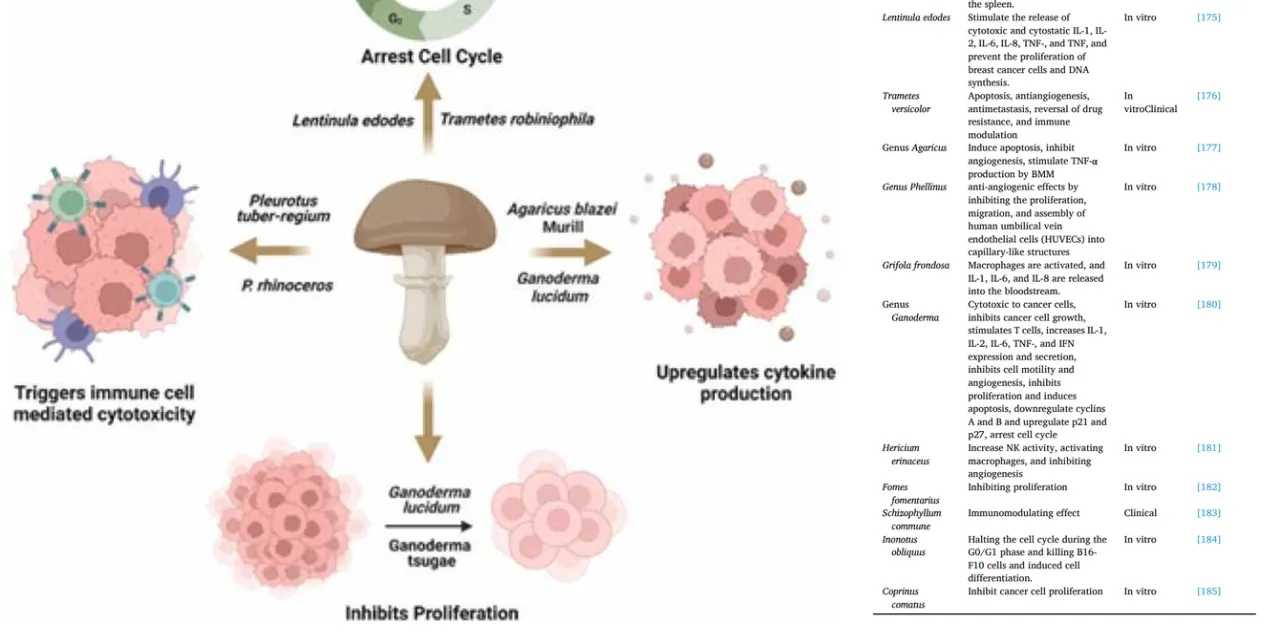
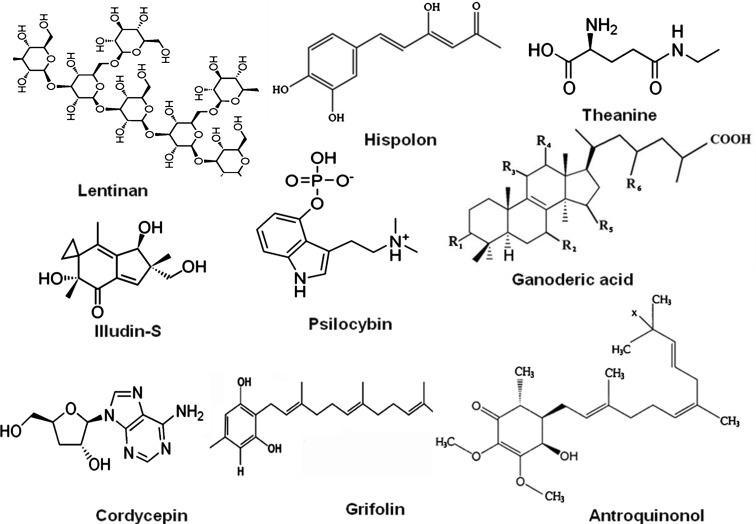
Immunomodulation: Mushroom bioactive compounds, such as lentinan, schizophyllan, and maitake-D fraction, stimulate the immune system by activating macrophages, dendritic cells, and natural killer (NK) cells, enhancing cytokine production (e.g., IL-2, IL-6, TNF-α) and increasing anti-tumor immune responses.
Cell Cycle Arrest: Polysaccharides and other phytochemicals in mushrooms can halt cancer cell division at key regulatory checkpoints, particularly the G0/G1 and G2/M phases, thereby preventing tumor proliferation.
Apoptosis Induction: Mushrooms trigger programmed cell death (apoptosis) in cancer cells via both the intrinsic (mitochondrial) and extrinsic (death receptor) pathways, leading to DNA fragmentation and caspase activation, effectively eliminating malignant cells.
Angiogenesis Inhibition: Certain mushrooms, such as Ganoderma lucidum and Phellinus linteus, block the formation of new blood vessels (angiogenesis) that tumors need for growth by downregulating VEGF (vascular endothelial growth factor) and inhibiting endothelial cell proliferation.
Oxidative Stress Regulation: Mushroom compounds like ergothioneine, glutathione, and polyphenols neutralize reactive oxygen species (ROS), reducing oxidative DNA damage that contributes to carcinogenesis.
Epidemiological Evidence
Ba et al conducted a systematic review and meta-analysis of observational studies examining the association between mushroom consumption and cancer risk, finding a significant inverse relationship:
Overall Cancer Risk Reduction: Higher mushroom consumption was associated with a 34% lower risk of total cancer (Pooled RR: 0.66; 95% CI: 0.55–0.78; n = 17 studies).
Breast Cancer Risk Reduction: The strongest association was found for breast cancer, with a 35% lower risk in the highest mushroom consumption group (Pooled RR: 0.65; 95% CI: 0.52–0.81; n = 10 studies).
Non-Breast Cancer Risk Reduction: A more modest reduction in other types of cancer was observed (Pooled RR: 0.80; 95% CI: 0.66–0.97; n = 13 studies).
Dose-Response Relationship: A nonlinear dose-response was detected (P = 0.001), showing a 45% lower risk at 18g/day mushroom intake compared to 0g/day.
Clinical Data
Narayanan et al conducted a systematic review of clinical studies examining the use of medicinal mushrooms in cancer treatment, finding evidence of potential benefits in survival, immune response, and quality of life:
Study Scope:
Reviewed 39 clinical studies conducted between 2010 and 2020.
Examined 12 different medicinal mushroom preparations across various cancer types.
Most frequently studied mushrooms: PSK (Polysaccharide-K) from Turkey Tail (Trametes versicolor) (10 studies), Shiitake mycelia extract (Lentinula edodes) (8 studies), Huaier granules (Trametes robiniophila Murr.) (5 studies), and AHCC (active hexose correlated compound, a proprietary Shiitake extract) (5 studies).
Other mushrooms examined: Reishi (Ganoderma lucidum), Maitake (Grifola frondosa), Phellinus linteus, Agaricus blazei, and Chaga (Inonotus obliquus).
Most studied cancer types: gastric cancer (11 studies), breast cancer (8 studies), and prostate cancer (5 studies), with additional studies on colorectal, pancreatic, and esophageal cancers.
Survival Benefits:
Huaier granules improved overall survival (OS) and disease-free survival (DFS) in 2 studies on hepatocellular carcinoma (HCC) and 1 study on breast cancer.
PSK, a beta-glucan from Turkey Tail, improved survival outcomes in 4 gastric cancer studies when used as an adjuvant therapy.
Immune System Modulation:
11 studies reported positive immune responses, including increased natural killer (NK) cell activity, T cell function, and cytokine regulation.
These effects were particularly noted with PSK, Huaier granules, and Shiitake mycelia extract.
Quality of Life (QoL) Improvements:
14 studies found that mushroom supplementation led to reduced symptom burden, improved energy levels, and better overall well-being.
Benefits were particularly seen in patients undergoing chemotherapy.
Adverse Effects:
Some studies reported mild side effects (Grade 2 or lower), including nausea, vomiting, diarrhea, and muscle pain.
Study Limitations:
Many studies had small sample sizes and lacked randomized controlled trial (RCT) designs.
Only 1 study was conducted in the U.S., while most were in Japan (20 studies), China (9 studies), Taiwan (2 studies), Brazil (2 studies), South Korea (2 studies), and 1 each in Norway, Iraq, and Thailand.
More large-scale, high-quality clinical trials are needed to confirm efficacy and safety for routine use in cancer treatment.
Mechanistically, epidemiologically, and clinically, mushrooms show immense potential in both the prevention and treatment of cancer. Large-scale, high-quality clinical trials should be initiated to further assess the efficacy of mushrooms for cancer treatment. In the meantime, incorporating more mushrooms into your diet is a well-supported and proactive step that may help reduce cancer risk.
https://www.linkedin.com/pulse/enoki-mushroom-flammulina-filiformis-cancer-research-data-pawlik-8itof
Enoki Mushroom (Flammulina filiformis) in Cancer Research: Preclinical Mechanisms, Epidemiological Data, and Clinical Research Needs
Lucas Pawlik, Mycoverse Foundation, Vaduz
Abstract -- The enoki mushroom is one of the most widely cultivated edible mushrooms in the world. The enoki grown industrially in East Asia was separated in 2018 from the European F. velutipes as a species of its own, Flammulina filiformis. Much of the pharmacological literature still lists it under the older name. Preclinical studies show that its polysaccharides (FVP) induce apoptosis in lung adenocarcinoma cells via the mitochondrial pathway and in liver carcinoma cells via endoplasmic reticulum stress. Oral antitumor activity of the protein FVE through innate and adaptive immunity has been demonstrated in a hepatoma model; FIP-fve inhibits proliferation via p53 and protects intestine, bone marrow, and bone against docetaxel-induced damage; a sterol fraction shows antiproliferative effects. A hot-water extract from the mycelium of F. filiformis strain Fv19, published in 2026, almost completely inhibited tumor growth in the Ehrlich solid tumor model in mice. Epidemiological data from Nagano Prefecture show cancer mortality roughly 39% lower among enoki farmers; in a case-control study from the same prefecture, the odds ratio for gastric cancer fell to 0.66 with enoki consumption more than three times a week, compared with 0.95 for shiitake. A combined extract of enoki and buna-shimeji (EEM) improved clinical response, performance status, and quality of life in patients with advanced cancer in clinical observations. Randomized clinical trials on antitumor efficacy published in full are lacking. This review classifies the findings by level of evidence, clarifies the significance of the species distinction for interpretation, and gives guidance on safe preparation. From a research ethics perspective, it argues that an inexpensive, non-patentable food with this body of data requires publicly funded clinical testing, and it proposes study designs for adjuvant use and prevention.
https://pmc.ncbi.nlm.nih.gov/articles/PMC5141589/
Golden Needle Mushroom: A Culinary Medicine with Evidenced-Based Biological Activities and Health Promoting Properties
Calyn Tang
Flammulina velutipes (enoki, velvet shank, golden needle mushroom or winter mushroom), one of the main edible mushrooms on the market, has long been recognized for its nutritional value and delicious taste. In recent decades, research has expanded beyond detailing its nutritional composition and delved into the biological activities and potential health benefits of its constituents. Many bioactive constituents from a range of families have been isolated from different parts of the mushroom, including carbohydrates, protein, lipids, glycoproteins, phenols, and sesquiterpenes.
These compounds have been demonstrated to exhibit various biological activities, such as antitumour and anticancer activities, anti-atherosclerotic and thrombosis inhibition activity, antihypertensive and cholesterol lowering effects, anti-aging and antioxidant properties, ability to aid with restoring memory and overcoming learning deficits, anti-inflammatory, immunomodulatory, anti-bacterial, ribosome inactivation and melanosis inhibition. This review aims to consolidate the information concerning the phytochemistry and biological activities of various compounds isolated from F. velutipes to demonstrate that this mushroom is not only a great source of nutrients but also possesses tremendous potential in pharmaceutical drug development.
https://www.mdpi.com/2076-3417/13/14/8183
Appl. Sci. 2023, 13, 8183. https://doi.org/10.3390/app13148183
Influence of Addition of Dried Maitake and Enoki Mushrooms on Antioxidant, Potentially Anti-Inflammatory, and Anti-Cancer Properties of Enriched Pasta
[ PDF ]
The influence of the addition of 2.5, 5, 7.5, and 10.0% of dried Enoki and Maitake mushrooms on the content of bioactive compounds and some nutraceutical properties of pasta was determined in the study. The LC-MS/MS analysis of phenolic compounds revealed the highest amount of phenolic compounds in the Maitake-supplemented pasta. However, all the samples of the Enoki-enriched pasta exhibited a statistically significantly higher content of α-glucans than the control. Samples subjected to gastrointestinal digestion had significantly higher antioxidant and potential anti-inflammatory activities than ethanolic and buffer extracts (PBS). The ethanolic extracts from the Enoki- and Maitake-supplemented pasta had higher antioxidant activity (in some antiradical and reducing power assays) and higher lipoxygenase (E2.5 and E5 samples) inhibitory potential compared to the control sample. Additionally, some in vitro digested samples of pasta enriched with dried Enoki and Maitake mushrooms showed higher chelating power (E10, M7.5, and M10), reducing power (E5, E7.5, and M10), and lipoxygenase inhibition ability (E7.5, E10, and M10) than the control. In conclusion, the fortification of pasta with 7.5% and 10% of Enoki mushrooms and with 10% of Maitake mushrooms can be recommended.
Medicinal Mushrooms: Their Therapeutic Properties and Current Medical Usage With Special Emphasis on Cancer Treatments
John Smith, Neil Rowan, Richard Sullivan
Medicinal Mushrooms - Cancer treatments
Rokuya Imazeki, Yoshio Otani, Tsuguo Hongo
Christopher Hobbs's Medicinal Mushrooms: The Essential Guide
Christopher Hobbs, L. ac. Ahg