Soil
Lithification
Related: Bionic Soil Solutions ... Patents for Lithification
http://www.kob.com/article/stories/S3614560.shtml#.VHa29nvJXQL
11/09/2014
NM
man's 'bionic soil' turns dirt to stone, revolutionizes
road repair worldwide
by Ryan Luby,
KOB Eyewitness News 4

by Ryan Luby,
KOB Eyewitness News 4
They're often rutted and dangerous, but a Santa Fe business owner has a new technology that could forever change how road crews repair and maintain dirt roads.
Indeed, there's a certain beauty found in taking a road less traveled in New Mexico, but there's also a certain headache -- a teeth-ratting reminder why most dirt roads should be avoided.
On the back roads of the Navajo Nation, that's almost always true.
"There are a lot of struggles," Benjamin Bennett, the deputy director of the Navajo Nation Division of Transportation said in an interview with 4 Investigates.
The Navajo Nation is almost entirely rural and sparsely populated. Because of that, there are hundreds of miles of dirt roads. Crews try to maintain them, but it's often difficult.
After the snow melts every winter, it's especially tough.
"[We] try to make sure that we can keep everybody out of the mud," Bennett said.
He said some of the roads develop ruts that are up to one foot deep. He said some people never leave their homes for fear of becoming stranded.
They're often too far out of reach of emergency responders as well, he said.
However, Bennett hopes those are problems of the past. The Navajo Nation recently bought into a new technology called bionic soil, which puts Mother Nature's biological clock into overdrive.
"The product technology is called lithification, and lithification is the definition of transforming soil into rock," Bob Sherwin, founder of Bionic Soil Solutions said.
He had the help of an inventor in Brisbane, Australia in developing a "secret sauce" -- a non-toxic, proprietary liquid that exponentially accelerates the breakdown of oxygen, silicon, and aluminum found naturally in soil to turn it into stone.
"It's what Mother Nature does over hundreds of thousands of years," Sherwin said.
In order for the product to work properly, he said crews first till a dirt road with a machine called a reclaimer. Then, they spray the fluffed dirt with water to make it pack well. After that, they apply the "sauce," smooth the dirt with road rollers, then wait for it to harden overnight.
The next morning, 4 Investigates found it to be as hard as concrete and as smooth as a freshly-paved interstate.
Sherwin said the bionic soil is scientifically proven to be harder than concrete, water repellent, and nearly indestructible.
He demonstrated how the bionic soil remains intact, like a rock, when submerged in water. He said he's had some samples soaking for months which haven't changed a bit.
The Navajo Nation is confident the product is environmentally friendly to their sacred land. Bennett said the Navajo DOT has more stringent environmental standards than the rest of the country.
He also believes the bionic soil is a permanent solution along a particularly problematic, six-mile stretch of road through a mountain pass.
"This [project] was on the books since 1998," Bennett said.
He said the $1.3 million project is costing them the same, or less, than what they would have spent on a traditional road made of gravel and sand.
Sherwin said traditional gravel and sand roads last about three or four years, whereas the bionic soil could last for 20 or 30 years.
"Its going to open a lot of doors," Bennett said. "It's going to sell itself. And I think that if we can do that across the Navajo Nation, we could put a lot of people out of the mud."
Bionic Soil Solutions has completed roughly a dozen other projects elsewhere across New Mexico, including a road near Edgewood and on pads that surround pump jacks in the oil fields.
Further, the company expects to apply the product to the construction of homes. Ultimately, it plans to donate the product to the making of dirt bricks in underdeveloped countries.
Sherwin, along with more than a dozen investors scattered across the western U.S., recently secured licensing rights for their product nationwide. They have plans to expand worldwide.
1.
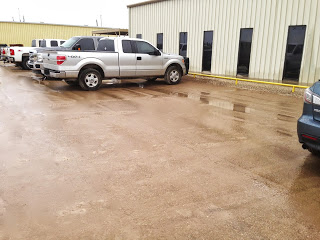 2.
2. 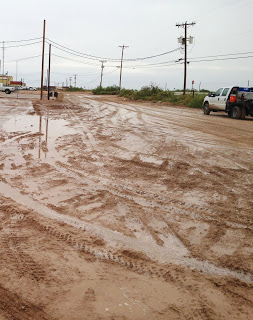 3.
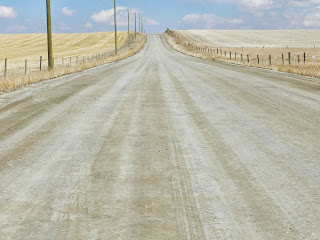
3. 
2. 3. 1. Bionic Soil treated parking lot
2. Untreated adjoining lot
3. Calgary Road, 13 years after treatment
http://bionicsoilsolutions.com
Bionic Soil Solutions
218 Camino La Tierra, Santa Fe, NM 87507
Phone:(505) 982-7444

Bob Sherwin
Bionic Soil Solutions International (BSSI) is the manufacturer and Exclusive Worldwide Distributor of a revolutionary soil technology called “Lithification.” (The process in which soil is transformed into rock). This paradigm shifting technology can be used in the construction and maintenance of dirt roads and subgrade, earth blocks and earth liners.
Testimonials
Ben Bennett Deputy Director, Navajo DOT
“Its going to open a lot of doors and I believe it is selling itself. From what I’ve seen after all of the rains, I would give it a 10. I would tell others that this is a very promising product and it’s worth looking into as we plan to use it more ourselves. This is the first time we’ve had a product like this and we are very impressed with it.”
http://bionicsoilsolutions.com/2014/11/businessman-seeking-green-roadbuilding-solution-sees-success-on-navajo-project/
The New Mexican ( November 11, 2014 )
Businessman
seeking green roadbuilding solution sees success on Navajo
project
by
Anne Constable
by
Anne Constable
Bob Sherwin Former real estate agent Bob Sherwin has been working for years on a long-lasting, eco-friendly solution to the problems of maintaining hundreds of miles of rutted dirt roads in rural New Mexico and elsewhere. He thought he had the answer several years ago with a product called RoadPacker, which he used to treat Spur Ranch Road in a private subdivision off U.S. 285 south of Eldorado.
Today the road is “1,000 percent” better, but it isn’t water resistant, and there have been some problems after heavy rains. The product, which has a high acid content, had worked well in China, Australia, Mexico and Canada. But it turned out that it didn’t work as well in the Southwest, where the pH content of soils is much higher, he said. He went back to the inventor, Alan Sonnenburg of Brisbane, Australia, who, it turned out, was developing a new formula designed to work in all soil conditions. And now Sherwin thinks he’s really found the solution to the problem. The new product turns dirt to stone overnight through a process called lithification in nature, he said.
Sherwin pointed out that a French materials scientists — Joseph Davidovits— believes this type of technology, not cut stone, was used to build the Great Pyramid of Giza in Egypt. Sherwin’s company, Bionic Soil Solutions LLC, has recently completed work on 11 miles of rural roads on the Navajo Nation, where the ruts after a snowmelt are as deep as 18 inches in places. “So far we are very pleased,” said Benjamin Bennett, deputy director of the Navajo Nation Division of Transportation. Soils, Sherwin said, have three common elements: oxygen, silicon and aluminum. They combine to form aluminosilicate. Bionic Soil turns the aluminosilicates into a gel that hardens and becomes impermeable to water. Sonnenburg added accelerators to make this process happen in 24 hours rather than over many thousands of years, the time it would take to occur naturally.
Bionic Soil Solutions partners with Univar USA, an international company that blends the product and sends it to the job site in tankers. The application process involves scarifying or tilling the soil with a grader or, for bigger projects, a reclaimer. The formula is mixed with water and the top 6 inches of soil. Then the surface is shaped and rolled. “You can drive on it immediately,” Sherwin said. The process is cheaper than laying down base course, the sand and gravel mixture used on many county roads. Sherwin said a mile of base course 6 inches deep and 24 feet wide takes 95 to 99 truckloads of gravel. Bionic Soil applications require 1 1/2 tankers of solution (at 3,500 gallons per tanker).
The overall cost depends on how far the materials have to be hauled. Because the Navajo Nation roads were so remote, the job is costing the tribe about $230,000 per mile, Bennett said. Paving the road could cost up to $2 million a mile, he added. Sherwin estimates the cost could be as low as $75,000 a mile for less remote stretches of road. In the case of Bionic Soil, the treated road will last longer and with a lot less maintenance, Sherwin said. If the product catches on, it could reduce the amount of gravel mining here and elsewhere. According to Sherwin, 300 million tons of virgin aggregate are mined annually in the U.S., taking down hills and leaving behind big, empty pits.
Sherwin is Bionic Soil’s founder and managing partner and owns 50 percent of the company. The other half is owned by about 35 investors, some of whom invested in RoadPacker, an entity that has been dissolved. Bionic Soil Solutions bought licensing and distribution rights for the U.S. and its protectorates and pays inventor Sonneburg money for every gallon sold. The company is currently looking for potential customers in the private sector — gas, oil, wind and solar energy firms, ranchers, farmers and Native communities — who can act more quickly than the public sector, although Sherwin said he met with the New Mexico Department of Transportation last week.
The new road technology has other applications as well. The company built a parking lot and 11 battery pads for an oil company in Carlsbad to reduce the chance of chemical spills reaching groundwater. “We’re hoping to spread the word to other oil companies,” Sherwin said. The product also can be adapted for making adobe earth blocks for homebuilding. Bennett said he thinks Bionic Soil speaks for itself. White Clay Road and Blue Canyon Road near Sawmill, Ariz., on the Navajo Reservation were virtually impassable, especially after hard rains and snow. They are also school bus routes, and the buses that are able to get through “tend to have high maintenance costs,” he said. Because of the conditions of the roads, Bionic Soil Solutions had to strip the roads down to the bottom of the ruts, at least a foot, and then build them back up. After the product was applied and the road was shaped and smoothed, the crew did a test drive. Sherwin said they were able to reach a speed of 87 mph on roads where the previous limit was about 5 mph.
To avoid compromising the surface, however, crews removing snow and debris will use a rubber-edged blade positioned a half-inch above the surface. But Bennett said “there’s no maintenance required,” and from the cost savings, “we could move on and do other roads.” What we’re shooting for,” Sherwin said, “is a green road technology that reduces the carbon footprint. One and one-half truckloads [of product] versus 98 [trucks of gravel].Businessman seeking green roadbuilding solution sees success on Navajo project
http://spurranchroad.blogspot.com/2013/07/bionic-solutions-photos-spur-ranch-road.html
http://www.mecfieldservices.com/products-services-6/soil-stabilization/
Soil Stabilization Applications
Bionic Road Solution (BRS): Binds the native soil, base course, gravel and even caliche tightly together to form a water resistant, long lasting road or subgrade. This application reduces dust by 80-90% (Decreased liability associated with heavy dust in the oilfield or any high traffic caliche road). Environmentally friendly!
Bionic Pond Liners (BEL): Transforms native soil into an impermeable soil layer. Excellent for Frac Pond applications due to the reduction in materials needed to construct the pond, as well as reducing the amount of leaks due to animals or heavy equipment piercing the pond liner. Environmentally friendly!
Why Bionic Soil?
Road Maintenance is EXPENSIVE!
Deferred Maintenance – drives up long term costs, shortens rehabilitation cycle, increases costs by as much as 400%!
Deferred Rehabilitation – compounds the problem at hand, leads to road failure, reconstruction of road bed results in 1000% increase in cost!
Environmentally Friendly
The United States currently mines 300,000,000 tons of aggregate each year to create base course for construction of roads
Building one mile of two lane road creates 7,000 tons of carbon dioxide emissions!!
Concrete, asphalt, and base course are among the TOP contributors to green house gas emissions today!
The current road building methods are not sustainable for the end users or for our planet.
Lithification
Patents
US4413931Method for treating subterranean formations
Subterranean geological formations such as those surrounding oil well bore holes, are treated by placing in or adjacent the formation a particulate material coated with a two-step, curable, novolac-type phenolic resin. The resin is thereafter cured in situ to bond the particulate matter together.
KR101276095
INORGANIC COMPOSITE FOR SOIL PAVEMENT, CONSTRUCTION METHOD OF SOIL PAVEMENT USING THE COMPOSITE
PURPOSE: An inorganic composite in a non-cement system for soil pavement is provided to maintain an intrinsic property of soil pavement, to have excellent compression strength, and to prevent the elution of heavy metals by using a lasting type alkali activator which has granulated blast furnace slag powder and natural acid clay. CONSTITUTION: An inorganic composite in a non-cement system for soil pavement comprises 100.0 of granulated blast furnace slag and 5-20 parts by weight of a lasting type alkali activator. The lasting alkali activator comprises 1,000 parts by weight of natural acid clay, 50 parts by weight of natural anhydrous gypsum, 5-20 parts by weight of slaked lime, 5-10 parts by weight of sodium hydroxide, 5-10 parts by weight of potassium silicate and 0.5-2.5 parts by weight of calcium stearate. A production method of the lasting alkali activator includes the following steps; the first pulverized product is produced by grinding a mixture of the natural acid clay and the anhydrous gypsum with the weight ratio of 100:50 into a size of 7,000-8,000 cm^2/g; the second pulverized product is produced by grinding the sodium hydroxide, the potassium silicate, the slaked lime and calcium stearate into 3,000-4,000cm^2/g; and the first pulverized product and the second pulverized product is mixed for 10-20 minutes. [Reference numerals] (AA) Generation of a first pulverized product(mixing and pulverizing natural acid clay/natural anhydrous gypsum); (BB) Generation of a second pulverized product(mixing and pulverizing sodium hydroxide/potassium silicate/slaked lime/calcium stearate); (CC) Mixture of the first pulverized product/the second pulverized product; (DD) Production of a continuous alkali magnetic material; (EE) Mixing of the continuous alkali magnetic material/granulated blast furnace slag powder; (FF)
GROUTING COMPOSITION FOR SEMI-RIGID ASPHALT CONCRETE USING GEOPOLYMER
KR20130023928
PURPOSE: A semi-rigid asphalt concrete grout material using a geopolymer is provided to increase the hardening speed, the compression intensity, the durability, the abrasion resistance, the water resistance, the chemical resistance and the slip resistance of semi-rigid asphalt concrete by mixing an acrylic resin in the geopolymer. CONSTITUTION: A semi-rigid asphalt concrete grout material using a geopolymer comprises 30-98 wt% of geopolymer, 1-30 wt% of acrylic resin, and 1-50 wt% of water. The geopolymer includes at least one material selected from fine slag powder, fly ash, paper mill sludge ash, slica fume, kaolin based minerals, calcium silicate based minerals, calcium aluminate based minerals, plasticized and pulverized clay, and oil shale ash. The geopolymer additionally includes at least one compound selected from sodium hydroxide, sodium aluminate, sodium sulfate hydrate, thenardite, potassium hydroxide, calcium hydroxide, a sodium silicate solution, and a potassium silicate solution.
Lithification reinforcing structure and lithification reinforcing method thereof
CN101892853
The invention relates to a lithification reinforcing structure and a lithification reinforcing method thereof. The lithification reinforcing structure is a support structure formed in stages in accordance with different underground spaces, and is formed by combining lithifed soil and grouted bars by hole drilling and grouting and integrally molding with concrete reinforcements. The lithification reinforcing method comprises the following steps: 1. drilling holes, 2. grouting, 3. reinforcing, and 4. carrying out space support construction. By pressing mud and seeping mud to carry out lithification processing on a loose stratum, the invention lithifies the muddy soil stratum which is not applicable to undermining originally and facilitates the undermining, thereby reducing dismantlement of surface buildings; by the support of the concrete reinforcements to the inner wall of a tunneling space, the invention enhances the support strength of the foundation work, can be used as a permanent stressing support, an early support before undermining or tunneling construction, a support in front of a tunneling surface, a support after a tunneling surface, a gross section transition support and a temporary support, provides reliable operating space for construction and improves the operating safety. Besides, the invention has the advantages of high strength, low project cost, high construction speed, convenience and feasibility, and solves the construction problems of wide-span ultra shallow-buried underground buildings.
MIXTURE FOR DETOXIFICATION AND LITHIFICATION OF DRILLING SLUDGES AND OIL- POLLUTED GROUNDS
RU2199569
FIELD: environmental protection. SUBSTANCE: invention relates to production of man-made mineral mixtures for detoxification and lithification of sludges, in particular liquid and visco-plastic spent drilling muds, various oil-polluted objects, in particular grounds, etc., and objects containing toxic compounds: heavy metal salts, polycyclic aromatic hydrocarbons, petroleum derivatives, synthetic surfactants, radionuclides, etc. Mixture contains, wt.%: aluminosilicate rock, 55-80; lime, 5-10; Portland cement, 5-20; and mineral complexing additive (bi- or trivalent metal chloride, sulfate, or carbonate, or mixtures for each anion, or phosphogypsum), 5-30. EFFECT: accelerated lithification of harmful mass and thereby decreased migration of pollutants into environments.
BLEND FOR DETOXIFICATION AND LITHIFICATION OF DOMESTIC AND INDUSTRIAL WASTES, BOTTOM SEDIMENTS, SLUDGES, AND OIL-POLLUTED GROUNDS
RU2184095
SUBSTANCE: invention, in particular, relates to production of artificial mineral blends for detoxification and lithification of viscous-plastic and solid wastes, in particular exhausted drilling fluids, oil-polluted grounds, and the like, containing toxic substances (heavy metal salts, polycyclic aromatic hydrocarbons, petroleum products, synthetic surfactants, radionuclides, etc.). Blend includes, %: aluminosilicate, 55-80; mineral, 5-10; lime, 10-30. Portland cement additionally contains 5-30% of dispersed organic sorbent, specifically peat, wood flour, crushed agricultural waste (for example chaff), and also sapropel. EFFECT: increased reliability of sorption of light hydrocarbons and negatively charged heavy metal complexes, cyanides, etc.
MIX FOR DICONTAMINATION AND LITHIFICATION OF HOUSEHOLD GARBAGE AND INDUSTRIAL WASTE, AND BOTTOM SEDIMENTS
RU2162068
Decontamination and lithification of liquid viscous plastic and solid household and industrial waste and bottom sediments containing toxic compounds. SUBSTANCE: mix comprises wt %: alumosilicate rock, 60-80; portland cement, 10-20; complex aniline compounds of copper and/or iron, 1-3; and polypropylene fiber, 2-3. EFFECT: higher mechanical properties of the resulting material.
MANUFACTURING METHOD OF ACIDIC GROUP POWDER LITHIFICATION CHEMICAL AND LITHIFICATION TREATMENT METHOD FOR SEWAGE SLUDGE USING THE SAME
KR100788441
A method for manufacturing an acid-based powder type solidifying agent and a method for solidifying sludge using the solidifying agent are provided to prevent secondary environmental pollution due to discharge and landfill, by reusing waste plaster as the acid-based powder type solidifying agent. A first mixing step is performed by mixing ferrous sulfate-7-hydrate into 96% of sulfuric acid(S1). A second mixing step is performed by mixing waste plaster powder, which is dried to have a water-content of below 5%, into the mixture processed by the first mixing step(S2). A first curing step is performed by cooling and pulverizing the mixture processed by the second mixing step(S3). A third mixing step is performed by mixing calcined lime as alkaline powder and sewage sludge containing much moisture into acidic powder prepared by the first curing step(S4).; A moisture of the mixture processed by the third mixing step is stabilized(S5).
Method for the lithification of weak building foundations
PL381168
A manufacturing method of mineral fiber paper
TWI351459