Steve
MARKS
Toroidal Power Unit
Toroidal Power Unit
https://www.youtube.com/watch?v=cRJHtl6LyP4
Interview with Jack Durban ( Marks' associate ) ( Part 1 )
Jack Durban / Steven Marks interview TPU ( Part 2 )
Interview with Steven Marks
Wesley Translate's Akula video #13: Akula's TPU part 2

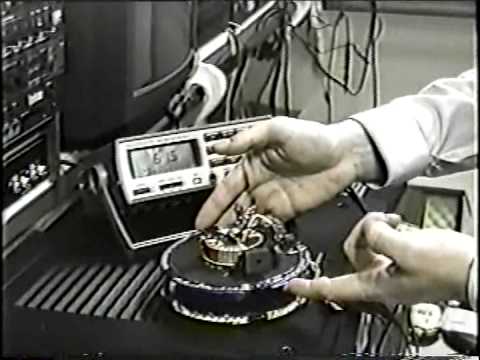
Collected Notes -- Steven Marks re : TPU ( Toroidal
Power Unit )
"In one of the RCA engineering manuals I read that it has been measured in a wire that there exists a slight increase in current when first electrons are caused to flow in it.
"This was explained because the earth’s magnetic field exerted some influence on the wire and the electron flow inside it. Or rather the electrons on the surface of the wire.
"The inrush of current through the filament interacts with the earth’s magnetic field to produce a small kick. (Morgan Jones book, valve amplifiers. 3 rd edition, page 262)
"It PROVES that there is an interaction between the magnetic field of the earth and simple electrons running through wires
"They say that you cannot get more out of something then you put into it. Then I think about that wire with the small kick when first turned on… There in lies the secret my friend..."
[ NOTE ; Hans Coler and Schumann ( of Schumann Resonance fame ) observed this phenomenon in the 1940s. ]
STEVEN MARK : Summary of Important Points:
1. Compass will spin up when turned on.
2. Never tune too closely to the exact frequencies
3. Make a Kill Switch with Over Voltage & Heat Sensors.
4. The control units are so very important to control the frequencies.
5. The frequencies are directly related to the circumference of the collector coil.
6. First frequency, then second harmonic component into the second, then the third.
7. You could describe the useable current output of my coil as DC but with some hash in it.
8. There are 3 Control Coils (all the way around) each of the 3 Collector Units. Start them 1 at a time.
9. The “TPU” units apparently heat up to a potentially dangerous level after a considerable period of time
10. The Collector is three separate coils of multi strand copper wire laid one on top of the other. Other control wires are wound around all of the horizontal collector coils together.
It took several years of experimentation to discover what frequencies and most importantly how to make small integrated circuits work to perform the control functions necessary to make the demonstrations you see on the video tapes available today.
So in many ways we have early RCA color TV engineers to thank for my discovery of the power generator. I am sure they are all dead now but they did contribute. Perhaps a story which had impact on me at that time was told to me by my boss way back in 1970 I believe it was.
He told me that around 1965 or 66 there was an explosion in an apartment in Chicago. The authorities had concluded that for some unknown reason, a General Electric color television receiver had been the source of an explosion that killed a young black child in the apartment. My boss went on to relate that he was involved in the investigation because he was in Chicago at the time and he was invaluably experienced with television circuits and etc. He told us that what they found was, the TV had exploded with some quick fury. The explosion did in fact kill the poor child who was sitting directly in front but spared his mother who was some distance away in the kitchen. The explosion was strange because of the absence of expected chemicals necessary to create the explosion. It appeared that the TV was the exact center of the explosion, however no one could find a reason for the explosion occurring.
Also consider that there is not really much inside a TV to explode with enough force to kill people and destroy the living room a large apartment. Yes a CRT can explode and kill someone, however this was not the kind of explosion we are talking about. The most interesting part of the story is that according to our boss, metallic objects especially those containing large amounts of iron were dramatically displaced. He mentioned that some nails were actually removed from the walls and pulled toward the TV set. When they found them they were bent and shaped like cork screws! Everything in the room appeared to have moved or was moving toward the TV as it exploded, or imploded as the case may be.
The child was apparently killed by way of these metallic objects traveling through his body on their way toward the center of the TV set. As far as my boss knew, there was never a good explanation for the occurrence. We found out that this was not the only unexplained explosion of TV sets worldwide.
However, the fact that all the sets exploded while in operation may bear some light. Also most of the TV sets were made by the GE company or were TV sets made using GE circuits and of similar design. However, this man who had been my mentor for so many years had his own theory which he never told anyone as far as i know, except me. His theory was that the TV while in operation, somehow managed to become a receiver of more then just television waves and so for a millisecond in time became a receiver and discharged of a huge amount of electrical and magnetic energy.
This discharge of magnetic energy is vary similar to the discharge of magnetic energy during an atomic explosion. . . Now that is something I have thought about a great deal. My employer's words had great impact on me. Not that they meant anything really, but I kept thinking about the possibility of many frequencies combining at one moment in time to produce an entirely different effect then intended by the designers.
Listen to what I say here...... I am going to state just characteristics. I don't want people to get over excited and start arguing again too much. My units behave exactly like common radios in one way. With a radio you have many different stations broadcasting at different frequencies. Yes I know about the difference between Frequency Modulation and Amplitude Modulation, etc. That is not relevant for our conversation here.
You tune your radio to the station you desire and the closer you tune to the ideal frequency the stronger the amplification of the signal will be and the better the radio will collect and amplify the signals for their entertainment value. If the radio signal is too strong the radio receiver might be overloaded and distortion or other bad effects will take place. By tuning slightly off frequency we can weaken the signal the radio is receiving and amplify and produce the sound for entertainment purposes.
However, the music will not be of high quality. The music will be lacking in response and timbre, etc. OK let us compare this story of the common radio. Think of the power unit as a device similar to a radio receiver. No I do not want to hear feed back informing me that I am trying to convince the world my unit works on radio waves!!!.
But it behaves very much like a simple radio receiver except for the fact that radio waves need to be amplified before they can be of any use to us. My units behave as though they are variable tuning devices, and we are tuning them to a frequency just like a radio. The closer you get to the center frequency the more power you permit the collector to dissipate into a load. The important difference here is that in the case of the radio, you tune into the frequency and amplify it for use.
1. In the case of my power unit, you create several frequencies within a space of the collector coil's circumference.
2. The frequencies are directly related to the circumference of the collector coil.
3. You can begin to collect the current and dissipate it with no need for amplification because the signal source also becomes the feed for the power source and has the natural tendency to run with gain.
4. It is important that you note that you can never tune too closely to the exact frequencies of power conversion because the power received by the collector will instantly destroy it.
5. We instead must deliberately tune off the frequencies of conversion in order to make the thing properly work. Remember that it is like a furnace which feeds itself. The hotter it gets the more fuel it gives itself to burn.
6. That is why the control units are so very important. Without the control unit constantly monitoring the frequencies of operation and making the necessary changes to keep the whole thing off exact conversion frequency, then the unit would very quickly destroy it's self.
7. By the way, have you seen the video of the compass turning violently in the center of the unit while in operation? Notice that when I first turn the unit on that the compass starts to spin very slowly. It speeds up faster and faster until it just stops. When it stops the unit is always operating at about it's design maximum.
We never found out why any of this occurred. It tended to reinforce what I observed as the turbine effect.
8. When the unit is shut off the compass starts to revolve again and slowly comes to a rest. By the way, the fire discharge everyone sees in the video is after the output of the device is switched through a large high value resister!
9. I hope that will wake up a few of you to the danger potentials.
10. Stefan is quite correct about the amount of power necessary to pull the nails out of the walls during the GE color television explosion in Chicago. Actually Dr. Schinzinger told me that it would have required much more power then that. We theorized that the TV set must have become for a split second, a power unit very similar in operation to one of my own making. Except for the fact that it wouldn't have been designed to collect and convert the available power in a useful way. Instead, the TV just stumbled for one millisecond on the correct combination of frequencies necessary to cause the phenomenon of magnetic collection. But unfortunately the TV set had no way to control the function and began to absorb and discharge both the electric and magnetic factors caused by the influence of the strong field.
11. It was during this discussion with Dr. Schinzinger that he pointed out that during an atomic explosion aside from the gigantic blast wave and heat produced there is also an extremely large magnetic force which is so strong that it travels way out into space during the explosion. The magnetic wave is so strong that it will completely destroy any unprotected electronic circuits of solid state design. That is why solid state radios will be useless after an nuclear attack on your country.
12. Let us ponder where the huge magnetic field comes from when you explode an atomic bomb. It is just created? Is it converted? Is it part of the earth somehow? Is it just a by product of the fabric of time and space being ripped into pieces in a fragment of a second? I am curious as to where this unbelievably huge magnetic force comes from during an atomic explosion... It is something else to think about. Perhaps in connection with my power technology. Dr. Schinzinger said that it is explained as being the result of the splitting of the atom. However, that is a very short explanation and not really a satisfactory explanation of what generates the force. He agreed with me and said it would also mean that in reality we know very little about magnetic fields and magnetic property.
13. The multiple frequencies traveling around the coils are of too high a frequency to provide for any motive effort. They are only a means to achieve an end. The multiple frequencies begin to feed themselves and the multiple kicks become a combined big kick. I call it resonating. That is why if you notice in the video tapes that it takes just a few seconds for the coil to begin to function at maximum effort.
14. When I began to study the effects of multiple frequencies combined together I found out that when you deliberately strive to create the worst case scenario of frequencies you start to get some very measurable kicks. In themselves they are not much. But if you make enough of them fast sendoff, you get a collectible power spike that is more then the power available to begin with. The destructive heating caused by the eddy currents become the problem we face when we make a really large powerful coil. Now you understand more about the heating problem and why using a fan does not work.
15. You could describe the useable current output of my coil as DC but with some hash in it. It really doesn't have any convertible AC component which could provide a mechanical motive force as you suggested. "In one of the RCA engineering manuals I read that it has been measured in a wire that there exists a slight increase in current when first electrons are caused to flow in it. This was explained because the earth's magnetic field exerted some influence on the wire and the electron flow inside it. Or rather the electrons on the surface of the wire. Even today you can find examples of discussion of this fact even in non scientific journals. If you look in Morgan Jones book, Valve Amplifiers, 3rd edition, on page 262 he says, The inrush of current through the filament interacts with the earth's magnetic field to produce a small kick. SMALL KICK. Those words mean a great deal. It PROVES that there is an interaction between the magnetic field of the earth and simple electrons running through wires. It may be a small influence but it is actual OVER UNITY. I have spent several years of my life thinking about that."
16. They didn't know that according to science only one playing of the shellac disk would destroy it. They didn't know so they just kept on making and selling diamond needles for not only shellac disks but the new soft vinyl ones as well. Trial and error is the best way to make new discoveries. If we rely completely on what we are told by scientists and engineers we will never make any relevant discoveries because we are told not to try, that they are impossible. On to another point. Please keep in mind that these things are dangerous. Very dangerous. We are talking about several hundred volts at a potential of an amp or more. The average experimenter can not deal with anything like that.
17. I do not want the average person actually coming across one of the correct frequency components and using both hands to measure the field frequency not realizing there is five hundred volts and zap, their heart is stopped. I tell you this from my experience. Personal experience involving others.
If something as elementary as an ETR circuit is not understood by the experimenter and if the experimenter has never had any experience with high voltages, especially voltages that can easily kill you, then he should get out and not attempt to recreate anything like my technology. During my experiments and even during my demonstrations, several people were badly hurt.
Perhaps you read the report by a gentleman who was told NOT to touch the two leads coming out of the small coil because the same voltage was there as would be at the 120 volt mains wall socket. At some point he decided the only way for him to know for sure that my demonstration was real was to touch the two leads leading directly out of the small coil. He was badly burned and needed medical attention. However he became an instant believer.
18. The very FIRST example I gave you was that; It is common scientific knowledge that if you have a piece of wire and first run electricity through it you will have a small kick when first energized. The kick is universally attributed to the earth's magnetic field. OK the point is; YOU CAN GET SOME ENERGY OUT OF THE EARTH! Next point; YOU CAN DO SOMETHING VERY SIMPLE WITH A WIRE TO SHOW THIS.
Next point; YOU CAN SEE THAT YOU CAN GET MORE OUT OF A PIECE OF WIRE THEN YOU PUT IN TO IT.
19. We are not talking about a coil or a transformer or anything developing a primary to secondary flux. We are just talking about a straight piece of wire, some electrons and a method of measuring what comes out of it. Some people just sit back and say, well that isn't very much power, we want to make much more. In order to run you must walk first. I told you that the simplest form of over unity is a piece of wire and a voltage source.
Anyone can actually connect it and measure. See for yourself the kick. NO coil no xmrs, just a kick.
That should tell you learned gentleman that there exists a form of energy convertible and useable which is directly related to a simple piece of wire and instantaneous electron flow. You know it is common knowledge in the electron tube world that aside from the fact that a cold filament conducts more electricity then when hot, one of the things that destroys the filament in electron tubes for that matter is this kick when you first turn on the juice. The kick is there whether the filament is hot or cold. The kick helps destroy the filament and cathodes integrity.
So everyone knows about the kick and accepts that it somehow comes from the earth's magnetic field. So do something with this information! Not even Edison explained what this means! In his memoirs he said that it was a fact that we all had to contend with, but that he did not understand why it happened. If you call yourself experimenters then start to experiment. I had only this to go on when I started and little by little I figured out how to make many several thousands of kicks per second. . . AND YOU KNOW WHAT, IT ISN"T DIFICULT AT ALL.
20. Lets talk about the 'kick.' When the old Edison DC generators were turned on, back in the day, they released this 'kick' and killed many workers in the process. A man by the name of Tesla had seen this. He wondered how and why this 'kick' would occur. So he experimented with wire and disruptive discharges from capacitors. It was found by him that this kick could be made so powerful that it could explode wires instantly. This kick came out of the wires perpendicularly. He discharged capacitors into stout wire and through a spark gap.
The key to the kick's strength and appearance was in how fast Tesla discharged the capacitors into the spark gap AND how fast Tesla STOPPED the flow of current AT the spark gap. Tesla used all types of devices to stop this flow of current, magnets, a flame, counter-rotating engines. His goals were to get the time in which the discharge is STOPPED to be much quicker. As Tesla did this he found that the perpendicular radiations, the ones from the wires, caused electrical effects to appear in wires and other copper/metal materials near the STOPPED current/discharge. These electrical effects could be made to create electrons on other wires and copper around his STOPPED current/discharge wire.
21. With the right combination of frequencies, you can actually create a revolving field with inertia! That is what I have referred to as , The inertia effect. There is a genuine gyroscopic effect when the units are on. Everybody has noticed that when held and in operation, the units have a definite vibration and have a gyroscopic effect. They seam to resist being moved through the air. When placed on a smooth surface it is very pronounced. Some of you should think about that.
22. Rotation of field. How many people think about that. If you could have a field that you could think of as a big ball. And you could rotate it in two directions what would the ramifications be? Listen, you need to make three coils or so one on top of the other. But the important thing is to wrap the control coils perpendicularly around the collector coils. There needs to be three of them all the way around. Start them up one at a time each.
23. First frequency, then second harmonic component into the second, then the third. When you eventually strike the cord look out. You will know what has happened at that point. In the mean time you can measure a slight output even if you do not strike the exact cord. Larger collectors have a much greater ability to collect and dissipate more energy then the smaller ones. However, if they turn into a bomb it will not make much difference. There is no such thing as a small lightning strike.
24. Perhaps a smaller one is safer because the only thing that will stop a red collector is the disintegration of the matter acting as a receiver. IE, the wires all burn up. We built many, many units with various combinations of collectors during our experimental days. My colleagues and I have a recollection of about thee hundred being crushed up because they were not the best designs. Most of the more successful units we made had control wiring run or wrapped vertically over the horizontal collector wires. You can see them in the units in some of the videos under black plastic covering. They were run perpendicular to the travel of the collector wires. They were run in multiple segments. Each segment could be fed a different frequency individually and or from a collector section to help perpetuate the oscillation and control.
25. The control frequencies are important in order to make power from the collector. I assumed that anyone working on technology this sophisticated would have a superior knowledge of electronics and an understanding of PURE frequency output being a Necessity to control the reactions going on inside the collector. By starting the oscillation you cause the current to flow in the collector which causes the magnification of the process within the collector which will ultimately produce the greater voltage and power in usable amounts during operation. It is electron flow of a high order creating a large magnetic field. Or vice versa. Electron tube circuits work much more precisely then solid state units. Especially when first experimenting. You will be able to get some excitation with solid state units but we had to design with tubes first and then try to duplicate the functioning system with solid state circuits later. It was difficult. Solid state circuits are very dirty and imprecise.
26. Vacuum tubes have EXTREMELY FAST TRANSIT TIMES. Solid state devices are like molasses! They also use about a million percent of feed-back to get a clean signal output. Vacuum tube devices are fast, accurate and only require a few db of feedback to achieve better result. Lets just look at simple power amplifier as an example: A 100 watt solid state amplifier will consist on average with a compliment of 30 or so transistors, lots of amplifying and control devices all based on high current low voltage. Low voltage means SLOW. Also, all those transistors in the amplifying stages slow down the signal process. Now look at a basic electron tube device. You have one stage of amplification, one stage of signal phase splitting and driving and one stage of power output, all at high voltage low current. This means FAST! It also means that the feedback for frequency output correction is FAST also. Now you see why I have always said that tubes are much better for experimentation. Solid state devices are too slow to find the three major intersecting you know whats...
27. I want you to start and think of the generator principles the exact same way that passing the sound barrier was accomplished. Read how the engineers finally developed the proper wing design to accomplish super sonic speed in aircraft. I hope it will give you a picture of what is going on inside the generator and especially the collector. The people who say that tubes are exactly the same as transistors are very, very naive.
28. And now I will tell you something very important. You remember I mentioned fast electron transit time vs molasses? Let us examine a simple audio amplifier. When you design an amplifier you try to isolate noise, or hash from the mains power supply from getting into the B+ and contaminating the output signal, etc. You can measure all kinds of noise from the mains in your B+ not to mention all the noisy spikes from the solid state rectifiers giving the direct current to the power capacitors. All of this is easily measured, or seen on a scope of most solid state audio amplifiers. NOW design and make a good tube amplifier and you will immediately find a dramatic difference in the B+ supply measurements and what you can see on the scope. No more spikes from the solid state rectifiers, almost no hash from the mains power coming in! REMEMBER, all of that noise and hash in your solid state amplifier is in the output signal ! Now tell me? What do you think is happening inside the extremely sensitive torrid generator when you use solid state devices to attempt to create the required precise control frequencies to make catalyst and produce power???
29. You know transistors just don't do well at those high frequencies. They try hard but they just make all sorts of harmonics all over the place. Dirty things transistors. MOSFETS are better you know if you wanted to make an amplifier that behaved as though it was a tube amp but in a smaller size. Please be very careful with your experiments and WATCH out! The Kill switch....remember the kill switch. I do not want this to scare the crap out of any body and have them telling mamma, blaming satan, god, or any body else.
30. This inventor claims that the output of the unit is high voltage DC with a frequency component of around 5k Hz. First of all, obviously you can have several different output components in the power output signal. You can have DC and AC together without any problem.
There are several parts of the power unit which have patents. Remember that the power unit technology is owned by the UEC corporation and I have to be very careful about not stepping on their toes. I am not afraid of them or anything like that. It is just that they are the legitimate owners of the patents and most of the research ect. I would not like to break my trust with them. However, I can, and will give to all of you as much information as I can. I believe that I will be able to give you enough information to begin research on your own. I just have to pass it in front of my attorney first so I do not get myself into trouble, that's all. 2. I will in time give out a basic Hardware diagram which you may find helpful. 3. No, I will not publish a schematic diagram of the control circuit. It is proprietary information owned and controlled by the UEC Corporation, so I won't go there.
31. About the Flame like Discharge. Yes it does cause RF burns. I was going to tell you about that, but I decided to wait and see how long it would take one of you to realize this on your own. Bravo! YES, toroidal transformers have some very weird factors. Study the strange factors. Your interest in the harmonic resonance is also stepping toward the right direction of things. But then again it depends on your viewpoint about exactly what harmonic resonance is and how it relates to magnetic fields and converting energy as does my power unit. We have done a great deal of experimentation with permanent magnets with some very astounding results. I could stop now and start over again with that subject alone. Has anyone ever read any of the reports about our experiments with what was called, the Magnetic shadow casting material? No it wasn't some kind of paint. But you would be fascinated with the amount of renewable energy you can extract from a permanent magnet! We went through about ten thousand dollars worth of Neodymium and Super Cobalt 404 magnetic material in our experiments. I could write volumes of information about that stuff. Those experiments tie in to our development of the power unit.
32. At the request of Mr. Richard Mincherton I was present on October 28th at a test demonstration of a device that its inventor claims will produce electric power without measurable energy input except as derived from the earth'’ magnetic and gravitational fields. The test was conducted at the inventor's home. I was allowed to bring and use measuring instruments, but because the inventor had to leave after 1 ½ hours, I was not able to conduct independent tests on my own. Based on my observations, I can attest to the fact that the three models of the device displayed and tested on that day did indeed light up one, two and six light bulbs (each rated at 100 watt and 120 volt) respectively. This was less then the figures quoted to me before the test, but still adequate to demonstrate that the devices function in some fashion. The smallest unit produced 140 to 150 volts unloaded and 60 to 90 volts when lighting one 100-watt bulb. The mid-sized unit produced 250 volts unloaded, and was observed producing 142 Volts at .5 Ampere after 30 minutes of lighting two bulbs. The largest unit produced 798 Volts unloaded. With a six-bulb load the voltage dropped to 420 Volts.
After the test the inventor cut the toroidally shaped device into segments (though not the controller box located at the center of the device). These samples consisted of an array of circumferentially arranged coils and wires grouped around a core made of a cork like substance. October 29, 1995 Roland Schinzinger, Dept. of Electrical and Computer Engineering (UCI). Professor Emeritus of Electrical Engineering (UCI) PhD, Univ. California, Berkeley 1966. MS, “ 1954. BS, “ 1953
33. I do suggest that people who are not familiar with rf and the burns that can be had do not mess with this. The coils get hot. This problem has not been resolved. It apparently due to the windings moving. Think of the ouput as dc (pulsed) 5khz with lots of Hash in it. When it is unloaded the voltage climbs substantially and I do not mean a spike. it lasts for several seconds and is a good third higher. Steven calls it the turbine effect.
The large coils have control units (as seen) the small coils have the control unit mounted on the inside edge of the coil and they do have to be inside the coil. Here is something interesting from Steven. It has been a very long road from beginning to end. It took several years of experimentation to discover what frequencies and most importantly how to make small integrated circuits work to perform the control functions necessary to make the demonstrations you see on the video tapes available today.
In one of the videos you demonstrate your device which it is connected to a measuring instrument. When you turn it top down the voltage decrease and you had no explanation for it. Now my question: did you try your device already on the earth south site? YES NORBERT, WE DID TRY THEM SOUTH OF THE EQUATOR, THEY WORK IN REVERSE. CAN SOMEONE TELL ME WHY?
34. YES THERE IS A ROTATING FEILD WHICH CAUSES ELECTRONS TO FLOW IN COPPER WIRE AND BE USED TO PROVIDE USEFULL WORK FORSE. THERE ARE MANY WIRES PERPENDICULAR TO THE MAIN COLLECTOR. THIS IS A NECESSARY PART OF THE DEVICE.
SINCERELY,
SM. March 06, 2006
September 29, 1997
Michael Fennell (Consulting Engineer)
8348 Menkar Road
San Diego, CA. 92126
To whom it may concern:
I have been hired by Mr. Green to evaluate the performance of the Toroidal Power Unit or TPU as has been described to me as a proprietary invention of Steven Mark who was until 1995 President and Chief engineer of Spheric Laboratories, a public corporation. I have been instructed to compare the performance of the TPU with that of any known batteries and other storage systems. As understood the device is universally observed to have the following characteristics:
Outside Diameter: 6"
Inside Diameter: 5"
Height: 1 - 3/4"
Weight: 12 ounces
Output Power: 250 Watts
Output Voltage: 160 Volts
Voltage Frequency: 5000 Hz.
Duration of Performance: 30 Minutes
The “TPU” units apparently heat up to a potentially dangerous level after a considerable period of time, and must be shut off at that point. This makes some people suspicious of a battery that is being depleted and which must be recharged after a few minutes. However, after having cooled down, the inventor has always managed to start the unit up again and light the lamps again for the same amount of time as before, until the unit heats up again, without removing the device from the observers sight to be “recharged”. This can apparently be done any number of times, such as the cumulative “ON” time can be extended to at least 30 or 40 minutes. This is several
times longer then the theoretical limit of any kind of concealed battery pack that I, the battery experts or electrical engineers have yet been able to discover. I have personally seen this demonstration at least fifty times.
In point of fact, there is in existence a video tape showing a “TPU” putting out over 1,000 Volts and lighting ten 100 Watt/ 120 volt light bulbs in series for ten minutes. (I have seen this demonstration in person several times).
35. About the collector: It is three separate coils of multi strand copper wire laid one on top of the other, not interleaved. Three is important. You can do many things with three coils. You can run them in parallel, you can run two in series and one in parallel, or etc. You can run a separate frequency into each coil for better control on large power units if need be. The control wiring is vertically wound in several segments around each of the horizontal collector coils. Other control wires are wound around all of the horizontal collector coils together.
Through the different control wire and coil wire arrangements you can keep complete control of the unit most of the time. However, you must have an emergency KILL switch. A way of cutting off all the control frequencies simultaneity. This kill switch must be, manual and also connected through a heat sensor buried within the collector coil.
It should automatically stop the function of the unit before it self destructs on it's own. This is important for obvious reasons. Also the kill switch should also be connected to cut off whenever it measures over voltage. If that should ever happen, you would never have enough time to hit the kill switch before the inevitable explosion occurred. You know, it is very similar to the idea of a long garden hose. Picture a hose with water in it. If you pick up one end and move along the length of the hose you will move the water constantly along in the direction you are moving. You could also squeeze the hose in the direction to move the water along as well. And you could do both to control the movement of the water more precisely. You can think of the movement of water as the movement of electrons through the collector coils.
36. August 16, 2006 – Mystery Post. Here is what I perceive in his power toroidal device, and I will try to make this concise and sensical:
1. When one builds a bifilar coil, using one winding for power, and one for trigger, and drive this with a transistor, there is a certain point, when you bring a magnet close to one end of the coil, you will get a loud squealing noise from the coil. This feedback is the result of the trigger and power coil constantly switching the power transistor used to drive that coil off and on again. It is also a point where that coil/transistor combination produce a high voltage output which one can gather from the collector of the transistor. If left unchecked, this resonant frequency of on/off switching will burn up the transistor, and thus a resistor must be put into the trigger winding circuit to lessen the voltage produced in the winding. It is one element of what I believe is happening in the Mark device.
2. When one places several coils around a toroid, one can think of switching from one to the next, preferably sequentially, the minimum number of coils being three. In this case one could use the trigger winding from one coil to turn on the power of the second coil, the trigger from the second to the third power, the third trigger to the power winding of the first coil.
3. Flux can switch directions within a ferrous material instantaneously and some say super-luminally. It takes very little switching power to flip flux "bundles" from one direction to another, given that there is a good path for the flux to move through. The toroid is perfect for this. If one were to turn on a magnetic field in one coil, that flux permeates most of the toroid, but more importantly is perceived by the next coil. This in turn triggers that coil to operate, and the first coil field is shut down. In this way, one could use coils to move the flux in PULSES around the toroid. This switching from coil to coil, accomplished with low power, high voltage pulses occurs at a natural frequency of the circuit and that frequency that can be handled by the power transistors.
4. The high voltage, low power is a result of the "kick" whereof Steve Mark speaks. It was most clearly described by Nikola Tesla, when he observed a very high voltage spike at the VERY INSTANT a DC switch was closed. In fact he spoke of people being killed by this spike. Such a spike (though lower in magnitude) happens within a transistor at the very instant its gate is closed to allow power to course through it. I learned of this in vacuum tubes from my dad when he taught me how to build my first Heathkit shortwave radio in 1963. He said: "Whenever possible, leave the radio on - it doesn't consume much power, but the startup surges will quickly burn up your tubes."
5. When a coil is thus activated, initially it creates a very powerful magnetic spike. Imagine that this can even be more amplified if the transistor is turned on only to close the gate of a silicone controlled rectifier, in order to dump a small capacitor very suddenly through the coil.
6. It becomes easy to see that when one talks about the switching ability of transistors, 5kHz is perfectly reasonable, switching from one coil to the next.
7. Next we have the challenge of making the many pulses of magnetic power unidirectional. As we all know current running through a wire creates a circular magnetic field centered about that wire. This also answers the old question you posed on one of your posts as to why a set of jumper cables jumps when shorted across the battery terminal. Well, first, the direction of current is opposite in the two leads, thereby quadrupling the magnetic force in the narrow space between the two wires. This powerful magnetic "linear" flux concentration between the cables then tries to orient itself to the ambient earths magnetic flux lines, and hence, jumps. Note, however, that there is more at play here. The VERY INSTANT you connect the cable to the battery, you also have that very high voltage spike whereof Tesla spoke. This spike has a large Radiant Energy component to the electricity. It contributes a great deal to the powerful magnetic pulse.
8. Back to unidirectional flux in the toroid. In order to create a mainly DC current in windings around part or all of the toroid, we must now ensure the flux moves in ONE direction. Well, the placement of a magnet at right angles to the flow around the toroid would tend to make the flux take a preferential direction. The flux of a controlling coil in a flux-gating device such as some of the Joe Flynn devices is quite weak, but exerts enormous directional control on even very powerful flux. This is the concept exploited in the design of the newest patent of the Magnetic Power Module. (Interestingly, it appears to be a derivation of Steven Mark's efforts....) Thus, instead of using additional small coils to make the toroidal flux take one preferred direction as compared to the other can be acco0mplished by the use of a ferrite magnet, as seen in the videos (I, too have watched them numerous times.)
9. Now to the question of the little pieces of wire and the magnet. I don't remember anyone answering this to your or Mr. Mark's satisfaction. Let me have a go. When you move a magnet across a wire you generate a current in that wire. However, what was not iterated is that the amount of current generated is not only a matter of the strength of the magnet, but rather the SPEED and distance at which that magnet is moved across that wire. Thus when we speak of moving the magnet across a small piece of wire at the speed of a gunshot, you generate a very sudden, high voltage spike in that little piece of wire. Conversely, if you could move that wire crossways through even a weak magnetic field with few flux likes, you could generate a voltage spike. In essence Mark is doing this in his toroid. He states he is running at about 5kHz. For four coils (like the one that is open on the cardboard box in his garage with two lamps), he may be banging two opposed coils simultaneously with spikes, with the magnet forcing one direction, or he is running them sequentially. For the sequential version, that would mean the "magnetic flux North" (for lack of a better way to describe it) passes one spot in the toroid 1250 times per second. The RPM of the flux would therefore be AT LEAST 75,000RPM. Can you imagine the kind of power you might generate from Neo magnets in an armature near windings if you COULD rev that puppy up to 75,000RPM? Only this toroid has no back EMF when a load is put on the wires.
10. Remember I was talking about SPEED of the magnet passing the wires playing a significant role in the voltage produced. If we take the above example of 75,000 RPM, it is easy to calculate for a 14" diameter toroid, that the actual speed of the magnet "flying" past the wires at a very close range would be 3,123.74 statute miles per hour or 4,581.5 ft/second. Compare this to the bullet of a high powered rifle at 2,800 ft/sec. 11. One need only to add all the little pieces of wire, which are now individual loops of wire around the toroid's ring itself to see why the toroid generates such enormous voltages and currents. Needless to say, toroidal coils, like any coil have a preferred resonant frequency. If the toroidal coil is tuned to the "kick" frequency or pulsed frequency, one can see that this thing would put out scary amounts of power.
12. I shall make a stab here and say that these toroids DO NOT heat up until a load is put on the output wires. It would intuitively make sense that this heating is not only due to current flow within the toroid off-take winding, but also due to the new magnetic field that would result within the toroid, due to the DC current now flowing around it. Strangely, using the left hand rule for magnetism, this toroid is an aberration. Because when one thinks of the current beginning the flow through a load, the magnetic flux this winding creates is ADDITIVE to the pulsing magnetic flux created by the coils.
13. When we look at the earth's magnetic field, there are some weird things to look at. Does a high-speed rotational flux field draw or lessen or concentrate flux lines into a Mark device? Maybe that is exactly what it does. This simply ADDS more density to the field. However, something else strikes me more simply. Mark has set up his terrific sequential pulsed magnetic field with a small battery (who cares if there is a battery - that point is moot when you look at the power out) which rotates nearly twice as fast as the bullet from a high powered rifle. It creates enormous numbers of flux lines crossing wires per second. That is key and it takes little power. Once power is established, one could take a tiny amount from the output and run the circuit, so again the battery is moot. The main thing is the device's strange reaction to physical movement. I attribute this to the ENORMOUS impact of the SPEED at which the magnetic flux moves.
14. We see how even small flux density, when accelerated to very high speed, can STILL generate current in conductors, be they wires or even flat surfaces. When we talk about these effects, we understand that ANY magnetic device, be it a simple magnet compass or object, will try to orient itself to the earth's magnetic field. Try and experiment. See how a magnetized needle in a match turns slowly to north in a cup of water. Now take a strong neodymium magnet and tape a piece of thread to it and let it hang. Note how QUICKLY and how STRONGLY it orients itself to the earth's field. What Mark appears to have proven is that one can create the effect of higher strength of a magnet through speed of movement of the field. And the field appears to be strengthened drastically by the ADDITIVE pulses of the coils pumping the toroid up to saturation.
15. To me the reason that the toroid appears to "judder" as one attempts to move the toroid across the table is straightforward. As the field rotates, there is a point in the device where the rotating field (perhaps rotating is the wrong word) better, field in its racetrack, is oriented in direct opposition to the Earth's magnetic field. On the diametrically opposite side, the field is perfect attraction to the earth's field. This means that pushing the device North and South would have the most pronounced juddering or washboard effect. However, going crossways to N_S may also have weird effects, the flux lines moving at right angles to one another. I would tend to say this might be even more pronounced when a big load is put on the output coil, if my above assumption is correct with the inner ADDITIVE flux under load.
16. It makes sense that if we are moving a relatively weak magnetic field at very high RPM or lap rate, then perhaps we are now also talking about a gravitic interaction. Since it appears that gravity and spinning superconducting magnets are related, and we are spinning this field at a VERY high rate, then the orientation on startup is most likely also directly interacting with "gravitons?" I won't go there, as I know too little about the field. Suffice it to say, that gravity is directional, be it into the earth or into space from the earth's center. Either way it is directional. Inverting the toroid MAY then be affected in operation or stopped when it is inverted. Has Steven Mark solved this? It sounds SOOOOO interesting. And naturally, with smaller toroids, he is also talking about higher angular acceleration of the field, due to the smaller diameter. Maybe this also has a bearing on the trait?
17. The imploding television story is very interesting. Could Mark's device be close to tapping into or creating such a powerful magnetic vortex? Has he seen any evidence of magnetic attraction of any objects in or near the toroids?
Gilman St. Irvine, CA 92715-2703, Phone & FAX: (714) 786-7691
December 1, 1995
Dear Steven,
Thank you for dinner the other night. I truly enjoyed the experience and the ride home together. Thank you for sharing your thoughts. When you get to be my age Stephen you have learned how not to ruffle feathers. If I were in your shoes I would do exactly what we discussed. I have talked to my associate about the problems as you see it involving the heat created by your unit when generating power. He is willing to assist us in finding a solution and he does not feel it is an insurmountable problem.
The current involved no matter how slight must be a contributing factor, regardless. We must first consider all the working principles and decide how to go about solving the problem. I look forward to seeing you and your unit at my laboratory around eight thirty on Saturday morning. I will have only one observer and we will be otherwise alone. I promise you that we will give an honest evaluation of everything we observe and will attest to what we find.
If you need to talk to me first you may leave a message for me at my office at the University of California Irvine.
Sincerely,
Roland Schinzinger, PhD.
Gilman St. Irvine, CA 92715-2703, Phone & FAX: (714) 786-7691. Second report on Energy Device
At the request of Steven Mark I agreed to thoroughly test his invention of an energy device toroid at my laboratory at the UCI campus. With me was John Sanchez who will act as an observer and Mr. Mark who will operate his device for the tests.
The device is reported to develop measurable amounts of electric power beyond any known battery or storage device. In fact the inventor claims that his device will create electric power indefinitely as long as it is permitted to cool at intervals.
Mr. Mark arrived promptly at 8:30 AM and wasted no time in permitting my examination of two units. The first unit was roughly shaped like a large donut. It measured approximately 4.72” across with an inside diameter hole of 3” making a core width approximately 1” thick The unit was exactly 2” tall, resembling a toroid. I did not measure the weight however the unit was extremely light when held in the hand.
Mr. Mark connected the unit directly to a 100 watt 120 volt incandescent light bulb and caused the unit to operate. It did in fact illuminate the incandescent bulb quite brightly. I measured the voltage at 137 volts D.C. exactly, (ObS). See note* I then measured the current flowing through the wires to the bulb at a steady one-ampere, (ObS). We noted the time at 9:06 AM.,(ObS). We next measured the light output from the bulb with a luminescence meter and noted that it read2.5, (ObS). Next we measured a similar incandescent bulb placed in a socket powered from the main 120 volt (as measured) AC power provided to the laboratory. It measured 2.4 on the luminescence meter. This can probably be accounted for because the voltage as measured from the Toroid device is 137 volts and therefore 12 volts greater, generating a slight increase in light output over the incandescent light powered by the laboratory main power supply system. The toroid device did indeed provide the standard voltage and current necessary to provide electric lighting for a 120-volt circuit. The inventor then asked us for another bulb, which we provided him and he set about connecting the second bulb along with the first. The second bulb was connected in parallel to the first and did indeed light just as brightly as the
first.
I measured 137 volts now across the output just as before although the load had doubled and the impedance halved (ObS). I measured the current flowing to the two bulbs at just less then 2-amperes, (ObS).
The inventor stated that the unit would provide two amperes at 137 volts for several hours, if not indefinitely. We were cautioned that the unit while in operation would generate heat leading to self-destruction if not shut down and permitted to cool. He claimed that after cooling the unit could be restarted and used again over and over.
We permitted the first unit to remain in operation and provide power for the two incandescent bulbs while we turned our attention to the second larger unit the inventor brought with him for testing. The second unit was again toroid shaped with a large hole in the center. It was approximately 15” at the outside and 13” inside with a core thickness of approximately 1”. The unit was 4” tall. The unit was not measured in weight but could be easily lifted with one hand, (ObS). The inventor started the second larger unit in operation and cautioned myself and Mr. Sanchez not to touch the output leads from the device as they were at lethal potential. The time was 9:39 AM.
The inventor measured the output leads and told us there was 600 volts potential at several amperes. He connected the unit to five 120 volt 100 watt incandescent light bulbs as provided by myself. The larger second unit did indeed brightly light the five incandescent bulbs brightly. These bulbs were wired in series.
I measured the current through the wire connected to the 5-bulbs at 1.1 ampere, (ObS). I measured the voltage at 614 volts D.C., (ObS). The inventor then connected another five 120 volt light bulbs along with the first five making a total of ten 120 volt, 100 watt incandescent light bulbs lighting at equal intensity. I measured the light output with a luminescence meter at 2.43 each light bulb, (ObS). I did not measure the current but calculated it to be 2 amperes at 614 volts. I asked the inventor if this was the limit of the unit and he replied, “no way.”
He provided a quick blow fuse rated at 50 amperes. With two large electrical clamps and wiring, he shorted the fuse across the output terminals of the toroid and destroyed the fuse, (ObS). There was only a slight flickering of the ten incandescent bulbs as observed although there was a tremendous discharge of sparks from the output terminals of the toroid unit.
The inventor then gave me the fuse for examination. It was warm to the touch and smelled acrid, (ObS). It was a large 240 volt AC air conditioner disconnect fuse and designed for severe service duty, (OsS). The inventor’s claim that the large toroid output terminals were at lethal potential was no longer in question.
The time was 11:20 AM when the inventor removed the small toroid unit from operation because of heat build up. I examined the small toroid unit and it was indeed quite hot to the touch. The unit had been in steady operation for exactly two hours and fourteen minutes. Noted: 2- hours and 14 minutes, (ObS). The load of 2- amperes at 137-volts did not change through the test period.
http://www.doctorkoontz.com/Scalar_Physics/Steven%20Mark/Steven_Mark.htm
Jack
Durban's Account: Device is Real; Steven Mark wasn't
On March 16, 2008, Jack Durban wrote:
A little background on who I am and why I remained silent for over a decade.
I have been an avid inventor and product developer since I was a kid. I was drawing detailed engines and mechanisms by age 9 and just had a knack for looking at a product and finding faults in the design. In school I spent all my time drawing machines and basic circuits. I worked on my first patent in High school and it issued in 1977. Since then I have developed over 200 products that cover several industries. I currently hold 21 patents that have issued or are pending published applications. As a product developer I have prepared dozens of patents for clients and read thousands of patents during searches over a quarter century now. I have seen it all when it comes to technology and I have an open mind which is rare in my field. I have designed and worked on alternative health devices like the RIFE machines and even worked with Barry Lynes the author of "The Cancer cure that worked". I designed the world's first Brainwave analyzer to measure correlates of I.Q. with Dr. John Ertl a brilliant PhD in Cybernetics. I am putting this out there to say that I have always entered into any design or design evaluation task with eyes wide open and no preconceptions.
The reason why I didn't come forward sooner was due to an NDA [Non-Disclosure Agreement] I signed back in '96. As one who makes a living working with invention, patents and is a caretaker of others intellectual property, I have to be very careful in discussing anything of a sensitive nature. Although all NDA's have to expire by a certain date, I waited an extra 8 years just in case Steven ever surfaced again.
I have seen several so called free energy devices, and all without exception were failures. Not all were fraudulent. Some were just not well understood by their creators as not meeting the requirements of producing over unity power or work.
When I was approached by M.M. to work with Steven Marks, I wasn't overly excited after years of seeing these all crash and burn, but I was again all ears. When I saw the devices work and was able to rotate the units 90 degrees without loss of output power, I felt a chill go over me like seeing a ghost. You see I know Tesla's works as he is one of my heroes like Edison and others. I fully understood the impact of being able to rotate the device without performance depredation. The gyroscopic sensation felt when moving the device made it clear to me instantly that the coils displaced about the perimeter of the device were switching in a quadrature fashion like stators in a motor yet there were no mechanical devices in the unit. It became clear that there was a lot of current flowing from winding to winding.
The device worked and the video is real. It was shot at a mansion that Steven rented in Lemon Heights California. Steven's face does not appear in the first videos but I did notice that he does appear in the one on youtube that shows potential investors. He always wore an all black suit and shoes even when doing basic lab work. It was part of the facade.
The sad thing is that Steven was a bit of a hustler. He received millions from several investors, and never delivered the end product. Steven spent wildly on a lavish lifestyle. The seemingly sophisticated test equipment one sees in the videos was in fact a collection of audio and video gear. It was all purchased for audio development on Steven's so called 3D audio theater system that was shown at CES in 1996 or 97.
I have no doubt that Steven was not the true inventor of this device, as he was not technically savvy enough for such a feat. His only technical background was working on televisions and cars. He claimed to be an expert in Rolls Royce repair and he did own an older model but it wasn't anything outstanding.
I met Steven in 1996 when my company was hired by Mercury Marilla, Steven's boyfriend at the time, to replicate the device's capabilities by any means possible. At first I thought he was trying to find out if there was another quick way to produce the same result with an alternative approach, but I later realized he was likely looking for a second design that he could pawn off on investors so he could retain the original design.
There were many, many investors pouring in money like there was no tomorrow in the hopes of getting their hands on what appeared to be the holy grail of free energy.
There was a reason beyond the endless supply of investment dollars that kept the technology from ever being delivered, and that was the fact that the device only ran for so long before it shut down due to overheating, which averaged 20 minutes or so after it was activated. He was very frustrated with the thermal issues, but every time I came up with a solution he would say he would check it out, but nothing ever came of the remedies. He would never allow me to take the unit apart or do any dissecting at all. The design was quite simple. There were two sets of windings arranged in a fashion that very closely resemble the Tesla patent 381,970 circa 1888. There were two large chokes and polypropylene caps that appeared to be an output smoothing function. My Instincts told me that the choke and cap pair was a tuned tank, but knowing how little electronics knowledge Steven had, I could not see him being capable of doing any tank tuning, and there was no grid dip gear around. I'll be releasing more information as I get time.
Oh one little side note among many in this interesting moment in time was Steven’s use of a magnet to activate the device. This was just a ruse. The magnet, a cheap Radio Shack magnet at that was deployed only as a means of closing a simple Reed switch that closed the primary circuit. Steven thought this would throw off those who viewed live demos, as he was well aware that many potential investors were bringing their top engineers with them.
I am thinking about writing a screenplay on this, as there is much, much more to the story, including sex, crimes and misdemeanors. I have been sitting on this story for over a decade now.
Coming Forward After All This Time
On March 15, 2008, Jack Durban wrote:
Hello Sterling,
The post was at… Link here
A purely random pick after days with little sleep. For some odd reason I just thought it was time to tell the story that few have ever heard. Perhaps it was seeing all the pretenders making up stuff about the man and the machine only to profit themselves from the legacy.
I did secretly release some secrets to Keely net a few years ago and they agreed to keep my name a secret.
Now after 11 years I no longer am concerned about breeching anyone’s confidence. NDA’s only last so long!
I hope you have an open mind as the technology did indeed work.
As one who was often hired to debunk so called over unity devices I was very fortunate to play with the device and work on a couple projects with Steven both power and audio related.
I should tell you in advance that I have a pretty good idea as to how it worked but I do not know enough to build it without spending some serious time in the lab which. Post-Interview Comment
On March 20, 2008, Jack Durban wrote:
I would like to add the following...
This was part of an email of 20 March 08, between myself and one of the respected elders in the movement to reproduce the SM Device. This email is redacted and only shows one question of many and my position on Steven Mark to clarify my motives in this matter.
> "I think that you offered some sound inspiration but i > did not see how knocking him technically helps as > there may come a time when he will be more forth > coming"
Let’s examine this situation.
1. If there ever was a man deserving of some knocking it is Steven Mark. I understand that you guys are walking on egg shells with this guy with the hopes that he will someday reveal the final formula; but there is little reason to believe beyond hope and despair that he ever will reveal the final answer.
2. Megalomaniacs like Steven need an audience to feed their narcissistic appetite. To give anyone the final keys to making the device work would be cutting the umbilical cord to his adoring fans. All he could gain from such an act is a thank you. Remember, Steven knows how to make these already. If he wanted to help you or anyone else he could have without hesitation long ago.
3. There are several others doing this and are well beyond where Steven is. Once he realizes this watch how quickly he comes forward to help when his obsolescence becomes a self realization and his fan base loses interest.
The reason I came forth yesterday was to tell the truth about what I experienced while working with Steven Mark. Contrary to some of the less than friendly posts regarding my inability to shed any light any light on the technology beyond what is already known, I never represented that I possessed or would reveal anything of a technical nature that would further any development underway. If I had I certainly would have finished the device myself.
What was a payoff? None for myself. Most of the feedback I received publicly was negative. The only payoff I can hope for is that if a guy like Steven Mark, a hustler and tinkerer with less than extraordinary intellect was able to reproduce this free energy device there is hope for others to replicate this device also as many others have to date.
I apologize for offending those who are still drinking the Steven Mark Koolaid but I don’t think most of you know of or appreciate the trail of shattered dreams and victims left in this mans’ wake.
All the Best,
Jack Durban
email: <jdurban {at} vorel.com>


https://www.youtube.com/watch?v=z99El4pjUc4
Steven Marks TPU Patent Found

US7830065
Solid State Electric Generator
Solid State Electric Generator
Inventor : Graham Alan Gunderson
A solid-state electrical generator including at least one permanent magnet, magnetically coupled to a ferromagnetic core provided with at least one hole penetrating its volume; the hole(s) and magnet(s) being placed such that the hole(s) penetrating the ferromagnetic core's volume intercept flux from the permanent magnet(s) coupled into the ferromagnetic core. A first wire coil is wound around the ferromagnetic core for the purpose of moving the coupled permanent magnet flux within the ferromagnetic core. A second wire is routed through the hole(s) penetrating the volume of the ferromagnetic core, for the purpose of intercepting this moving magnetic flux, thereby inducing an output electromotive force.; A changing voltage applied to the first wire coil causes coupled permanent magnet flux to move within the core relative to the hole(s) penetrating the core volume, thus inducing electromotive force along wire(s) passing through the hole(s) in the ferromagnetic core. The mechanical action of an electrical generator is thereby synthesized without use of moving parts.
[0001] This application claims priority to Provisional Application 60/645,674 filed Jan. 21, 2005, entitled PERMANENT MAGNET DRIVEN ELECTRIC GENERATOR.
BACKGROUND OF THE INVENTION
[0002] 1. Field of the Invention
[0003] This invention relates to a method and device for generating electrical power using solid state means.
[0004] 2. Description of the Related Art
[0005] It has long been known that moving a magnetic field across a wire will generate an electromotive force (EMF), or voltage, along the wire. When this wire is connected in an electrical closed circuit, in order to perform work, an electric current is driven through this closed circuit by the induced electromotive force.
[0006] It has also long been known that this resulting electric current causes the closed circuit to become encircled with a secondary, induced magnetic field, whose polarity opposes the primary magnetic field that first induced the EMF. This magnetic opposition creates mutual repulsion as a moving magnet moves toward such a closed circuit and attraction as that moving magnet then moves away from the closed circuit. Both these actions tend to slow, or "drag" the progress of the moving magnet generating the EMF, causing the electric generator to act as a magnetic brake, in direct proportion to the amount of electric current produced.
[0007] Gas engines, hydroelectric dams and steam-fed turbines have historically been used to overcome this magnetic braking action occurring within mechanical electric generators. A large amount of mechanical power is ultimately required to produce a large amount of electrical power, since the magnetic braking interaction resulting from induced electrical current is generally proportional to the amount of power being generated.
[0008] There has been a long felt need for a generator which reduces or eliminates this well-known magnetic braking interaction, while nevertheless generating useful electric power. The need for convenient, economical, and powerful sources of renewable energy remains urgent. When the magnetic fields within a generator are caused to move and interact by means other than applied mechanical force, electric power can be supplied without the necessity of consuming limited natural resources, thus with far greater economy.
SUMMARY OF THE INVENTION
[0009] It has long been known that the source of the magnetism within a permanent magnet is a spinning electric current within ferromagnetic atoms of certain elements, persisting indefinitely in accord with well-defined quantum rules. This atomic current encircles each atom, thereby causing each atom to emit a magnetic field, as a miniature electromagnet.
[0010] This atomic current does not exist in magnets alone. It also exists in ordinary metallic iron, and in any element or metallic alloy that can be "magnetized", that is, exhibits ferromagnetism. All ferromagnetic atoms and "magnetic metals" contain such quantum atomic electromagnets.
[0011] In specific ferromagnetic materials, the orientation axis of each atomic electromagnet is flexible. The orientation of magnetic flux within, as well as external to the material, easily pivots. Such materials are referred to as magnetically "soft", due to this magnetic flexibility.
[0012] Permanent magnet materials are magnetically "hard". The orientation axis of each atomic electromagnet is fixed in place within a rigid crystal structure. The total magnetic field produced by these atoms cannot easily move. This constraint permanently aligns the field of ordinary magnets, hence the name "permanent".
[0013] The axis of circular current flow in one ferromagnetic atom can direct the axis of magnetism within another ferromagnetic atom, through a process known as spin exchange. This gives a soft magnetic material, like raw iron, the useful ability to aim, focus, and redirect the magnetic field emitted from a magnetically hard permanent magnet.
[0014] In the present invention, a permanent magnet's rigid field is sent into a magnetically flexible, "soft" magnetic material. The permanent magnet's apparent location, observed from points within the magnetically soft material, will effectively move, vibrate, and appear to shift position when the magnetization of the soft magnetic material is modulated by ancillary means (much like the sun, viewed while underwater, appears to move when the water is agitated). By this mechanism, the motion required for generation of electricity can be synthesized within a soft ferromagnetic material, without requiring physical movement or an applied mechanical force.
[0015] The present invention synthesizes virtual motion of magnets and their magnetic fields, producing an electrical generator described herein, which does not require mechanical action or moving parts. The present invention describes an electrical generator wherein magnetic braking phenomena, known as expressions of Lenz's Law, do not oppose the means by which the magnetic field energy is caused to move. The synthesized magnetic motion thereby manifests without mechanical or electrical resistance. This synthesized magnetic motion is aided by forces generated in accordance with Lenz's Law, in order to produce acceleration of the synthesized magnetic motion, instead of physical "magnetic braking" common to mechanically-actuated electrical generators. Because of this novel magnetic interaction, the solid-state static generator of the present invention is a robust generator, requiring only a small electric force to operate.
BRIEF DESCRIPTION OF THE DRAWINGS
[0016] So that the above-recited features of the present invention can be understood in detail, a more particular description of the invention, briefly summarized above, may be had by reference to various embodiments, some of which are illustrated in the appended drawings. It is to be noted, however, that the appended drawings illustrate only typical embodiments of this invention and are therefore not to be considered limiting of its scope, for the invention may admit to other equally effective embodiments.
[0017] FIG. 1 is an exploded view of the generator of this invention.
[0018] FIG. 2 is a cross sectional elevation of the generator of this invention.
[0019] FIG. 3 is a schematic diagram of the magnetic action occurring within the generator of FIGS. 1 and 2.
[0020] FIG. 4 is a circuit diagram, illustrating one method of electrically operating the generator of this invention.


DETAILED DESCRIPTION OF THE INVENTION
[0021] FIG. 1 depicts a partially exploded view of an embodiment of an electric generator of this invention. The parts have been numbered, with the numbering convention applied to FIGS. 1, 2, and 3.
[0022] Numeral 1 represents a permanent magnet with its North pole pointing inward toward the soft ferromagnetic core of the device. Similarly, numeral 2 indicates permanent magnets of preferably the same shape and composition, with their South poles aimed inward toward the opposite side, or opposite surface of the device. The letters "S" and "N" denote these respective magnetic poles in the drawing. Other magnetic polarities and configurations may be used with success; the pattern shown merely illustrative of one efficient mode of adding magnets to the core.
[0023] The magnets may be formed of any polarized magnetic material. In order of descending effectiveness, the most desirable permanent-magnet materials are Neodymium-Iron-Boron (NIB) magnets, Samarium Cobalt magnets, AlNiCo alloy magnets, or "ceramic" strontium-, barium- or lead-ferrite magnets. A primary factor determining permanent magnet material composition is the magnetic flux strength of the particular material type. In an embodiment of the invention, these magnets may also be substituted with one or more electromagnets producing the required magnetic flux. In another embodiment of the invention, a superimposed DC current bias can be applied to the output wire to generate the required magnetic flux, in substitution of, or in conjunction with said permanent magnets.
[0024] Numeral 3 indicates the magnetic core. This core is a critical member of the generator, determining the characteristics of output power capacity, optimal magnet type, electrical impedance, and operating frequency range. This core may be any shape, composed of any ferromagnetic substance, formed by any process (sintering, casting, adhesive bonding, tape winding, etc). A wide spectrum of geometries, materials, and processes are known in the art of magnetic cores. Effective common materials include, but are not limited to, amorphous metal alloys (such as that sold under the trademark designation "Metglas" by Metglas Inc., Conway S.C.), nanocrystalline alloys, manganese and zinc ferrites as well as ferrites of any suitable element including any combination of magnetically "hard" and "soft" ferrites, powdered metals and ferromagnetic alloys, laminations of cobalt and/or iron, and silicon-iron "electrical steel". This invention successfully utilizes any ferromagnetic material, while functioning as claimed. In an embodiment of the invention, and for the purpose of illustration, a circular "toroid" core is illustrated. In an embodiment of the invention, the composition may be bonded iron powder, commonly available from many manufacturers.
[0025] Regardless of core type, the core is prepared with holes, through which wires may pass, which have been drilled or formed to penetrate the core's ferromagnetic volume. The toroidal core 3 shown includes radial holes pointing toward a common center. If, for example stiff wire rods were to be inserted through each of these holes, these wires would meet at the center point of the core, producing an appearance similar to a spoke wheel. If a square or rectangular core (not illustrated) is used instead, these holes are preferably oriented parallel to the core's flat sides, causing stiff rods passed through the holes to form a square grid pattern, as the rods cross each other in the interior "window" area framed by the core. While in other embodiments of the invention, these holes may take any possible orientation or patterns of orientation within the scope of the present generator, a simple row of radial holes is illustrated herein as one example.
[0026] Numeral 4 depicts a wire or bundle of wires, i.e. output wire 4, that pick-up and carry the generator's output power. Typically this wire is composed of insulated copper, though other output mediums such as aluminum, iron, dielectric material, polymers, and semiconducting materials may be substituted. It may be seen in FIG. 1 and FIG. 2 that wire 4, which serves as an output medium, passes alternately through neighboring holes formed in core 3. The path taken by wire 4 undulates, passing in an opposite direction through each adjacent hole. If an even number of holes is used, the wire will emerge on the same side of the core it first entered on, once all holes are filled. The resulting pair of trailing leads may be twisted together or similarly terminated, forming the output terminals of the generator shown at Numeral 5. Output wire 4 may also make multiple passes through each hole in the core. Though the winding pattern is not necessarily undulatory; this basic form is shown by way of example. Many effective connection styles exist; this illustration shows the simplest. All successful connection methods pass wire 4 at some point through the holes in the core.
[0027] Numeral 6 in FIGS. 1, 2, and 3 points to a partial illustration of the input winding, or inductive coil used to shift the permanent magnets' fields within the core. Typically, this wire coil encircles the core, wrapping around it. For the toroidal core presented, input coil 6 resembles the outer windings of a typical toroidal inductor, a common electrical component. For the sake of clarity, only a few turns of coil 6 are shown in each of drawing FIGS. 1, 2, and 3. In practice, this coil may cover the entire core, or specific sections of the core, including or not including the magnets, while remaining within scope of the present invention.
[0028] FIG. 2 shows the same representative generator of FIG. 1, looking transparently "down" through it from above, so the relative positions of the core holes (dotted lines), the path of the output wire, and magnet positions (as shaded areas) are made clear.
[0029] The generator shown uses a core with 8 radially drilled holes. The spacing between these illustrative holes is equal. As shown, each hole is displaced 45 degrees from the next. All holes' centers lay along a common plane; this imaginary plane is centered half-way along the core's vertical thickness. Cores of any shape and size may include as few as two, or as many as hundreds of holes, and a similar number of magnets. Other variations exist, such as generators with multiple rows of holes, zigzag and diagonal patterns, or output wire 4 molded directly into the core material. In any case, the basic magnetic interaction shown in FIG. 3 occurs for each hole in the core, as detailed below.
[0030] FIG. 3 shows the same design, viewed broadside. The curvature of the core has been flattened to the page for the purpose of illustration. The magnets are represented schematically, protruding from core top and bottom, with arrows indicating the direction of magnetic flux-arrow heads pointing north, tails south.
[0031] In practice, the free, unattached polar ends of the generator's magnets may be left as-is, in open air, or provided with a common ferromagnetic path linking unused North and South poles together, as a magnetic "ground". This common return path is typically made of steel, iron or similar material, taking the form of a ferrous enclosure housing the device. It may serve the additional purpose of a protecting chassis. The magnetic return may also be another ferromagnetic core in repetition of the present invention, forming a stack or layered series of generators, sharing common magnets between generator cores. Any such additions are without direct bearing on the functional principle of the generator itself, and have therefore been omitted from these illustrations.
[0032] Two example flux diagrams are given in FIG. 3. Each example is shown in a space between schematically depicted partial input coils 6. A positive or negative polarity marker indicates the direction of input current, applied through the input coil. This applied current produces "modulating" magnetic flux, which is used to synthesize motion of the permanent magnets, and is shown as a double-tailed horizontal arrow (a) along the core 3. Each example shows this double-tailed arrow (a) pointing to the right or the left depending on the polarity of applied current.
[0033] In either case, vertical flux entering the core (b, 3) from the external permanent magnets (1, 2) is swept along, within the core, by the direction of the double-tailed arrow representing the input coil's magnetic flux (a). These curved arrows (b) in the space between the magnets and holes can be seen to shift or bend (a->b), as if they were streams or jets of air subject to a changing wind (a).
[0034] The resulting sweeping motion of the permanent magnets' fields causes their flux (b) to brush back and forth over the holes and wire 4 passing through these holes. Just as in a mechanical generator, when magnetic flux brushes or "cuts" sideways across a conductor in this way, EMF or voltage is induced. By connecting an electrical load across the ends of this wire conductor (Numeral 5, in FIGS. 1, 2) a current is allowed to flow through the load in a closed circuit, delivering electrical power able to perform work. Input of an alternating current across the input coil 6 generates an alternating magnetic field (a) causing the fields of permanent magnets 1, and 2 to shift (b) within the core 3, inducing electrical power through a load (attached to terminals 5), as if the fixed magnets (1,2) themselves were physically moving. However, no mechanical motion is present.
[0035] In a mechanical generator, induced current powering an electrical load returns back through output wire 4 creating a secondary induced magnetic field, exerting forces which substantially oppose the original magnetic field inducing the original EMF. Since load currents induce their own, secondary magnetic fields opposing the original act of induction in this way, the source of the original induction requires additional energy to restore itself and continue generating electricity. In mechanical generators, the energy-inducing motion of the generator's magnetic fields is being physically actuated, requiring a strong prime mover (such as a steam turbine) to restore the EMF-generating magnetic fields' motion, against the braking effect of the output-induced magnetic fields (the induced field (c), and the inducing field (b)), destructively in mutual opposition. It is this inductive opposition which ultimately must be overcome by physical force, which is commonly produced by consumption of other energy resources.
[0036] The electric generator of the present invention is not actuated by mechanical force. The generator of the present invention also makes use of the induced, secondary magnetic field in such a way as to not cause opposition, but instead addition, and resulting acceleration of magnetic field motion. Because the present invention is not mechanically actuated, and because the magnetic fields do not act to destroy one another in mutual opposition, the present invention does not require consumption of natural resources in order to generate electricity.
[0037] The present generator's induced magnetic field, resulting from electric current flowing through the load and returning through output wire 4, is that of a closed loop encircling each hole in the core admitting the output conductor or conductive medium (4, c). The present generator's induced magnetic fields create magnetic flux in the form of closed loops within the ferromagnetic core. The magnetic field "encircles" each hole in the core carrying output wire 4, similar to the threads of a screw "encircling" the shaft of the screw.
[0038] Within this generator, the magnetic field from output medium or wire 4 immediately encircles each hole formed in the core (c) carrying this medium or wire 4. Since wire 4 may take an opposing direction through each neighboring hole, the direction of the resulting magnetic field will likewise be opposite. The directions of arrows (b) and (c) are, at each hole, opposing, headed in opposite directions, since (b) is the inducing flux and (c) is the induced flux, each opposing one another while generating electricity.
[0039] However, this magnetic opposition is effectively directed against the permanent magnets that are injecting their flux into the core, but not the source of the alternating magnetic input field 6. In the present solid state generator, induced output flux (4, c) is directed to oppose the permanent magnets (1, 2) not the input flux source (6, a) that is synthesizing the virtual motion of those magnets (1, 2) by its magnetizing action on core 3.
[0040] The present generator employs magnets as the source of motive pressure driving the generator, since they are the entity being opposed or "pushed against" by the opposing reaction induced by output current which is powering a load. Experiments show that high-quality permanent magnets can be magnetically "pushed against" in this way for very long periods of time, before becoming demagnetized or "spent".
[0041] FIG. 3 illustrates inducing representative flux arrows (b) directed oppositely against induced representative flux (c). In materials typically used to form core 3, fields flowing in mutually opposite directions tend to cancel each other, just as positive and negative numbers of equal magnitude sum to zero.
[0042] On the remaining side of each hole, opposite the permanent magnet, no mutual opposition takes place. Induced flux (c) caused by the generator load currents remains present; however, inducing flux from the permanent magnets (b) is not present since no magnet is present, on this side, to source the necessary flux. This leaves the induced flux (c) encircling the hole, as well as input flux (a) from the input coils 6, continuing its path along the core, on either side of each hole.
[0043] On the side of each core hole where a magnet is present, action (b) and reaction (c) magnetic flux substantially cancel and annihilate, being oppositely directed within the core. On the other side of each hole, where no magnet is present, input flux (a) and reaction flux (c) share a common direction. Magnetic flux thereby adds together in these zones, where induced magnetic flux (c) aids the input flux (a). This is the reverse of typical generator action, where induced flux (c) is typically opposing the "input" flux originating the induction.
[0044] Since the magnetic interaction herein is a combination of magnetic flux opposition and magnetic flux acceleration, there is no longer an overall magnetic braking, or total opposition effect. The braking and opposition is counterbalanced by a simultaneous magnetic acceleration within the core. Since mechanical motion is absent, the equivalent electrical effect ranges from idling, or absence of opposition, to a strengthening and overall acceleration of the electrical input signal (within coils 6). Proper selection of the permanent magnet (1, 2) material and flux density, core 3 material magnetic characteristics, core hole pattern and spacing, and output medium connection technique create embodiments wherein the present generator will display an absence of electrical loading at the input and/or an overall amplification of the input signal. This ultimately causes less input energy to be required in order to work the generator. Therefore, as increasing amounts of energy are withdrawn from the generator as output power performing useful work, decreasing amounts of energy are generally required to operate it. This process endures, working against the permanent magnets (1, 2) until they are demagnetized.
[0045] In an embodiment of this invention, FIG. 4 illustrates a typical operating circuit employing the generator of this invention. A square-wave input signal, furnished by appropriate transistorized switching means, is applied at the input terminals (S), to the primary (a) of a step-down transformer 11. The secondary winding (b) of the input transformer may be a single turn, in series with a capacitor 12 and the generator 13 input coil (c), forming a series resonant circuit. The frequency of the applied square wave (S) must either match, or be an integral sub-harmonic of the resonant frequency of this 3-element transformer-capacitor-inductor input circuit.
[0046] Generator 13 output winding (d) is connected to resistive load L through switch 14. When switch 14 is closed, generated power is dissipated at L, which is any resistive load, for example, an incandescent lamp or resistive heater.
[0047] Once input resonance is achieved, and the square wave input frequency applied at S is such that the combined reactive impedance of total inductance (b+c) is equal in magnitude to the opposing reactive impedance of capacitance 12, the electrical phases of current through, and voltage across, generator 13 input coil (c) will flow 90 degrees apart in resonant quadrature. Power drawn from the square wave input-energy source applying power to S will now be at a minimum.
[0048] In this condition, the resonant energy present at the generator input may be measured by connecting a voltage probe across the test points (v), situated across the generator input coil, together with a current probe around point (i), situated in series with the generator input coil (c). The instantaneous vector product of these two measurements indicates the energy circulating at the generator's input, ultimately shifting the permanent magnets' fields in order to create useful induction. This situation persists until the magnets are no longer magnetized.
[0049] It will be apparent to those skilled in the art that a square (or other) wave may be applied directly to the generator input terminals (c) without use of other components. While this remains effective, advantageous re-generating effects may not be realized to their fullest extent with such direct excitation. Use of a resonant circuit, particularly with inclusion of a capacitor 12 as suggested, facilitates recirculation of energy within the input circuit, generally producing efficient excitation and a reduction of required input power as loads are applied.