Guihua YU, et al
Hydrogel Water Purification
Hydrogel Water Purification
Water
Purification Breakthrough Uses Sunlight and Hydrogels

Inside
a 'Hierarchically-Nanostructured Gel' Vapor Generator. UT
Austin
AUSTIN, Texas — The ability to create clean, safe drinking
water using only natural levels of sunlight and inexpensive
gel technology could be at hand, thanks to an innovation in
water purification.
According to the United Nations, 30,000 people die each week from the consumption and use of unsanitary water. Although the vast majority of these fatalities occur in developing nations, the U.S. is no stranger to unanticipated water shortages, especially after hurricanes, tropical storms and other natural disasters that can disrupt supplies without warning.
Led by Guihua Yu, associate professor of materials science and mechanical engineering at The University of Texas at Austin, a research team in UT Austin’s Cockrell School of Engineering has developed a cost-effective and compact technology using combined gel-polymer hybrid materials. Possessing both hydrophilic (attraction to water) qualities and semiconducting (solar-adsorbing) properties, these “hydrogels” (networks of polymer chains known for their high water absorbency) enable the production of clean, safe drinking water from any source, whether it’s from the oceans or contaminated supplies.
The findings were published in the most recent issue of the journal Nature Nanotechnology.
“We have essentially rewritten the entire approach to conventional solar water evaporation,” Yu said. The Texas Engineering researchers have developed a new hydrogel-based solar vapor generator that uses ambient solar energy to power the evaporation of water for effective desalination. Existing solar steaming technologies used to treat saltwater involve a very costly process that relies on optical instruments to concentrate sunlight. The UT Austin team developed nanostructured gels that require far less energy, only needing naturally occurring levels of ambient sunlight to run while also being capable of significantly increasing the volume of water that can be evaporated.
“Water desalination through distillation is a common method for mass production of freshwater. However, current distillation technologies, such as multi-stage flash and multi-effect distillation, require significant infrastructures and are quite energy-intensive,” said Fei Zhao, a postdoctoral researcher working under Yu’s supervision. “Solar energy, as the most sustainable heat source to potentially power distillation, is widely considered to be a great alternative for water desalination.”
The hydrogels allow for water vapor to be generated under direct sunlight and then pumped to a condenser for freshwater delivery. The desalinating properties of these hydrogels were even tested on water samples from the salt-rich Dead Sea and passed with flying colors. Using water samples from one of the saltiest bodies of water on Earth, UT engineers were able to reduce salinity from Dead Sea samples significantly after putting them through the hydrogel process. In fact, they achieved levels that met accepted drinking water standards as outlined by the World Health Organization and the U.S. Environmental Protection Agency.
“Our outdoor tests showed daily distilled water production up to 25 liters per square meter, enough for household needs and even disaster areas,” said Yu. “Better still, the hydrogels can easily be retrofitted to replace the core components in most existing solar desalination systems, thereby eliminating the need for a complete overhaul of desalinations systems already in use.”
Because salt is one of the most difficult substances to separate from water, researchers have also successfully demonstrated the hydrogels’ capacity for filtering out a number of other common contaminants found in water that are considered unsafe for consumption.
Yu believes the technology can be commercialized and is preparing his research team in anticipation of requests from industry to conduct scalability tests.
The potential impact of this technology could be far-reaching, as global demand for fresh, clean water outpaces existing natural supplies.
A patent application has been filed, and Yu has teamed up with the university’s Office of Technology Commercialization to assist with the licensing and commercialization for this novel class of hydrogels.
This research was funded by the Alfred P. Sloan Foundation, the Camille & Henry Dreyfus Foundation and the National Science Foundation.
For more information, contact: Johnny Holden, Cockrell School of Engineering, 512-471-2129.
According to the United Nations, 30,000 people die each week from the consumption and use of unsanitary water. Although the vast majority of these fatalities occur in developing nations, the U.S. is no stranger to unanticipated water shortages, especially after hurricanes, tropical storms and other natural disasters that can disrupt supplies without warning.
Led by Guihua Yu, associate professor of materials science and mechanical engineering at The University of Texas at Austin, a research team in UT Austin’s Cockrell School of Engineering has developed a cost-effective and compact technology using combined gel-polymer hybrid materials. Possessing both hydrophilic (attraction to water) qualities and semiconducting (solar-adsorbing) properties, these “hydrogels” (networks of polymer chains known for their high water absorbency) enable the production of clean, safe drinking water from any source, whether it’s from the oceans or contaminated supplies.
The findings were published in the most recent issue of the journal Nature Nanotechnology.
“We have essentially rewritten the entire approach to conventional solar water evaporation,” Yu said. The Texas Engineering researchers have developed a new hydrogel-based solar vapor generator that uses ambient solar energy to power the evaporation of water for effective desalination. Existing solar steaming technologies used to treat saltwater involve a very costly process that relies on optical instruments to concentrate sunlight. The UT Austin team developed nanostructured gels that require far less energy, only needing naturally occurring levels of ambient sunlight to run while also being capable of significantly increasing the volume of water that can be evaporated.
“Water desalination through distillation is a common method for mass production of freshwater. However, current distillation technologies, such as multi-stage flash and multi-effect distillation, require significant infrastructures and are quite energy-intensive,” said Fei Zhao, a postdoctoral researcher working under Yu’s supervision. “Solar energy, as the most sustainable heat source to potentially power distillation, is widely considered to be a great alternative for water desalination.”
The hydrogels allow for water vapor to be generated under direct sunlight and then pumped to a condenser for freshwater delivery. The desalinating properties of these hydrogels were even tested on water samples from the salt-rich Dead Sea and passed with flying colors. Using water samples from one of the saltiest bodies of water on Earth, UT engineers were able to reduce salinity from Dead Sea samples significantly after putting them through the hydrogel process. In fact, they achieved levels that met accepted drinking water standards as outlined by the World Health Organization and the U.S. Environmental Protection Agency.
“Our outdoor tests showed daily distilled water production up to 25 liters per square meter, enough for household needs and even disaster areas,” said Yu. “Better still, the hydrogels can easily be retrofitted to replace the core components in most existing solar desalination systems, thereby eliminating the need for a complete overhaul of desalinations systems already in use.”
Because salt is one of the most difficult substances to separate from water, researchers have also successfully demonstrated the hydrogels’ capacity for filtering out a number of other common contaminants found in water that are considered unsafe for consumption.
Yu believes the technology can be commercialized and is preparing his research team in anticipation of requests from industry to conduct scalability tests.
The potential impact of this technology could be far-reaching, as global demand for fresh, clean water outpaces existing natural supplies.
A patent application has been filed, and Yu has teamed up with the university’s Office of Technology Commercialization to assist with the licensing and commercialization for this novel class of hydrogels.
This research was funded by the Alfred P. Sloan Foundation, the Camille & Henry Dreyfus Foundation and the National Science Foundation.
For more information, contact: Johnny Holden, Cockrell School of Engineering, 512-471-2129.
https://www.nature.com/articles/s41565-018-0097-z
Nature Nanotechnology (2018)
doi:10.1038/s41565-018-0097-z
Highly
efficient solar vapour generation via hierarchically
nanostructured gels
Fei Zhao, Xingyi Zhou, Ye Shi, Xin Qian, Megan Alexander, Xinpeng Zhao, Samantha Mendez, Ronggui Yang, Liangti Qu & Guihua Yu
Fei Zhao, Xingyi Zhou, Ye Shi, Xin Qian, Megan Alexander, Xinpeng Zhao, Samantha Mendez, Ronggui Yang, Liangti Qu & Guihua Yu
Abstract
Solar vapour generation is an efficient way of harvesting solar energy for the purification of polluted or saline water. However, water evaporation suffers from either inefficient utilization of solar energy or relies on complex and expensive light-concentration accessories. Here, we demonstrate a hierarchically nanostructured gel (HNG) based on polyvinyl alcohol (PVA) and polypyrrole (PPy) that serves as an independent solar vapour generator. The converted energy can be utilized in situ to power the vaporization of water contained in the molecular meshes of the PVA network, where water evaporation is facilitated by the skeleton of the hydrogel. A floating HNG sample evaporated water with a record high rate of 3.2 kg m−2 h−1 via 94% solar energy from 1 sun irradiation, and 18–23 litres of water per square metre of HNG was delivered daily when purifying brine water. These values were achievable due to the reduced latent heat of water evaporation in the molecular mesh under natural sunlight.
CN104107562
Hydrogel microstructure template-based multifunctional superhydrophobic coating
Hydrogel microstructure template-based multifunctional superhydrophobic coating
Inventor(s): PAN LIJIA; YU GUIHUA; WANG YAQUN; SHI YE; SHI YI +
Applicant(s): UNIV NANJING
The invention discloses a hydrogel self-assembled microstructure template-based multifunctional superhydrophobic coating. Silicate ester is added into a hydrogel monomer (precursor) solution, after hydrogel monomer gelation and silicate ester hydrolysis, a silica microstructure film is formed, the silica microstructure film is modified by a self-assembled monomolecular film having hydrophobicity so that a super-hydrophobic coating is formed, the hydrogel monomer comprises at least one of aniline or its derivatives, and pyrrole or its derivatives, the silicate ester comprises at least one of methyl silicate, ethyl silicate, propyl silicate, butyl silicate and tetrachlorosilicane, and the self-assembled monomolecular film comprises at least one of silanization reagents such as alkylchlorosilane, alkylsiloxane, fluoroalkylchlorosilane and fluoroalkylsiloxane.
Based on a hydrogel-based self-assembled micro-structured template superhydrophobic coating, the silicate is added to the hydrogel monomer (precursor) solution, and the hydrogel monomer gelation and silicate hydrolysis form two Silica micro-structured thin film, a self-assembled monomolecular film with hydrophobic properties is modified on the silica micro-structured film to form a superhydrophobic coating; the hydrogel monomer is aniline or a derivative thereof, pyrrole or a derivative thereof In at least one of the foregoing, the silicate includes at least one of methyl silicate, ethyl silicate, propyl silicate, butyl silicate, or tetrachlorosilane; the self-assembled monomolecular film material includes alkane At least one of a silylating agent of a chlorochlorosilane, an alkyl siloxane, a fluoroalkyl chlorosilane, or a fluoroalkyl siloxane.
Technical field
The invention relates to a surface interface material or an oil-water separation material, in particular to a multifunctional superhydrophobic coating and a preparation technology thereof by using a hydrogel microstructure as a template.
Background technique
Controlling the surface properties of materials such as wettability is one of the main goals of surface science research. Surfaces with a water contact angle (CA) greater than 150° and a roll-off angle (TA) of less than 10° are known as superhydrophobic surfaces [1, 2] and have great application prospects such as: waterproof coatings [3-5] Self-cleaning surfaces [2], smooth surfaces [6], anti-wetting fabrics [7], drag reducing coatings [8] and selective oil/water separation [9]. The lotus leaf is an example of a natural super-hydrophobic surface, which allows water droplets to bead and roll down, causing contaminants to be removed [10-13]. The reason is that the microscopic structure of the lotus surface can maintain microscopic air bubbles under the water droplets, resulting in a macroscopic superhydrophobic effect with a contact angle greater than 150[2]. The superhydrophobic and self-cleaning properties of natural surfaces have inspired people's extensive research interest. To develop artificial superhydrophobic surfaces, one needs to understand the complementary effects of two key surface parameters, namely surface energy and surface roughness [14-16]. According to Young's equation, the surface modification treatment using chemical groups with low free energy can effectively increase the water contact angle of the solid surface. However, even a flat substrate with the lowest surface energy has the highest water contact angle of only about 120° [17, 18]. It is well known that according to the Cassie model [1], the apparent contact angle of a rough solid surface can be described by the following formula [2]:
Cosθ C =-1+f s (cosθ flat +1) (1)
Where fs is the portion where the solid is in contact with the liquid, and θflat is the contact angle of the water on the flat solid surface. Therefore, the introduction of the micro/nanostructured surface to obtain the appropriate surface roughness is a prerequisite for the generation of superhydrophobicity. In recent years, methods have been developed to prepare superhydrophobic surfaces with micro/nanostructures, including top-down and bottom-up methods, such as photolithography, chemical vapor/bath deposition [3,19,20], and chemical etching [21 , 22], particle/nanostructure self-assembly [9, 23, 24], polymer film casting [5] and electrospinning [25, 26]. Recently, Volmer et al. used a candle ash film as a microstructure template to prepare a transparent superhydrophobic surface [19]. However, the existing synthesis methods have difficulty in providing a universal superhydrophobic coating on substrates of different material compositions and sizes, different shapes and structures. The main challenge in this field is still how to realize low cost and suitable for large scale Surface treatment and superhydrophobic coating with stable performance.
[1]. Cassie, A.B.D.; Baxter, S.Trans. Faraday Soc.1944,40,0546-0550.
[2]. Liu, K.S.; Yao, X.; Jiang, L. Chem. Soc. Rev. 2010, 39, 3240-3255.
[3]. Deng, X.; Mammen, L.; Butt, H.J.; Vollmer, D. Science 2012, 335, 67-70.
[4]. Yuan, J.K.; Liu, X.; Akbulut, O.; Hu, J.; Suib, S.L.; Kong, J.; Stellacci, F. Nature Nanotech. 2008, 3, 332-336.
[5]. Wong, T.S.; Kang, S.H.; Tang, S.K.Y.; Smythe, E.J.; Hatton, B.D.; Grinnhal, A.; Aizenberg, J. Nature 2011, 477, 443-447.
[6]. Feng,L.;Li,S.H.;Li,Y.S.;Li,H.J.;Zhang,L.J.;Zhai,J.;Song,Y.L.;Liu,B.Q.;Jiang,L.;Zhu,D.B.Adv. Mater.2002, 14, 1857-1860.
[7]. Kumar, R.T.R.; Mogensen, K.B.; Boggild, P.J.Phys. Chem. C2010,114,2936-2940.
[8]. Cao, L.; Price, T. P.; Weiss, M.; Gao, D. Langmuir 2008, 24, 1640-1643.
[9]. Rouessac,V.;Ungureanu,A.;Bangarda,S.;Deratani,A.;Lo,C.H.;Wei,T.C.;Lee,K.R.;Lai,J.Y.Chem. Vap. Deposition2011, 17, 198-203.
[10]. Xu, L.G.; He, J.H. Langmuir 2012, 28, 7512-7518.
[11]. Kim, S.H.; Lee, S.Y.; Yang, S.M. Angew. Chem. Int. Ed.2010, 49, 2535-2538.
[12]. Karunakaran, R.G.; Lu, C.H.; Zhang, Z.; Yang, S. Langmuir 2011, 27, 4594-4602.
[13]. Erbil, H.Y.; Demirel, A.L.; Avci, Y.; Mert, O. Science 2003, 299, 1377-1380.
[14]. Tuteja, A.;Choi,W.;Ma,M.;Mabry,J.M.;Mazzella,S.A.;Rutledge,G.C.;McKinley,G.H.;Cohen,R.E.Science2007,318,1618-1622.
[15]. Tuteja, A.; Choi, W.; Mabry, J.M.; McKinley, G.H.; Cohen, R.E. Proc. Natl. Acad. Sci. U.S.A.2008, 105, 18200-18205.
[16]. Pan, L.J.; Yu, G.H.; Zhai, D.Y.; Lee, H.R.; Zhao, W.T.; Liu, N.; Wang, H.L.; Tee, B.C.K.; Shi, Y.; Cui, Y.; Bao, Z. Proc. Natl. Acad. Sci. U.S.A.2012, 109,9287-9292.
[17][image] W.; Fink, A.; Bohn, E.J. Colloid Interface Sci. 1968, 26, 62-69.
[18] Nosonovsky, M. Langmuir 2007, 23, 9919-9920.
[19]. Hecht, D.S.; Hu, L.; Irvin, G.Adv. Mater.2011,23,1482-1513.
[20]. Liu, Y.Y.; Chen, X.Q.; Xin, J.H. Nanotechnology 2006, 17, 3259-3263.
[21]. Han, J.T.; Kim, S.Y.; Woo, J.S.; Lee, G.W.Adv. Mater.2008, 20, 3724-3727.
[22]. Chiou, N.R.; Lui, C.M.; Guan, J.J.; Lee, L.J.; Epstein, A.J. Nature Nanotech. 2007, 2, 354-357.
[23]. Deng, X.; Mammen, L.; Zhao, Y.; Lellig, P.; Muellen, K.; Li, C.; Butt, H.J.; Vollmer, D. Adv. Mater.2011,23,2962-2965.
[24]. Genzer, J.; Efimenko, K. Science 2000, 290, 2130-2133.
[25]. Lee, S.G.; Lee, D.Y.; Lim, H.S.; Lee, D.H.; Lee, S.; Cho, K.Adv. Mater.2010,22,5013-5017.
[26]. Choi, W.; Tuteja, A.; Chhatre, S.; Mabry, J.M.; Cohen, R.E.; Mckinley, G.H. Adv. Mater.2009, 21, 2190-2195.
Summary of the Invention
The purpose of the present invention is to provide a superhydrophobic coating in situ using a hydrogel as a micro-structured template and a preparation method thereof. Another object of the present invention is to provide a processing method such as spray coating, ink jet printing, screen printing, and the like applicable to the above all-solution synthesis.
It is also an object of the present invention to provide a coating technique for synthesizing a coating that can be stretched and maintain superhydrophobicity in a stretched state. The object of the invention is also to provide applications based on this superhydrophobic coating: materials and surface coating materials for efficient oil-water separation, in particular fast selective oil absorption sponges and oil-water selective separation filters.
Based on a hydrogel micro-structured template-based multifunctional superhydrophobic coating (Fig. 1), an (alkyl) silicate is added to a hydrogel monomer (precursor) solution, and the hydrogel monomer is gelled and After the hydrolysis of the silicate, it will spontaneously form a silica micro-structured film (thickness is not limited, generally from 100 nm to micron), and the self-assembled monomolecular film with hydrophobic properties is modified after the silica micro-structured film is formed. a superhydrophobic coating; the hydrogel monomer is aniline or a derivative thereof, at least one of pyrrole or a derivative thereof, and the alkyl silicate comprises methyl silicate, ethyl silicate, silicic acid At least one of propyl, butyl, or tetrachlorosilane; the self-assembled monomolecular material includes alkyl chlorosilanes, alkyl siloxanes, fluoroalkyl chlorosilanes, or fluoroalkyl siloxanes. At least one of the silylating agents.
The mole ratio of the alkyl silicate to the hydrogel monomer is 1:15 to 5:1.
A method for preparing a multifunctional superhydrophobic coating based on a hydrogel micro-structured template is made by in situ template replication of polyaniline or polyaniline derivatives or polypyrrole or polypyrrole derivative hydrogel nanostructures; at step one In the following, the precursor solution is mixed: solution A, an aqueous solution of an oxidation initiator; solution B, aniline or a derivative thereof or pyrrole or a derivative thereof, and an aqueous solution of a doping acid; solution C, alkyl silicate (Tetraethyl silicate TEOS) solution. The aniline or pyrrole monomer and the aqueous solution of the doped acid are polymerized into a polyaniline acidic hydrogel under the action of the solution A. The polymerization and gelation of the polyaniline are relatively fast, and the three-dimensional multi-layered structure is rapidly formed within 3 minutes. Gum; After that, the high water content acidic hydrogel makes the TEOS in-situ Belle-Hydrolysis reaction to generate a silica layer on the polyaniline nanostructure template. In step two, a superhydrophobic surface is created on the silica microstructure coating by deposition of a silanized material such as octadecyltrichlorosilane (OTS). The method of the present invention for hydrogels as a micro-structured template can be applied to the surface of various materials, and we have made stable preparations on various substrates including paper, wood, cotton fabric, cement, glass, metal, plastic and rubber. Superhydrophobic coating.
The molar ratio of the tetraethyl silicate to the aniline monomer is from 1:15 to 5:1, more preferably from 1:2 to 2:1. (According to the experimental summary).
The preferred hydrogel monomer is aniline or pyrrole.
The doped acid is especially a polybasic acid. Of course, an organic acid such as acetic acid may be used first. The preferred polybasic acid is oxalic acid, phytic acid, phosphoric acid, polyvinylphosphonic acid, N-sulfonic acid, butyl-3-methylimidazole. At least one of a bisulfate salt, N-sulfonic acid butyl pyridine hydrogensulfate or 1,2,4,5-benzenetetracarboxylic acid.
The oxidation initiator is at least one of persulfate, ferric chloride, cupric chloride, silver nitrate, hydrogen peroxide, chloroauric acid or ceric ammonium nitrate.
The method for synthesizing the superhydrophobic coating may specifically include the following steps:
(1) Formulation of a solution A containing an oxidation initiator;
(2) Preparation of a monomer containing solution B;
(3) Prepare a solution C containing tetraethyl silicate;
(4) The above solution is mixed, sprayed or troweled to form a film, and the hydrogel is left to stand for a while to form a hydrogel. The plastic film is covered thereon to keep the moisture. After 5 to 12 hours, the plastic film is peeled off to dry the moisture.
(5) The coating is treated with a silanizing agent such as octadecyltrichlorosilane to treat the coating as superhydrophobic.
Wherein, in the steps (1) and (2), the solution A is an aqueous solution, the solution B is an aqueous solution or an organic solution, and the doping acid is formulated in the solution A and/or the solution B.
After the step (4) is finished, the porous nanostructured film is removed from the polyaniline at a temperature slightly above 250° C. or reacted with concentrated nitric acid to remove the polyaniline to obtain a colorless transparent micro-nanostructured silica film, and then the steps are repeated (5). After the silanization reaction, a superhydrophobic film with a transparency of >98% can be obtained.
The mixed solution of step (4) can be sprayed or spin-coated on a stretchable rubber, fabric, etc. substrate, and the superhydrophobic film obtained after step (5) has superhydrophobic properties under the condition of large mechanical strain. Capacity, contact angle can be stably maintained at 150° under 100% strain.
For the protection of the environment, such as oil spill clean-up and industrial oil-containing waste water recovery applications, there is an urgent need for highly efficient oil/water separation materials. The present coating material structure can be used for the manufacture of superoleophobic adsorbent materials (including covered sponges or flat surfaces, etc.). The specific manufacturing steps are as follows:
(5) Preparation of solution A containing oxidant;
(6) Preparation of a monomer containing solution B;
(7) Prepare a solution C containing tetraethyl silicate;
(8) The above solution is mixed, the sponge is impregnated, the excess solution is extruded, and the hydrogel is formed by standing on the surface of the adsorbent material or on the surface for a while, and a plastic film is covered thereon to keep moisture. After 5 to 12 hours, the plastic film is peeled to dry.
(6) Spraying and impregnating silanization reagents such as octadecyltrichlorosilane treat the coating as superhydrophobic.
Wherein, in the steps (1) and (2), the solution A is an aqueous solution (concentration ranging from 0.2 to 2 M), the solution B is an aqueous solution or an organic solution (concentration ranging from 0.1 to 2 M), and the polybasic acid is prepared in the solution A and/or the solution B Medium (polybasic acid volume concentration 10% to 90%).
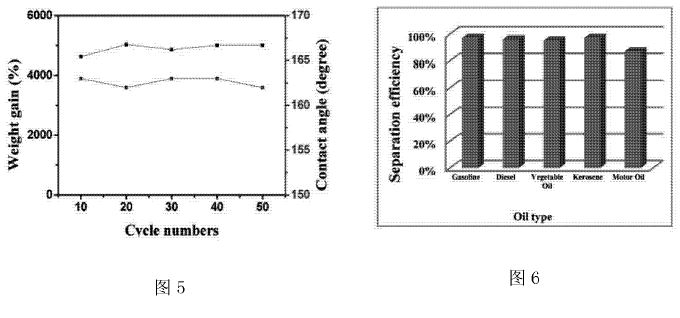
The super oil-absorbing sponge prepared from the coating material of the present invention can absorb up to 40 times its own weight of oil (including gasoline, diesel, vegetable oil, kerosene, lubricating oil and crude oil) without completely absorbing water. The absorbed oil can be recovered by simply extruding the sponge. The super oil-absorbing sponge has a stable hydrophobicity and a long cycle life. Even after 50 cycles of extrusion, it retains a high hydrophobicity and high absorption capacity of >160° contact angle. Super oil absorbent sponges can work in harsh environments. We placed an oil-absorbing superabsorbent sponge in an environment where the simulated crude oil layer leaked in the natural environment, and used an aqueous solution containing 40g·L < -1 > sea salt. The container was placed on a shaker to simulate the wave environment with an oscillation of 100rpm. . For the collection and application of crude oil spills, it is best for the sponge to sink into the water without losing its superhydrophobicity, and it will not leak oil under the impact of the waves if it is placed in seawater for a long time. Our sponges resisted oil spills very well, and those that floated on the surface of the water for more than 7 days did not sink into water nor leaked oil. This indicates that the sponge retains its superhydrophobicity and hardly absorbs seawater even when it is in contact with seawater. Our super oil-absorbing sponges have the following advantages compared to other technologies: easy processing, industrial-scale production potential, low cost, high absorption capacity, excellent cycle performance, long life, and strong adaptability, suitable for use in harsh environments Wait.
The coating can be used for the preparation of super oleophobic filters. Specific steps are as follows:
(1) Preparation of solution A containing oxidant;
(2)Formulation of a solution B containing precursors (monomers) such as aniline and pyrrole;
(3) Prepare a solution C containing alkyl silicate (tetraethyl silicate);
(4) The above solution is mixed, and the stainless steel or other wire filter (mesh of the filter mesh is in the range of 50-200 mesh) is impregnated to remove the excess solution, and the hydrogel is formed by standing still on the surface of the filter for a moment to cover the plastic thereon. The film retains moisture, and the plastic film is removed after 5 to 12 hours to dry the moisture.
(7) Spraying, impregnating silane-containing reagents such as octadecyltrichlorosilane to treat the coating into a super-hydrophobic filter.
Wherein, in the steps (1) and (2), the solution A is an aqueous solution, the solution B is an aqueous solution or an organic solution, and the polybasic acid is formulated in the solution A and/or the solution B.
Hydrogel-based self-assembling micro-structured superhydrophobic coating materials for (coating) surfaces of various materials, including paper, wood, cotton fabric, cement, glass, metal, plastic and rubber, are prepared Stable super-hydrophobic coating that becomes a hydrophobic material, adsorbent material, and mesh functionalized material; or silica-based transparent super-hydrophobic coating with a microstructure on the lens/substrate surface; mixed solution ABC, spray coating, spin coating, Scraping, casting, ink-jet printing or screen-printing methods on stretchable rubber, fabrics, etc. The resulting superhydrophobic film has the ability to retain superhydrophobic properties with large mechanical strains. Stretch 100 In the case of strain, the contact angle can be stably maintained at 150°.
The beneficial effect of the present invention is that the prepared superhydrophobic filter can selectively and effectively separate oil from water. The super oleophobic filter has surface properties similar to lotus leaf, with a contact angle of more than 149°. When the filter is placed at the oil-water interface, the oil can pass through the filter and water cannot pass through. Oils such as gasoline, diesel oil, vegetable oil, kerosene, and engine oil were successfully separated from the water and the separation efficiency exceeded 90%. The water content of the separated oil is less than 0.04%. The new oil-water separation filter has low manufacturing costs and industrial-scale manufacturing, and has great potential advantages for filter processing of oil production and oil spills.
Description of the drawings
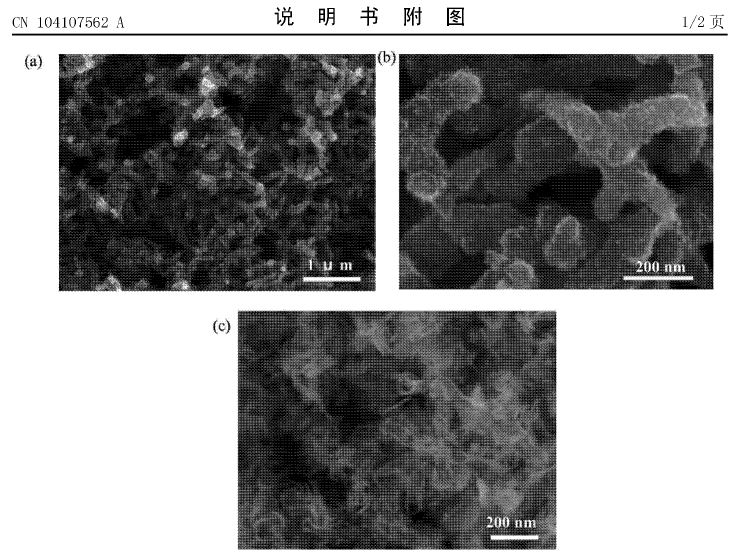
Figure 1. Microstructure data of the coating: (a-b) scanning electron micrograph of silica-coated polyaniline microstructure. (c) Scanning electron micrograph of the silica microstructure after removal of polyaniline. The micro-nanostructured silica film is a silica film with a 50-200 nm particle size distribution.
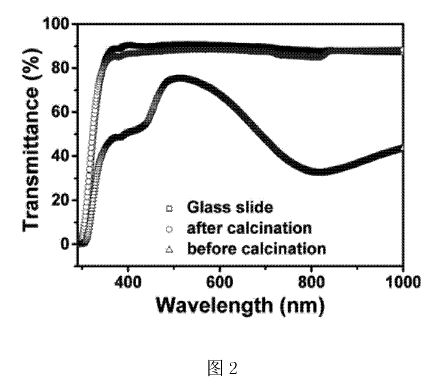
Figure 2. Optical absorption data of the transparent superhydrophobic coating on the surface of the glass substrate (the uppermost curve is untreated glass).
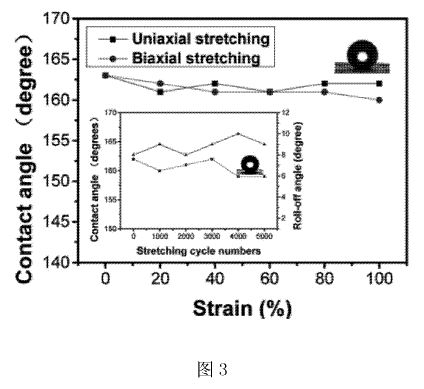
image 3. Tensile properties of superhydrophobic coatings (contact angle data under different strain conditions).
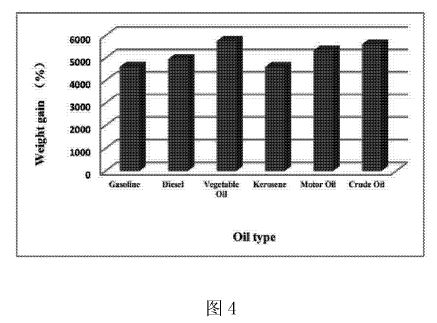
Figure 4. Super oil-absorbing sponges have been tested for their ability to absorb different oils, including diesel gasoline and crude oil.
Figure 5. Surface contact angle retention data after superabsorbent sponge absorption/squeezing cycles. The relationship between the number of cross-screws/extrusion cycles and the oil absorption and water contact angle.
Figure 6. The oil-water separation filter tests the separation efficiency of different oils.
Detailed description
The superhydrophobic coating is synthesized as follows:
Step 1, configure the solution (A, C) from water, oxidant, and silicic acid. The oxidizing agent is preferably ammonium persulfate (concentration ranging from 0.2 to 2 M), but other oxidizing agents such as ferric chloride, copper chloride, silver nitrate, hydrogen peroxide, chloroauric acid, and other persulfate derivatives are also used. For example, Na 2 S 2 O 8 and K 2 S 2 O 8 ; silicic acid (ethyl silicate, such as tetraethylorthosilicate, tetraethyl silicate TEOS) solution is preferably ethyl orthosilicate, but other silicon Acid solutions such as silicon tetrachloride are also used.
Step 2. The monomers and the acid are dissolved in water or an organic solvent to constitute a monomer solution B (concentration ranging from 0.2 to 2M). In the examples monomer aniline, but other carbon-based organic monomers may also be used, such as pyrrole, thiophene and aniline derivatives such as anisidine, methylaniline, ethylaniline, o-alkoxyaniline and 2 ,5-dialkoxyaniline monomers, respectively, for the synthesis of polypyrrole, polythiophene, polymethoxyaniline, polymethylaniline, polyethylaniline, polyalkoxyanilide, poly 2,5- For example, dialkoxyanilines and the like. The polymerization of the above polymers under the action of an oxide initiator is a prior art.
The effect of polybasic doped acid is preferably phytic acid, phosphoric acid and polyvinylphosphoric acid containing a phosphate group, but other small molecule acids of multifunctionality (functionality ≥ 2, molecular weight ≤ 800) can also be used, such as 1, 2,4,5-Benzenetetracarboxylic acid, N-sulfonic acid butyl-3-methylimidazolium hydrogen sulfate, N-sulfonic acid butylpyridinium hydrogen sulfate and the like. The polybasic acid concentration range is 0.1-2M. In embodiments, the aniline monomer and phytic acid can be dissolved in water after mixing.
Step 3, place the monomer solution in the reaction vessel. The capacity of the container can be large or small according to actual needs. Large-scale containers can be used to realize mass production of polymer hydrogel, and can also be cast into different shapes of hydrogel materials in various shapes of containers.
Step 4, the silicic acid solution is dissolved in an organic solvent to constitute a silicic acid solution (the volume concentration of silicic acid is 10% to 90%). In the examples, isopropanol, but other organic solvents can also be used, such as n-propanol;
In step 5, the oxidant solution and the monomer solution are mixed, and then mixed with the silicic acid solution. After the mixture is mixed, rapid shaking is performed to uniformly mix the aqueous solution and the organic solution.
Step 6, standing (at least 6h to several days), forming a polyaniline hydrogel in a few minutes, at the same time can be observed that the solution color turns dark green, there will be a small amount of unmixed organic solvent left on the top of the gel A layer of plastic film is placed on the surface of the gel to prevent evaporation of water, and it is allowed to stand for a long time to ensure that silicic acid has enough time to hydrolyze to generate silica.
Step 7, purification of the hydrogel. The hydrogel material is dialyzed or ion exchanged in deionized water, distilled water to remove excess ions. Silica-coated phytic acid-doped polyaniline pure hydrogels were finally obtained. In this step, the hydrogel can also be dedoped with ammonia to remove phytic acid. Dedoping does not destroy the hydrogel structure because the porous polyaniline backbone can already retain its shape.
Step 8. The hydrogel is dried at room temperature or in a dry box (<70° C.) and after thorough drying, the surface is modified with a solution with a low surface energy. In the examples, octadecyltrichlorosilane is used. Low-surface-energy solutions can also be used, such as perfluorooctyltrichlorosilane, perfluorodecyltriethoxysilane, perfluorodecyltrichlorosilane, and other fluorine-containing or chlorosilanes. Phase and gas phase method. In the embodiment, the liquid phase treatment method uses n-heptane as the solute, and other organic solute such as n-octane, n-hexadecane and the like can also be used.
A Example: Proportioning experiment
Example 1: Polyaniline superhydrophobic coating preparation;
Firstly, 1 ml of an aqueous solution of ammonium persulfate oxidizer containing 0.286 g was placed, an aqueous monomer solution in which aniline (0.458 ml) and phytic acid (0.921 ml) were mixed, and isopropyl alcohol (0.5 ml) and ethyl orthosilicate (0.263 ml) were disposed. . The molar ratio of polyaniline to tetraethylorthosilicate is 1:1, and similar results can be obtained for the raw materials in the range of the present invention. Then, the three solutions are mixed and shaken immediately after mixing. The mixed solution is then pipetted onto a clean silicon wafer that has already been processed and spread well. In a matter of minutes, the polymerization reaction takes place and the polyaniline hydrogel is formed on the silicon wafer. The plastic film is covered on the silicon wafer to keep moisture. After 12 hours, the plastic film is peeled off and the silicon wafer is soaked in deionized water for several minutes. The silicon wafer was dried at room temperature or in a drying oven and treated with an octadecyltrichlorosilane (OTS) solution to give a green superhydrophobic coating with a water contact angle >150°. This is also the superhydrophobic coating material of FIG.
Example 2: Preparation of a superhydrophobic polyaniline coating (ethyl orthosilicate solute was changed to ethanol);
First, 1 ml of an aqueous solution of ammonium persulfate oxidizer containing 0.286 g was placed, an aqueous monomer solution in which aniline (0.458 ml) and phytic acid (0.921 ml) were mixed, and ethanol (0.5 ml) and ethyl orthosilicate (0.263 ml) were disposed. The molar ratio of polyaniline to ethyl orthosilicate is 1:1. Then, the three solutions are mixed and shaken immediately after mixing. The mixed solution is then pipetted onto a clean silicon wafer that has already been processed and spread well. Within a few minutes, the polymerization reaction takes place and the polyaniline hydrogel is formed on the silicon wafer. The plastic film is covered on it to keep moisture. After 12 hours, the plastic film is removed and the silicon wafer is soaked in deionized water for several minutes. The silicon wafer was dried at room temperature or in a drying oven and treated with an octadecyltrichlorosilane (OTS) solution to give a green superhydrophobic coating with a water contact angle >150°. It is proved that the ethyl silicate solute does not affect its hydrolysis to generate silica, nor does it affect the superhydrophobic properties.
Example 3: Preparation of a polypyrrole superhydrophobic coating;
First, a 0.5 mL aqueous solution containing 0.274 g of an ammonium peroxodisulfate solution was placed, and an aqueous monomer solution in which aniline (0.084 ml) and phytic acid (0.184 ml) were mixed was prepared, and isopropyl alcohol (0.5 ml) and ethyl orthosilicate (0.267 ml) were disposed. ). The molar ratio of polyaniline to ethyl orthosilicate is 1:1. Then, the three solutions are mixed and shaken immediately after mixing. The mixed solution is then pipetted onto a clean silicon wafer that has already been processed and spread well. Within a few minutes, the polymerization reaction takes place and the polypyrrole hydrogel is formed on the silicon wafer. The plastic film is covered on it to keep moisture. After 12 hours, the plastic film is removed and the silicon wafer is soaked in deionized water for several minutes. The silicon wafer was dried at room temperature or in a drying oven and treated with an octadecyltrichlorosilane (OTS) solution to give a green superhydrophobic coating with a water contact angle >150°. It was proved that the topography of polyaniline and polypyrrole hydrogel conformed to the requirement of superhydrophobic structure.
Example 4: Polyaniline superhydrophobic coating preparation (polyaniline and tetraethylorthosilicate molar ratio of 4:1);
First, 1 ml of an aqueous solution of ammonium persulfate oxidizer containing 0.286 g of an aqueous solution of aniline (0.458 ml) and phytic acid (0.921 ml) was placed, and isopropyl alcohol (0.5 ml) and ethyl orthosilicate (0.0656 ml) were disposed. . The molar ratio of polyaniline to tetraethylorthosilicate is 4:1. Then, the three solutions are mixed and shaken immediately after mixing. The mixed solution is then pipetted onto a clean silicon wafer that has already been processed and spread well. In a matter of minutes, the polymerization reaction takes place and a polyaniline hydrogel is formed on the silicon wafer. The plastic film is placed on it to keep moisture. After 12 hours, the plastic film is removed and the silicon wafer is soaked in deionized water for several minutes. The silicon wafer was dried at room temperature or in a drying oven and treated with an octadecyltrichlorosilane (OTS) solution to give a green superhydrophobic coating with a water contact angle >150°.
Example 5: Polyaniline superhydrophobic coating preparation (polyaniline and tetraethylorthosilicate molar ratio of 1:4);
Firstly, 1 ml of an aqueous solution of ammonium persulfate oxidizer containing 0.286 g was placed, an aqueous monomer solution in which aniline (0.458 ml) and phytic acid (0.921 ml) were mixed, and isopropyl alcohol (0.5 ml) and ethyl orthosilicate (1.05 ml) were disposed. . The molar ratio of polyaniline to ethyl orthosilicate is 1:4. Then, the three solutions are mixed and shaken immediately after mixing. The mixed solution is then pipetted onto a clean silicon wafer that has already been processed and spread well. In a matter of minutes, the polymerization reaction takes place and the polyaniline hydrogel is formed on the silicon wafer. The plastic film is covered on it to keep moisture. After 12 hours, the plastic film is peeled off and the silicon wafer is soaked in deionized water for several minutes. The silicon wafer was dried at room temperature or in a drying oven and treated with an octadecyltrichlorosilane (OTS) solution to give a green superhydrophobic coating with a water contact angle >150°.
Example 6: Preparation of superhydrophobic polyaniline coating (synthetic gel first and then ethyl silicate);
First, an aqueous solution containing 0.286 g of an ammonium peroxodisulfate oxidizer solution was placed, and an aqueous monomer solution in which aniline (0.458 ml) and phytic acid (0.921 ml) were mixed was placed. Then the two solutions are mixed and shaken immediately after mixing. The mixed solution is then pipetted onto a clean silicon wafer that has already been processed and spread well. Within a few minutes, the polymerization reaction takes place, polyaniline hydrogel is formed on the silicon wafer, the silicon wafer is soaked in deionized water for several minutes, and the wafer is dried at room temperature or in a drying oven. The dried silicon wafer was placed in a solution containing 20 ml of ethanol, 180 ml of water, and 10 ml of ethyl orthosilicate for 24 hours and the solution was stirred with a magnet. Then, the silicon wafer was taken out and dried and treated with an octadecyltrichlorosilane (OTS) solution to obtain a green superhydrophobic coating with a water contact angle of >150°. Whether it is a directly hydrolyzed silica-coated hydrogel coating or a silica-coated hydrogel coating, superhydrophobic properties can be obtained.
B Example: Performance Test
Example 7: Superhydrophobic coating to prepare a green transparent superhydrophobic glass sheet;
Firstly, 1 ml of an aqueous solution of ammonium persulfate oxidizer containing 0.286 g was placed, an aqueous monomer solution in which aniline (0.458 ml) and phytic acid (0.921 ml) were mixed, and isopropyl alcohol (0.5 ml) and ethyl orthosilicate (0.263 ml) were disposed. . Then, the three solutions are mixed, shake immediately after mixing, and then the pipette is used to suck the mixed solution onto a clean glass sheet that has already been processed, and spread evenly. Within a few minutes, the polymerization reaction takes place and a polyaniline hydrogel is formed on the glass sheet, covered with a plastic film to retain moisture, and after 12 hours the plastic film is removed and the glass sheet is soaked in deionized water for several minutes. In order to obtain a transparent super-hydrophobic glass sheet, the glass sheet is sonicated in deionized water, and the length of the ultrasound can control the thickness of the coating to obtain a green transparent glass sheet. The glass sheet is dried at room temperature or in a drying oven and used The treatment of alkyl trichlorosilane (OTS) solution gave a green transparent super-hydrophobic glass sheet with a water contact angle of 167° and a roll angle of 6°.
Example 8: Preparing a colorless transparent superhydrophobic glass sheet with a superhydrophobic coating;
Firstly, 1 ml of an aqueous solution of ammonium persulfate oxidizer containing 0.286 g was placed, an aqueous monomer solution in which aniline (0.458 ml) and phytic acid (0.921 ml) were mixed, and isopropyl alcohol (0.5 ml) and ethyl orthosilicate (0.263 ml) were disposed. . Then, the three solutions are mixed, shake immediately after mixing, and then the pipette is used to suck the mixed solution onto a clean glass sheet that has already been processed, and spread evenly. Within a few minutes, the polymerization reaction takes place, polyaniline hydrogel is formed on the glass sheet, and the plastic film is covered thereon to keep moisture. After 12 hours, the plastic film is peeled off and the glass sheet is soaked in deionized water for several minutes. In order to obtain a transparent super-hydrophobic glass sheet, the glass sheet is ultrasonicated in deionized water, and the length of the ultrasound can control the thickness of the coating. A green transparent glass sheet can be obtained. The glass sheet is dried at room temperature or in a drying oven, and the glass is transparent. The glass flake was calcined in a tube furnace at 400°C for 2 hours to remove the silica inside polymer to obtain a transparent coating glass flake, which was then treated with an octadecyltrichlorosilane (OTS) solution. Colorless transparent super-hydrophobic glass sheet. The transmittance of the glass sheet relative to that of the pure glass sheet without any treatment only decreased by 2%, and it had a good transparency. And the water contact angle is 165° and the roll angle is 5°.
Example 9: Wear Resistance of Green Transparent Superhydrophobic Glass Sheets
Firstly, 1 ml of an aqueous solution of ammonium persulfate oxidizer containing 0.286 g was placed, an aqueous monomer solution in which aniline (0.458 ml) and phytic acid (0.921 ml) were mixed, and isopropyl alcohol (0.5 ml) and ethyl orthosilicate (0.263 ml) were disposed. . Then, the three solutions are mixed, shake immediately after mixing, and then the pipette is used to suck the mixed solution onto a clean glass sheet that has already been processed, and spread evenly. Within a few minutes, the polymerization reaction takes place and the polyaniline hydrogel is formed on a glass sheet, covered with a plastic film to retain moisture, and after 12 hours the plastic film is removed and the glass sheet is soaked in deionized water for several minutes. In order to obtain a transparent super-hydrophobic glass sheet, the glass sheet is sonicated in deionized water, the length of the ultrasound can control the thickness of the coating, and a green transparent glass sheet can be obtained. The glass sheet is dried at room temperature or in a drying oven and used The treatment of alkyl trichlorosilane (OTS) solution resulted in a green transparent superhydrophobic glass sheet.
The resulting green transparent super-hydrophobic glass sheet was placed obliquely on the table and a funnel was placed 40 cm above it. The commercial sand is filtered with a filter. The particle size of the sand is uniform, and the weight is 20 g. Then it is sprinkled from the funnel. The sand hits the glass sheet from a height of 40 cm. After the impact is over, the contact angle of the glass sheet is measured. The glass flakes were measured to maintain superhydrophobic properties even after 100 g of sand impact. The contact angle was >150°.
Example 10 Preparation of a Superhydrophobic Coating Resistant to Tensile Superhydrophobic PDMS
Firstly, 1 ml of an aqueous solution of ammonium persulfate oxidizer containing 0.286 g was placed, an aqueous monomer solution in which aniline (0.458 ml) and phytic acid (0.921 ml) were mixed, and isopropyl alcohol (0.5 ml) and ethyl orthosilicate (0.263 ml) were disposed. . Then, the three solutions were mixed and shaken immediately after mixing. The mixed solution was then pipetted onto the just-polymerized PDMS and spread well. In a matter of minutes, the polymerization reaction takes place, a polyaniline hydrogel is formed on the PDMS, a plastic film is covered thereon to keep moisture, and after 12 hours the plastic film is peeled off and the PDMS is soaked in deionized water for several minutes. A green PDMS coating can be obtained. PDMS is dried at room temperature or in a drying oven and treated with an octadecyltrichlorosilane (OTS) solution to give a green superhydrophobic PDMS with a water contact angle of 163° and a roll angle of 8.
Also, this superhydrophobic PDMS has tensile properties, stretches 20% to 100%, respectively, and its contact angle is measured in the stretched state, and it can be obtained that the superhydrophobic property can be maintained even when stretched to 100%. Contact angle >150°. Then by repeating the 100% tensile test several times, the superhydrophobic property can still be maintained under repeated stretching of 1000 to 5000 times, and the contact angle is >150°. This superhydrophobic coating proved to have good tensile properties.
Example 11 Preparation of Selective Oil-absorbing Sponges from Superhydrophobic Coatings
Firstly, 1 ml of an aqueous solution of ammonium persulfate oxidizer containing 0.286 g was placed, an aqueous monomer solution in which aniline (0.458 ml) and phytic acid (0.921 ml) were mixed, and isopropyl alcohol (0.5 ml) and ethyl orthosilicate (0.263 ml) were disposed. . The three solutions are then mixed and shaken immediately after mixing. The mixed solution is then poured into a container containing the sponge that has been cleaned, and the sponge is squeezed to absorb the mixed solution as much as possible. In a matter of minutes, the polymerization reaction takes place and the polyaniline hydrogel forms in the inner and outer walls of the sponge (such as PU foam), covers the plastic film to keep the moisture, and after 12 hours, the plastic film is peeled off and the sponge is soaked in. Ion water for a few minutes. A hydrogel-covered sponge can be obtained. The sponge is dried at room temperature or in a drying oven and treated with an octadecyltrichlorosilane (OTS) solution to obtain a green superhydrophobic super-lipophilic sponge. The water contact angle is reached. 164°.
Example 12: Absorptive capacity of selective oil absorbing sponges for different oils
Firstly, 1 ml of an aqueous solution of ammonium persulfate oxidizer containing 0.286 g was placed, an aqueous monomer solution in which aniline (0.458 ml) and phytic acid (0.921 ml) were mixed, and isopropyl alcohol (0.5 ml) and ethyl orthosilicate (0.263 ml) were disposed. . The three solutions are then mixed and shaken immediately after mixing. The mixed solution is then poured into a container containing the sponge that has been cleaned, and the sponge is squeezed to absorb the mixed solution as much as possible. Within a few minutes, the polymerization reaction took place and the polyaniline hydrogel was formed inside the sponge and on the outer wall. The film was covered with a plastic film to keep moisture. After 12 hours, the plastic film was removed and the sponge was soaked in deionized water for several minutes. A hydrogel-covered sponge can be obtained. The sponge is dried at room temperature or in a drying oven and treated with an octadecyltrichlorosilane (OTS) solution to obtain a green superhydrophobic super-lipophilic sponge with water contact angles reached. 164°.
Separately prepare gasoline, diesel, motor oil, kerosene and crude oil. Taking gasoline as an example, in order to distinguish between aqueous solutions, use Sudan Blue to dye gasoline, and then add 50 ml of gasoline to a beaker of 100 ml of deionized water. The gasoline will float on the water and the processed sponge will be dropped into a beaker. The sponge was found to quickly absorb petrol, floated on the water after saturation and did not sink. Then use the balance to weigh the sponge, subtract the original net weight of the sponge is the sponge's oil absorption capacity. For gasoline, diesel, oil, kerosene and crude oil, the treated sponge can absorb oil equivalent to 40 times its own weight. After the oil is sucked, the oil can be extruded and reused by simply squeezing it.
Example 13: Selective oil absorbing sponge absorbs circulation ability
Firstly, 1 ml of an aqueous solution of ammonium persulfate oxidizer containing 0.286 g was placed, an aqueous monomer solution in which aniline (0.458 ml) and phytic acid (0.921 ml) were mixed, and isopropyl alcohol (0.5 ml) and ethyl orthosilicate (0.263 ml) were disposed. . The three solutions are then mixed and shaken immediately after mixing. The mixed solution is then poured into a container containing the sponge that has been cleaned, and the sponge is squeezed to absorb the mixed solution as much as possible. Within a few minutes, the polymerization reaction took place and the polyaniline hydrogel was formed inside the sponge and on the outer wall. The film was covered with a plastic film to keep moisture. After 12 hours, the plastic film was removed and the sponge was soaked in deionized water for several minutes. A hydrogel-covered sponge can be obtained. The sponge is dried at room temperature or in a drying oven and treated with an octadecyltrichlorosilane (OTS) solution to obtain a green superhydrophobic super-lipophilic sponge. The water contact angle is reached. 164°.
Taking gasoline as an example, in order to distinguish between aqueous solutions, use Sudan Blue to dye gasoline, and then add 50ml of gasoline to a beaker of 100ml of deionized water. Gasoline floats on the surface of the water, and the processed sponge is thrown into a beaker. The sponge was found to quickly absorb petrol, floated on the water after saturation and did not sink. Then use the balance to weigh the sponge, subtract the original net weight of the sponge is the sponge's oil absorption capacity. After the oil is sucked, the oil can be squeezed out by simply squeezing it. The squeezed sponge is allowed to stand at room temperature. Since the gasoline can easily evaporate, the sponge can be easily reused, or the hair dryer can be used to accelerate the drying of the sponge. Repeat the oil suction 10-50 times with the same sponge and measure its contact angle. It can be obtained that the sponge retains its superhydrophobic properties after 50 cycles of oil absorption, and the contact angle is >150°.
Example 14 Separation Capabilities of Steel Wire Mesh for Different Oils
Firstly, 1 ml of an aqueous solution of ammonium persulfate oxidizer containing 0.286 g was placed, an aqueous monomer solution in which aniline (0.458 ml) and phytic acid (0.921 ml) were mixed, and isopropyl alcohol (0.5 ml) and ethyl orthosilicate (0.263 ml) were disposed. . The three solutions are then mixed and shaken immediately after mixing. The mixed solution is then poured into a container where the cleaned wire mesh has been placed, and the wire mesh is pressed so that it contacts all of the mixed solution as much as possible. Within a few minutes, the polymerization reaction takes place and the polyaniline hydrogel is formed on the outer wall of the steel wire mesh, covered with a plastic film to retain moisture, and after 12 hours the plastic film is peeled off and the wire mesh is soaked in deionized water for several minutes. A hydrogel-coated steel wire mesh can be obtained, the steel wire mesh is dried at room temperature or in a drying box, and treated with an octadecyltrichlorosilane (OTS) solution to obtain a green super-hydrophobic super-hydrophilic steel mesh, water The contact angle reaches 149°.
Separately prepare gasoline, diesel, motor oil, kerosene and crude oil. Taking gasoline as an example, in order to distinguish between aqueous solutions, gasoline is dyed with Sudan Blue, and then 100 ml of gasoline is added to a beaker of 100 ml of deionized water. Place the superhydrophobic wire mesh treated in the middle of the mouths of the two containers and clamp them with a clip. Pour the mixture of gasoline and water from the above container, preferably with a glass rod, due to the super-hydrophobic superfluous wire mesh. With lipophilic properties, gasoline flows through the wire mesh into the lower container and water remains in the upper container. For petrol, diesel, oil, and kerosene, the treated steel mesh can achieve a separation efficiency of more than 90%, depending on the mixed solution pouring speed.
Table 1. Contact angle data for coatings on different substrate surfaces.
[image]
[image]
Table 2. After the oil-water separation filter filtered oil moisture test: